Compare Essential Oils
Select up to 4 oils to compare side-by-side
Citronella Essential Oil
Cymbopogon nardus
cilantro essential oil
Coriandrum sativum
Brazilian Orange Essential Oil
Citrus sinensis
Benzoin Resinoid Essential Oil
Styrax benzoin
Ylang Ylang Essential Oil
Cananga odorata
Wormwood Essential Oil
Artemisia absinthium
Wild Orange Essential Oil
Citrus sinensis
Vetiver Essential Oil
Vetiveria zizanoides
Verbena Essential Oil
Aloysia citriodora
Vanilla Essential Oil
Vanilla planifolia
Benefits & Uses
- • Promotes relaxation and peace of mind, making it effective for stress relief.
- • Helps ground emotions, providing a sense of stability during challenging times.
- • Enhances meditation practices through its calming and introspective aroma.
- • May improve mood and alleviate feelings of sadness or introspection.
- • Supports emotional balance and resilience during periods of change.
- • Can assist in wound healing and skin rejuvenation due to its antimicrobial properties.
- • Supports respiratory health by relieving coughs and promoting clear airways.
- • May alleviate discomfort associated with muscle tension and soreness.
- • Helps in maintaining healthy skin by toning and tightening, reducing the appearance of blemishes.
- • Supports overall immune function when used in wellness practices.
- • Effective in formulations for dry or aged skin, providing hydration and nourishment.
- • Can be used in combination with carrier oils for facial serums targeting uneven skin tone.
- • Suitable for use in balms and creams to promote skin elasticity.
- • Ideal for use in natural perfumes and body care products to impart a rich, appealing aroma.
- • May assist in balancing oily skin by regulating sebum production.
- • Works as a natural deodorizer when diffused, providing warmth and comfort to living spaces.
- • Can be added to cleaning solutions for its antimicrobial properties.
- • Effective in creating calming home environments during meditation or yoga practices.
- • Acts as an insect repellent when used in sprays for home refreshers.
- • Can be included in potpourri or sachets for a long-lasting scent in drawers and closets.
How to Use
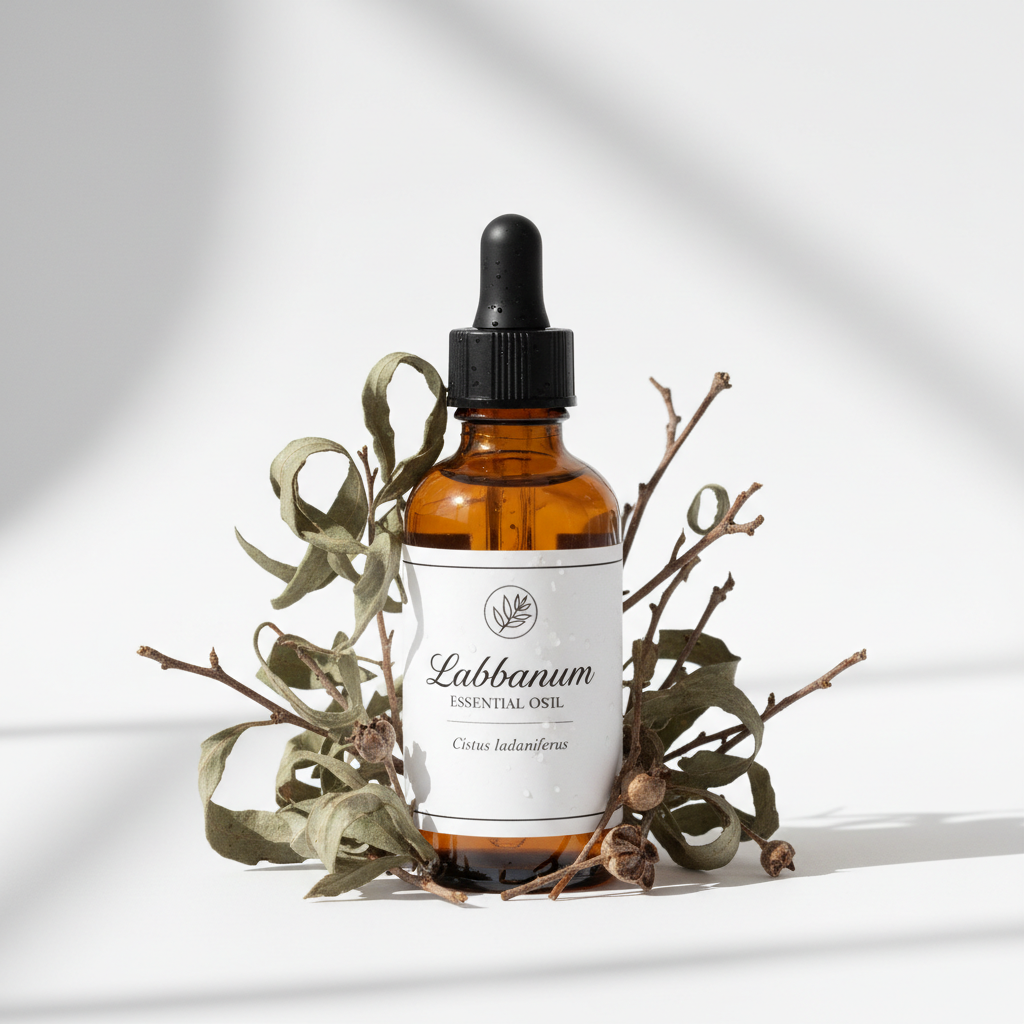
For small rooms, use 3-5 drops of labdanum essential oil; for medium rooms, use 5-8 drops; for large rooms, use 8-12 drops. Diffuse for 30-60 minutes at a time, 2-3 times daily, preferably during relaxation or meditation sessions.
Adults should dilute the essential oil to a concentration of 2-3% (12-18 drops of labdanum oil per ounce of carrier oil). For children, a dilution of 0.5-1% (3-6 drops per ounce) is recommended, and for the elderly, a 1-2% dilution (6-12 drops per ounce) is appropriate. Suggested carrier oils include jojoba, sweet almond, or coconut. Massage gently at application sites for better absorption.
For direct inhalation, place 1-2 drops on a tissue or cotton pad and breathe in. For steam inhalation, add 2-3 drops to a bowl of hot water, draping a towel over your head to trap the steam; inhale for 5-10 minutes. Personal inhalers can be prepared for on-the-go use.
Safety & Precautions
Conduct a patch test before widespread use. Avoid sunlight or UV exposure for 12 hours after topical application as it may cause photosensitivity. Consult a healthcare professional if pregnant or nursing. Use caution with prescription medications, especially those affecting the central nervous system. Store in a cool, dark place and replace cap tightly after use. Shelf life is typically 2-3 years if properly stored.
- ⚠️ Individuals allergic to plants in the Cistus family.
- ⚠️ Those with severe respiratory issues should consult before use.
- ⚠️ Pregnant women in their first trimester.
- ⚠️ Children under the age of 2 years.