Compare Essential Oils
Select up to 4 oils to compare side-by-side
Citronella Essential Oil
Cymbopogon nardus
cilantro essential oil
Coriandrum sativum
Brazilian Orange Essential Oil
Citrus sinensis
Benzoin Resinoid Essential Oil
Styrax benzoin
Ylang Ylang Essential Oil
Cananga odorata
Wormwood Essential Oil
Artemisia absinthium
Wild Orange Essential Oil
Citrus sinensis
Vetiver Essential Oil
Vetiveria zizanoides
Verbena Essential Oil
Aloysia citriodora
Vanilla Essential Oil
Vanilla planifolia
Benefits & Uses
- • Calming: Helps to maintain emotional balance and reduce feelings of anxiety.
- • Grounding: Ties the body and mind together, promoting a sense of security and stability.
- • Uplifting: May enhance mood and promote feelings of joy during aromatherapy sessions.
- • Stress relief: Useful in helping lower stress levels when included in relaxation practices.
- • Comforting: Provides a sense of warmth and safety in personal care rituals.
- • Hydrates skin: Ideal for dry and dehydrated skin types, providing moisture without greasiness.
- • Soothes irritation: Can alleviate itchiness and redness associated with dry skin and conditions like eczema.
- • Supports hair health: Enhances shine and moisture retention in hair, helping reduce breakage.
- • Improves circulation: Enhances blood circulation when massaged into the skin.
- • Nourishing: Rich in vitamins and fatty acids that support overall skin and hair health.
- • Carrier for essential oils: Ideal for diluting essential oils for topical applications due to its light texture.
- • Massage oil: Used in body massage blends to hydrate and soothe skin.
- • Moisturizing cream: Forms the base for creams targeting dry or mature skin.
- • Hair treatment: Used as a leave-in conditioner to enhance hair smoothness and shine.
- • DIY formulations: Serves as a base oil in homemade beauty products such as serums and lotions.
- • Cooking oil: Utilized as a versatile cooking oil due to its high smoke point.
- • Candle making: Acts as a carrier oil in homemade candles for added scent throw.
- • Natural cleaning: Can be incorporated into DIY cleaning products for a conditioning effect on surfaces.
- • Furniture polish: Mixed with essential oils for use as a natural furniture polish.
How to Use
For small rooms, use 3-5 drops; for medium-sized rooms, 5-8 drops; for large spaces, 8-12 drops. Diffuse for 30-60 minutes, 2-3 times daily, ideally in the morning or before bedtime to enhance relaxation.
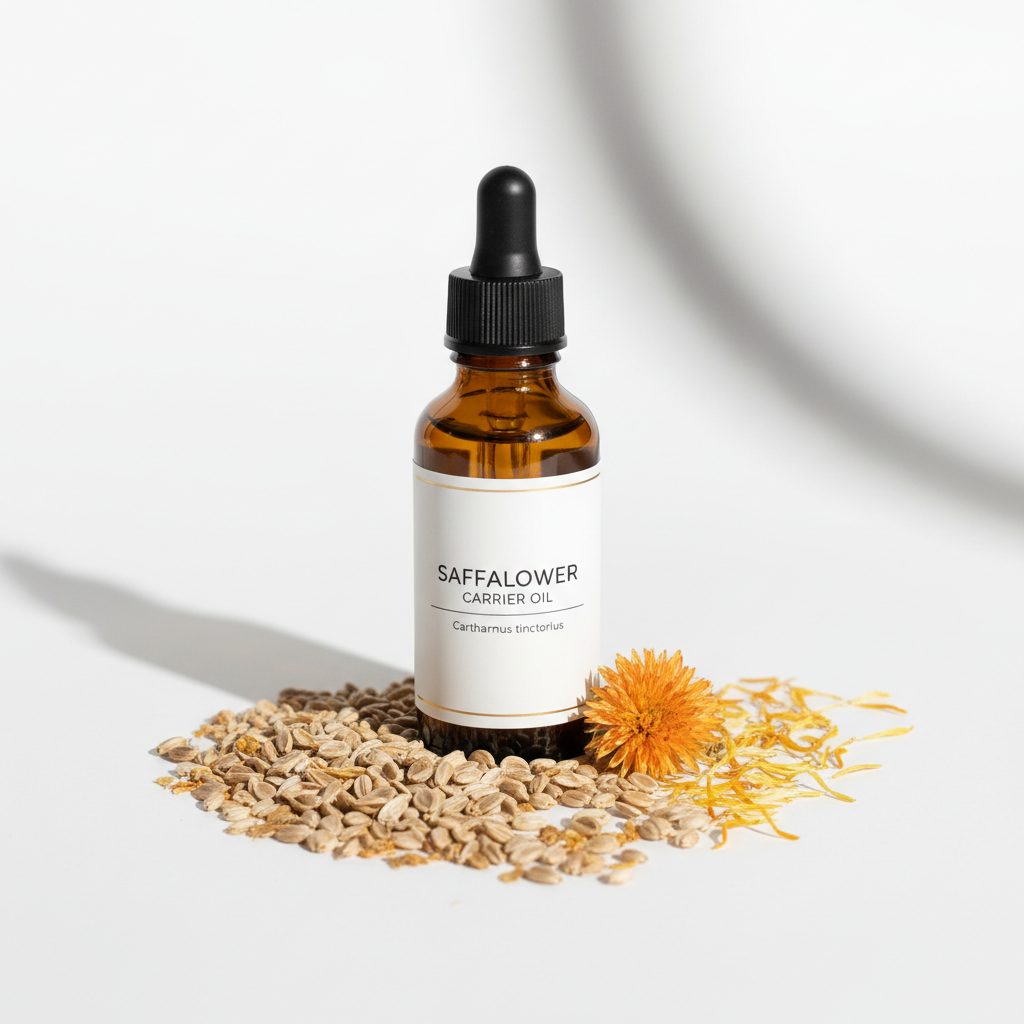
For adults: Dilute Safflower Carrier Oil to 2-3% with essential oils. For children: Dilution should be 0.5-1%, and for elderly: 1-2%. Use carrier oils like Jasmine or Coconut for luxury blends, focusing on dry areas and massaging gently for 5-10 minutes.
For direct inhalation, add 1-2 drops on a tissue or inhale from cupped hands. For steam inhalation, add 2-3 drops to a bowl of hot water, stepping back to inhale deeply for 5-10 minutes. Alternatively, use a personal inhaler.
Safety & Precautions
Always perform a patch test before topical application to avoid allergic reactions. Consult a healthcare provider before using during pregnancy or lactation. Avoid using oils that may cause photosensitivity (not generally applicable to safflower oil itself) and store in a cool, dark place. Shelf life is typically 1-2 years.
- ⚠️ Individuals with specific allergies to safflower or related plants.
- ⚠️ Those with skin conditions that respond negatively to oil applications.
- ⚠️ Pregnant individuals without prior consultation with a healthcare provider.