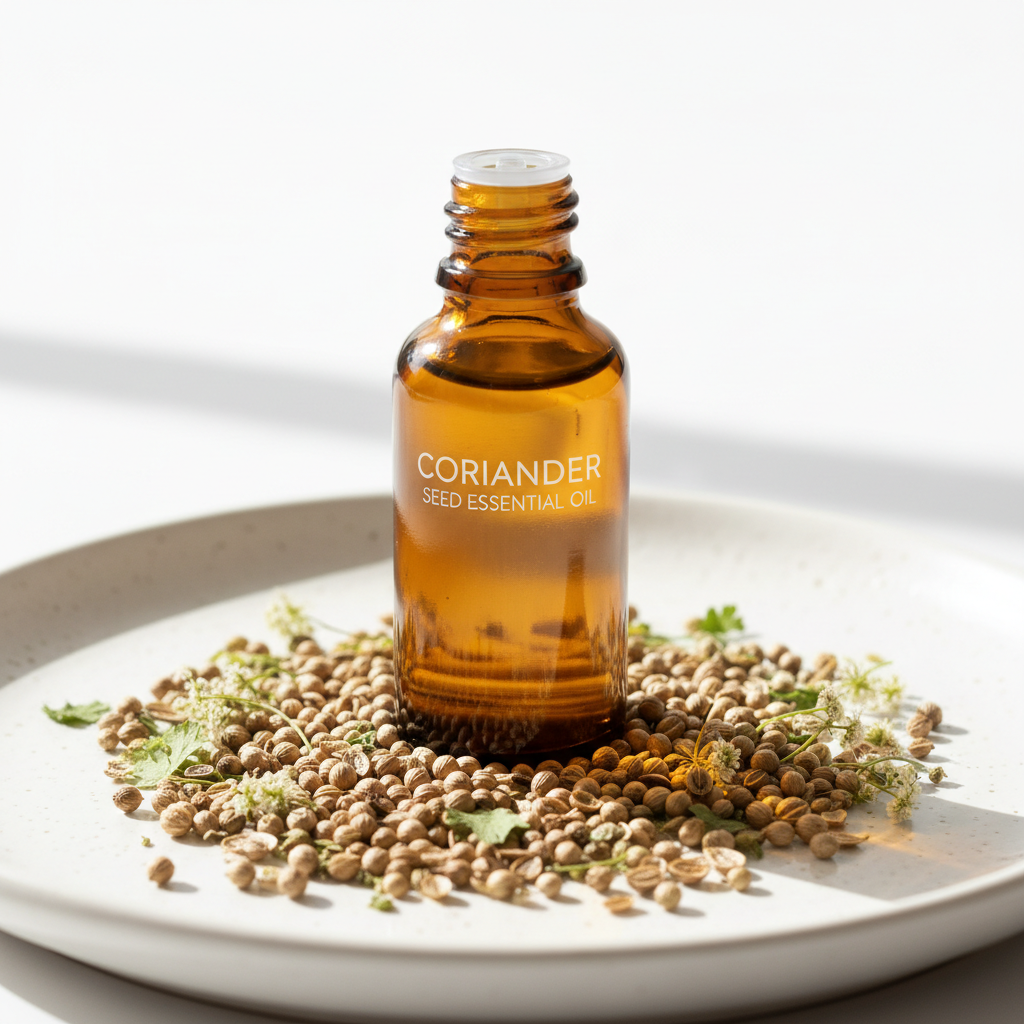
Coriander Seed Essential Oil
Coriandrum sativum
Plant Source
seeds
Scent Family
Spicy
"Discover the wonders of Coriander Seed Essential Oil, its extraction, benefits, and traditional uses for wellness and aromatherapy. Learn more!"
Coriander Seed Essential Oil: A Comprehensive Guide
Coriander Seed Essential Oil, derived from the dried seeds of the Coriandrum sativum plant, has been treasured for centuries for its culinary and medicinal potential. This oil is distinctively recognized not only for its flavor-enhancing qualities in cooking but also for its therapeutic properties.
Origin and Extraction Method
The Coriandrum sativum, commonly known as coriander, is a herbaceous plant that thrives in the warm climates of southern Europe, North Africa, and parts of Asia. The essential oil is typically extracted using steam distillation, a method that involves passing steam through the plant material to vaporize the volatile compounds. Once cooled, the steam condenses back into liquid, separating the oil from the water. This meticulous process ensures that the essence of the oil is preserved, capturing its warm, sweet, and spicy aromatic profile.
Botanical Information
Coriander, belonging to the Apiaceae family, is an annual herb that reaches about 20-60 cm in height. It produces delicate white to pale pink flowers that bloom in umbels, followed by the distinctive seeds that are harvested for oil extraction. Each seed contains various compounds such as linalool, decanal, and other organic substances that contribute to its unique smell and health benefits.
Therapeutic Properties and Benefits
Coriander Seed Essential Oil is renowned for its various therapeutic properties. It is frequently utilized in aromatherapy for its calming effects, helping to alleviate stress and anxiety while enhancing overall mood. Furthermore, it is thought to support digestion and enhance appetite regulation, making it a popular choice for those experiencing bloating or discomfort after meals.
The oil is also believed to support respiratory health, assisting in the alleviation of congestion due to colds and allergies. Additionally, users have reported that coriander oil helps relieve headaches and tension when used in massage blends. Its calming properties may also contribute to improved sleep quality for those struggling with insomnia.
Historical and Traditional Uses
Historically, coriander has been a staple in culinary tradition across various cultures, utilized in dishes from Asian to Mediterranean cuisines. In traditional medicine, it has been used to promote digestion and relaxing effects. Ancient Egyptians utilized coriander not only for its flavor but also for its supposed medicinal properties, and its seeds were even found in ancient tombs.
Aroma Profile and Characteristics
Coriander Seed Essential Oil has a warm, spicy, and slightly sweet aroma. It carries a complex profile, characterized by herbaceous notes mixed with a hint of nutty sweetness. This aromatic quality makes it an excellent addition to personal care products, enhancing both their scent and therapeutic qualities.
Common Applications and Methods
This versatile essential oil offers numerous applications. In aromatherapy, it can be diffused to enhance mood and focus or diluted with a carrier oil for topical applications on pulse points. When added to massage oils, it aids in relaxation and relieves muscle tension.
In cooking, the oil can be used sparingly to enhance dishes, but it is essential to note that essential oils are much more concentrated than their herbal counterparts. Always consult with an expert when using essential oils for culinary purposes.
Interesting Facts and Trivia
- Coriander is native to regions spanning from southern Europe to southwestern Asia, which is why it is often found in Mediterranean cuisine.
- The plant has a dual purpose; both the leaves (often called cilantro) and the seeds are used in culinary applications.
- Its essential oil is often blended with other oils including lemon, lavender, and cedarwood for enhanced therapeutic benefits.
- Coriander Seed Essential Oil is not only known for its physical health benefits but also for its emotional lifting properties, deemed essential in holistic healing practices.
In summary, Coriander Seed Essential Oil is not only beneficial for culinary uses but is also a powerful ally in aromatherapy and natural wellness. Its rich history and diverse applications make it a valuable addition to any essential oil collection.
Ask AI About Coriander Seed Essential Oil
Get instant answers about this essential oil
Benefits & Uses
- Enhances mood by alleviating feelings of stress and anxiety.
- Promotes a sense of grounding—helpful for those feeling scattered or overwhelmed.
- Encourages clear thinking and enhances focus and concentration.
- Can stimulate motivation and enhance feelings of confidence during challenging tasks.
- May evoke a sense of warmth and comfort, making it a great choice for emotional healing.
- Supports a healthy appetite and may assist in regulating appetite control.
- Facilitates digestion, including relief from bloating and discomfort after meals.
- Can alleviate headaches and tension as part of a massage blend.
- May contribute to better sleep patterns due to its calming properties.
- Helps to reduce symptoms of respiratory conditions by easing congestion.
- Acts as a natural antiseptic in skincare formulations for blemish-prone skin.
- May help to brighten and even out skin tone when blended with carrier oils.
- Can be incorporated into massage oils to soothe and nourish the skin.
- Used in aromatherapy facial steams to promote skin clarity and vitality.
- Acts as a natural deodorizer for spaces like kitchens and bathrooms.
- Can be included in homemade cleaning solutions to enhance antibacterial properties.
- Utilized in potpourri for a pleasant and inviting aroma in living spaces.
- Infused in candles for a warm, inviting scent during gatherings.
How to Use
Diffuser
For a small room, add 3-5 drops; for medium spaces, use 5-8 drops; for large areas, add 8-12 drops. Optimal time for diffusion is 30-60 minutes, 2-3 times per day, preferably in the morning or when feeling under stress.
Topical
Adult dilution is recommended at 2-3% (12-18 drops oil per ounce carrier oil). For children (ages 2-12), reduce dilution to 0.5-1% (3-6 drops). Elderly should use at 1-2% (6-12 drops). Suggested carrier oils include sweet almond, coconut, or jojoba. Apply to desired area and massage gently for absorption, ideally after a warm shower.
Inhalation
For direct inhalation, place 1-2 drops on a tissue and breathe deeply. For steam inhalation, add 2-3 drops to a bowl of hot water and cover your head with a towel while inhaling the steam for 5-10 minutes. You may also use a personal inhaler with 10-15 drops of the oil.
Safety & Precautions
Conduct a patch test before use on the skin to ensure no allergic reactions occur. Coriander Seed Essential Oil can cause irritation if exposed to sunlight post-application—avoid sun exposure for 12 hours. Pregnant or nursing women should consult healthcare providers before use. Store in a cool, dark place, and ensure it is sealed tightly. Shelf life is typically 2-3 years.
Who should avoid:
- Pregnant individuals, especially in the first trimester.
- People with skin sensitivities or allergies to coriander or Apiaceae family members.
- Those on blood thinners or anticoagulant medications should avoid use unless advised by a healthcare provider.
Recommended Products

Understanding the aromatic layers of Coriander Seed Essential Oil
Top Notes
Heart Notes
Base Notes
Scent Evolution
Top Notes: First impression, evaporate quickly (15-30 min)
Heart Notes: Main character, last 2-4 hours
Base Notes: Lasting foundation, linger for hours
Complementary essential oils that pair beautifully with Coriander Seed Essential Oil
Abyssinian Carrier Oil
Crambe abyssinica
✓enhanced aromatherapy benefits
Ajowan Seed Essential Oil
Trachyspermum ammi
✓traditional pairing in aromatherapy
Allspice Essential Oil
Pimenta dioica
✓balanced scent profile
Ammi Visnaga Essential Oil
Ammi visnaga
✓similar chemical compositions
Amyris Essential Oil
Amyris balsamifera
✓enhanced aromatherapy benefits
Angelica Essential Oil
Angelica archangelica
✓complementary therapeutic properties
Blending Tips
- • Start with 2-3 oils for simple blends
- • Use 3-5 drops total per 10ml carrier oil
- • Let blends sit for 24-48 hours to marry
- • Test on a small skin area first
Calculating for: Coriander Seed Essential Oil
Recommended: 2% | Max safe: 5%
29.57 ml
Your Recipe
0.59 ml
28.98 ml
💡 Dilution Tips
- • Always do a patch test before full application
- • Children and elderly need lower dilutions (1-2%)
- • Facial products should be gentle (0.5-1%)
- • 1 drop ≈ 0.05 ml (20 drops per ml)
- • Common carrier oils: fractionated coconut, jojoba, sweet almond
Related Recipes
Aromatherapy Recipe: Under-Bed Storage Drawer Bombs
Discover this simple recipe for Under-Bed Storage Drawer Aroma Bombs, perfect for freshening up your space with delightful scents!

Calming Essential Oil Pillow Mist Recipe for Relaxation
Discover this easy recipe for a soothing pillow mist that features lavender and bergamot for ultimate relaxation and better sleep.
DIY Candle Making Fragrance Blend Recipe for Aromatic Bliss
Discover how to create a delightful essential oil blend recipe tailored for your candle making needs, enhancing your home with captivating scents.

DIY Essential Oil Foaming Hand Soap Recipe
Craft your own moisturizing foaming hand soap using essential oils! This DIY recipe combines natural ingredients for clean, soft hands. Perfect for home use!

DIY Essential Oil Inhaler Recipe for Focus
Boost your mental clarity and energy with this DIY essential oil inhaler recipe! Learn how to craft your invigorating inhalers at home easily.
Deep Tissue Pain Relief Oil Recipe
Discover the powerful essential oil recipe for deep tissue pain relief. Learn how to relieve muscle tension and soreness with all-natural ingredients.