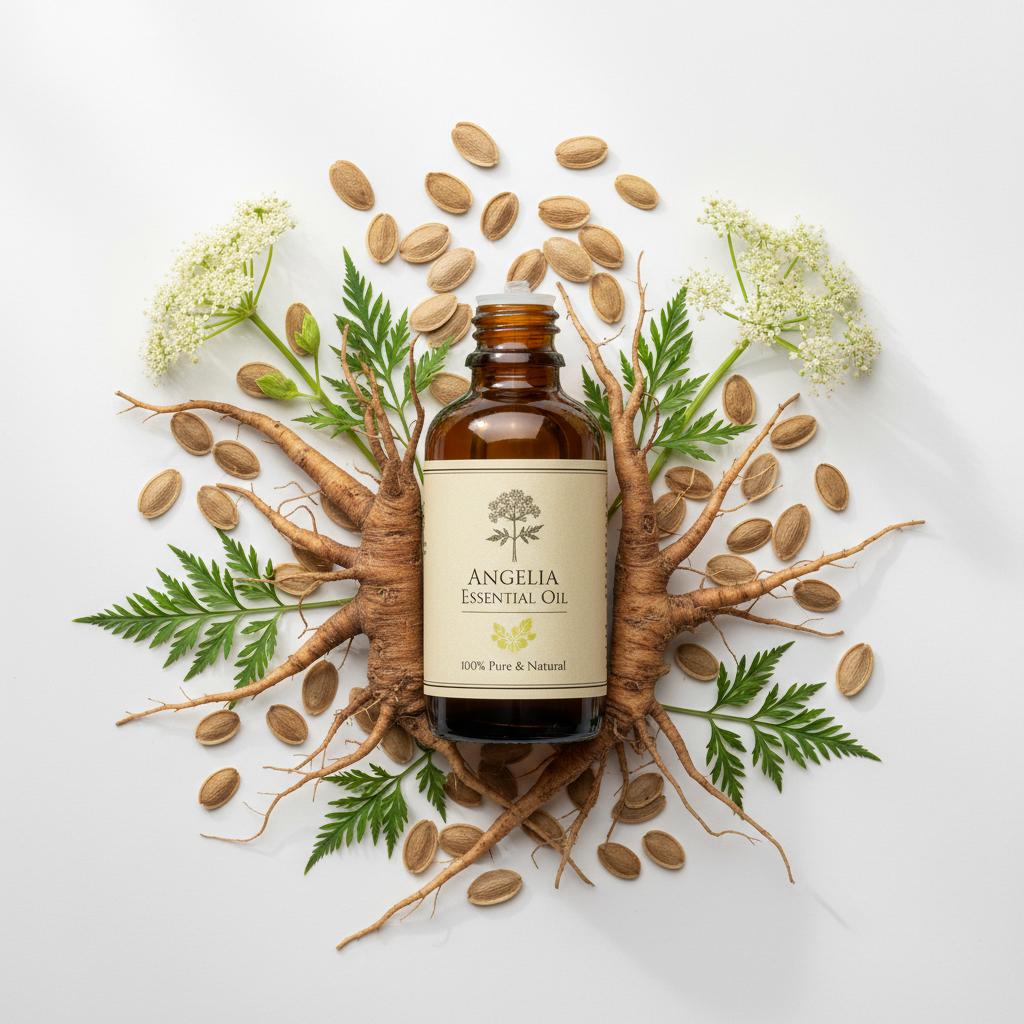
Angelica Essential Oil
Angelica archangelica
Plant Source
Roots and seeds
Scent Family
Earthy
"Discover the benefits of Angelica Essential Oil, its origins, therapeutic properties, and versatile applications in aromatherapy and holistic health practices."
Introduction to Angelica Essential Oil
Angelica Essential Oil, extracted from the roots and seeds of the Angelica archangelica plant, is a remarkable oil known for its diverse therapeutic properties. This cherished herb belongs to the Apiaceae family and has historical ties to European herbal medicine, where it has been valued for centuries not just for culinary applications but also for its potent medicinal benefits.
Origin and Extraction Method
The essential oil is obtained through steam distillation, which is crucial for preserving its full therapeutic properties and intricate aroma. The process begins with harvesting the roots and seeds, ensuring that the oil maintains its vibrant qualities. The resulting oil exhibits a rich earthy scent with sweet and herbaceous undertones, making it a popular choice for aromatherapy and natural health products.
Botanical Information
The Angelica archangelica plant is a robust perennial herb that can reach heights of up to 2 meters. It features large, lobed leaves and produces clusters of small white flowers in umbrella-like formations during late summer, typically from July to September. Flourishing in moist, rich soils, Angelica commonly grows in shaded meadows across Europe, creating an ideal backdrop for its growth.
Therapeutic Properties and Benefits
Angelica Essential Oil is renowned for its extensive range of therapeutic properties:
- Emotional Well-Being: The oil is believed to enhance emotional stability, reduce anxiety, and foster relaxation, making it an excellent companion for meditation and stress relief.
- Respiratory Support: Its natural compounds may help to alleviate respiratory discomfort, promoting easier breathing.
- Digestive Aid: Traditionally, Angelica has been credited with aiding digestion and supporting detoxification processes.
- Circulation Improvement: Angelica Essential Oil is thought to stimulate blood circulation, enhancing overall vitality and health.
Scientific research has identified various components in Angelica Essential Oil, such as terpenes and phenolic compounds, which may contribute to its mood-lifting properties and adaptogenic qualities that help the body better manage stress.
Historical and Traditional Uses
Throughout the ages, Angelica has played an essential role in herbal medicine across many cultures. It was often used as a remedy for digestive problems and was believed to carry protective qualities against negative energies and illnesses. In culinary applications, Angelica's roots have been infused into spirits and liquors, notably gin, showcasing its versatility beyond health.
Scientific Facts and Research
Recent studies have examined the antibacterial and anti-inflammatory properties of Angelica Essential Oil. Some research indicates its potential as a natural adaptogen, suggesting that compounds within the oil may help lower stress and bolster mental resilience. Further exploration into its health benefits continues to reveal new exciting potentials in holistic health practices.
Aroma Profile and Characteristics
The aroma of Angelica Essential Oil is uniquely warm, woody, and subtly sweet, imparting a grounding quality that is especially valued in therapeutic environments. It stirs creativity and provides tranquility for individuals engaged in meditation or relaxation techniques, making it a prized component within essential oil blends.
Common Applications and Methods
The versatility of Angelica Essential Oil allows for various applications:
- Aromatherapy: Often used in diffusion to uplift mood and purify environments, it pairs well with oils like lavender and bergamot to amplify its calming effects.
- Topical Use: Diluted with a carrier oil, it can be applied to the skin to relieve muscle tension and soothe skin conditions.
- Massage Therapy: Combined with carrier oils for massage therapy, it aids in alleviating physical discomfort and promoting overall relaxation.
Interesting Facts and Trivia
- Culinary Applications: Angelica is used in Scandinavian cuisine, often being candied and included in desserts, showcasing its culinary versatility.
- Folklore Beliefs: In medieval Europe, it served as a protective herb, thought to ward off disease and serve against malevolent forces.
- Nature's Adaptogen: Classified as an adaptogen, Angelica promotes balance within the body, assisting it in adapting to stressors.
Conclusion
In summary, Angelica Essential Oil is more than just a fragrant botanical; it is a multifaceted tool for enhancing emotional and physical well-being. Its ability to promote relaxation, support digestion, and serve as an inspiration for creativity makes it an invaluable addition to any essential oil collection. Whether you seek stress relief, are looking to enrich your aromatherapy practice, or simply want to enjoy its beautiful scent, Angelica Essential Oil offers a plethora of benefits that cater to diverse needs.
Ask AI About Angelica Essential Oil
Get instant answers about this essential oil
Benefits & Uses
- Grounding: Helps to stabilize emotions and promote a sense of clarity.
- Stress relief: Supports emotional balance in times of stress, helping to calm the mind.
- Inspiration: Can enhance creativity and motivation, aiding in overcoming mental blocks.
- Emotional protection: Acts as a shield against negative energies, promoting overall positivity.
- Balance: Encourages emotional stability, fostering resilience against life's challenges.
- Muscle relaxant: May help relieve tension in muscles and promote relaxation.
- Respiratory support: Aids in soothing respiratory discomfort, making breathing easier.
- Menstrual support: Can ease discomfort associated with menstruation and promote regular cycles.
- Circulation booster: Helps to stimulate blood flow and improve circulation overall.
- Skin health: Promotes healthy skin when used properly and can assist in resolving certain skin issues.
- Acne treatment: May help to reduce acne and blemishes due to its antimicrobial properties.
- Aging support: Can aid in reducing the appearance of fine lines and wrinkles.
- Wound healing: Promotes skin healing and recovery from minor cuts and abrasions.
- Hydration: Blended into skincare can provide moisture and nourishment for dry skin types.
- Natural air freshener: Use in diffusers to uplift and purify indoor air.
- Repellant: Acts as a natural insect repellent when diffused or applied topically with carrier oils.
- Cleaning agent: Added to homemade cleaners for its antimicrobial properties, enhancing sanitation.
How to Use
Diffuser
In a diffuser, use 3-5 drops for small rooms, 5-8 drops for medium rooms, and 8-12 drops for large rooms. Optimal duration for diffusion is 30-60 minutes per session, and this can be repeated 2-3 times daily. Morning sessions can enhance focus, while evening use may aid relaxation.
Topical
For topical application, adults should use a dilution of 2-3%, while children should use 0.5-1% and the elderly should use 1-2%. Blending with carrier oils such as jojoba, sweet almond, or coconut oil is recommended for massage across tension areas, allowing about 20-30 minutes for absorption.
Inhalation
For direct inhalation, place 1-2 drops on a tissue or cotton ball and gently inhale. For steam inhalation, add 2-3 drops of essential oil to hot water and inhale the steam for 5-10 minutes. Personal inhalers can also be used for on-the-go applications.
Safety & Precautions
Always perform a patch test prior to topical application. There are potential photosensitivity concerns; avoid direct sunlight for 12 hours post-application. Pregnant and nursing women should consult their healthcare provider before use. Be aware of potential interactions with medications, especially those affecting blood pressure. Store in a cool, dark place and use within 1-2 years for best quality.
Who should avoid:
- Pregnant women, especially during the first trimester.
- Individuals with a history of skin allergies or sensitivities.
- Those on blood pressure or anticoagulant medications.
Recommended Products

Understanding the aromatic layers of Angelica Essential Oil
Top Notes
Heart Notes
Base Notes
Scent Evolution
Top Notes: First impression, evaporate quickly (15-30 min)
Heart Notes: Main character, last 2-4 hours
Base Notes: Lasting foundation, linger for hours
Complementary essential oils that pair beautifully with Angelica Essential Oil
Agarwood Essential Oil
Aquilaria
✓balanced scent profile
Allspice Essential Oil
Pimenta dioica
✓enhanced aromatherapy benefits
Ammi Visnaga Essential Oil
Ammi visnaga
✓complementary therapeutic properties
Amyris Essential Oil
Amyris balsamifera
✓enhanced aromatherapy benefits
Angelica Root Essential Oil
Angelica archangelica
✓complementary therapeutic properties
Anise Essential Oil
Pimpinella anisum
✓complementary therapeutic properties
Blending Tips
- • Start with 2-3 oils for simple blends
- • Use 3-5 drops total per 10ml carrier oil
- • Let blends sit for 24-48 hours to marry
- • Test on a small skin area first
Calculating for: Angelica Essential Oil
Recommended: 2% | Max safe: 5%
29.57 ml
Your Recipe
0.59 ml
28.98 ml
💡 Dilution Tips
- • Always do a patch test before full application
- • Children and elderly need lower dilutions (1-2%)
- • Facial products should be gentle (0.5-1%)
- • 1 drop ≈ 0.05 ml (20 drops per ml)
- • Common carrier oils: fractionated coconut, jojoba, sweet almond
Related Recipes
Calming Essential Oil Pillow Mist Recipe for Relaxation
Discover this easy recipe for a soothing pillow mist that features lavender and bergamot for ultimate relaxation and better sleep.
Calming Lavender Linen Spray Recipe
A gentle, relaxing linen and room spray that promotes restful sleep and calm using lavender, chamomile, and cedarwood essential oils.
DIY Acne Calming Gel Spot Treatment Recipe for Clear Skin
Explore our DIY acne calming gel spot treatment recipe to soothe inflammation and fight breakouts using natural ingredients for healthier skin.
DIY Detoxifying Nail Soak Recipe with Essential Oils
Learn how to create a holistic detoxifying nail soak recipe that promotes healthy nails and cuticles while providing essential oils’ soothing benefits.
DIY Essential Oil Foaming Hand Soap Recipe
Craft your own moisturizing foaming hand soap using essential oils! This DIY recipe combines natural ingredients for clean, soft hands. Perfect for home use!
Delightful Sleep-Enhancing Pillow Sachets Recipe for Restful Nights
Discover how to create a calming sleep environment with this easy recipe for pillow sachets infused with soothing essential oils to improve your sleep quality.