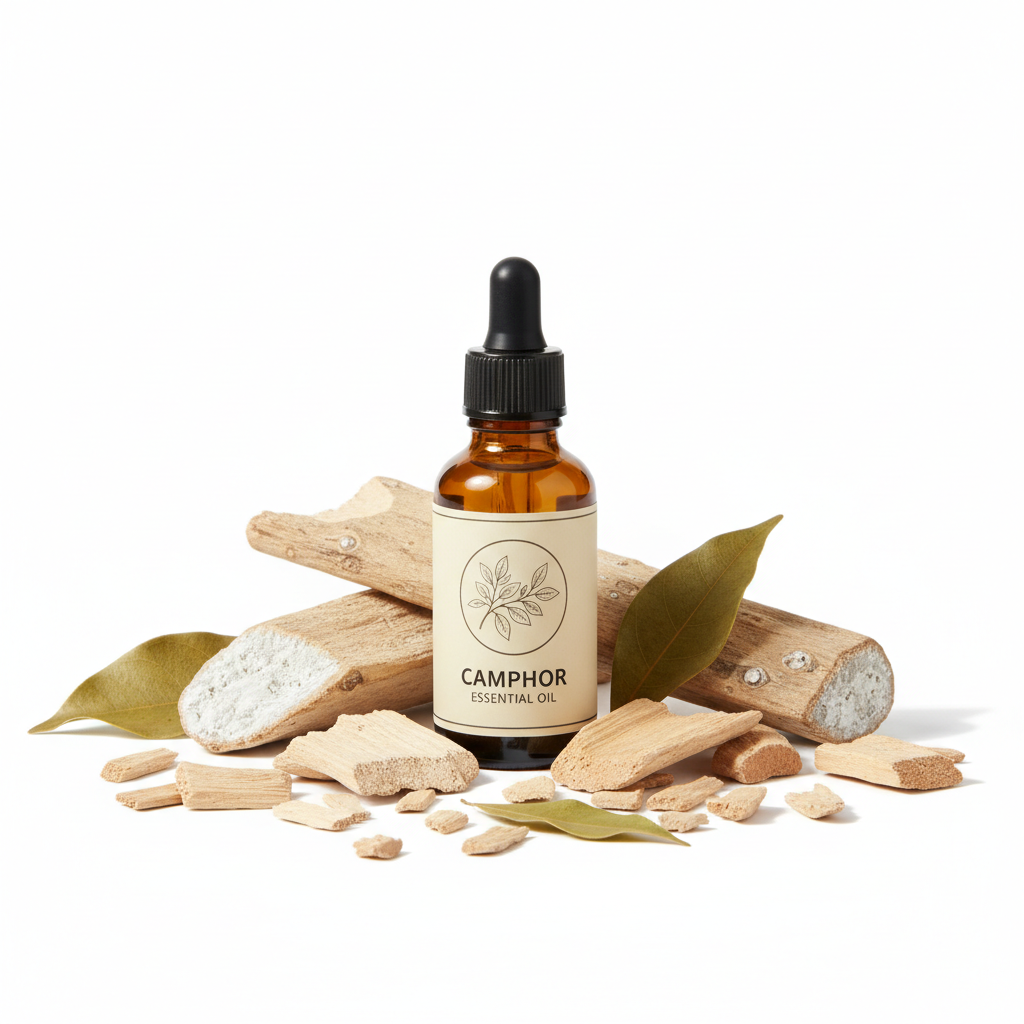
Camphor Essential Oil
Cinnamomum camphora
Plant Source
Wood
Scent Family
Herbal
"Explore camphor essential oil benefits, uses, history, and properties. Learn how this invigorating oil can enhance wellness and soothe ailments effectively."
Introduction to Camphor Essential Oil
Camphor essential oil is an aromatic oil extracted from the wood of the Cinnamomum camphora tree. This evergreen species is native to Asia, particularly in Taiwan and Japan, and has been valued for centuries, not only for its fragrance but for its numerous therapeutic properties. Typically achieved through steam distillation, the process of extracting camphor essential oil ensures that it retains its invigorating qualities, making it a popular choice in both holistic and modern medicine.
Botanical Information
Camphor is classified botanically in the Lauraceae family, the same family that includes bay laurel and cinnamon. The Cinnamomum camphora tree can grow up to 100 feet tall, characterized by its shiny green leaves and small white flowers. The camphor extracted from the tree trunk has a distinctive and potent aroma, often described as a penetrating, woody scent with hints of menthol.
Therapeutic Properties and Benefits
One of the most remarkable aspects of camphor essential oil is its diverse array of therapeutic properties. Some of the key benefits include:
- Respiratory Health: Camphor oil is well-known for its ability to support respiratory function. Inhaling its vapors can help clear congestion, making it a common ingredient in cough syrups and chest rubs.
- Pain Relief: When blended with carrier oils and applied to the skin, camphor acts as a natural analgesic, effectively relieving minor aches, sore muscles, and joint pain.
- Anti-inflammatory Action: Its anti-inflammatory properties make camphor oil beneficial for conditions like arthritis and muscle strains.
- Stress Relief: The calming effect of camphor can help alleviate stress and anxiety, promoting relaxation and a sense of tranquility.
Historical and Traditional Uses
Historically, camphor has been used in various cultures for medicinal purposes and rituals. In traditional Chinese medicine, it has been utilized for its capacity to ward off illnesses alongside its medicinal benefits. In Ayurveda, camphor is considered to balance the three doshas and is often recommended for its potential to increase vitality.
Scientific Research and Facts
Research on camphor essential oil has demonstrated its potential in a range of applications. Studies indicate its efficacy as an antimicrobial agent, which may help fight infections. Moreover, preliminary research suggests its effectiveness in improving circulation, making it a favored choice in massage therapy and sports recovery practices.
Aroma Profile and Characteristics
The distinct aroma of camphor essential oil is sharp and penetrating. When diffused, it creates an invigorating atmosphere that can energize any space. The scent is often associated with clarity and freshness, making it a popular choice for enhancing focus during study or work sessions.
Common Applications and Methods
Camphor essential oil can be applied in several ways:
- Aromatherapy: Used in diffusers to promote respiratory health and alleviate stress.
- Topical Application: When diluted with a carrier oil, it can be massaged into sore muscles and joints.
- Bath Additive: A few drops in a warm bath can provide a soothing experience.
- Incense and Candles: Creates a calming atmosphere, enhancing spatial energy during meditation or relaxation routines.
Interesting Facts and Trivia
- Insect Repellent: Camphor is often included in formulations aimed at repelling insects.
- Culinary Uses: In some cultures, small amounts of camphor are used in culinary dishes, though it should always be used cautiously.
- Preservation: Camphor has been used historically to preserve clothing and wood due to its fungicidal properties.
Conclusion
Overall, camphor essential oil stands out not only for its invigorating aroma but also for its broad spectrum of health benefits and traditional significance. Whether used in aromatherapy, massage, or traditional medicine, camphor continues to be a valuable addition to wellness practices, embodying a rich history that spans thousands of years. Its potent properties make it a staple not just for health enthusiasts but also for those seeking natural alternatives for a variety of ailments.
Ask AI About Camphor Essential Oil
Get instant answers about this essential oil
Benefits & Uses
- Calming: Promotes tranquility, alleviating stress and anxiety.
- Focus-enhancing: Sharpens mental clarity, aiding concentration and alertness.
- Sensation booster: Provides a refreshing sensation that can uplift mood.
- Supportive: Acts as a comforting presence during times of emotional distress.
- Energizing: Stimulates mental and physical energy, combating fatigue.
- Muscle relief: Used in massage oils for deep muscle relaxation.
- Respiratory support: Diffused or inhaled to clear breathing pathways.
- Pain reduction: Beneficial in liniments for minor pain and discomfort.
- Anti-itching: Useful in formulations for insect bites and skin irritations.
- Skin rejuvenation: Often included in topical blends for its purifying properties.
- Acne treatment: Helps combat oily skin and acne due to its antimicrobial properties.
- Soothe irritation: Can be diluted and applied to relieve minor skin irritations.
- Exfoliating scrubs: Often featured in natural scrubs for its invigorating qualities.
- Circulation booster: Included in massage oils targeting cellulite.
- Anti-aging formulations: Supports skin rejuvenation through improved circulation.
- Natural insect repellent: Can be added to homemade sprays to deter pests.
- Deodorizer: Acts as a refreshing scent when added to cleaning solutions.
- Mold deterrent: Effective in cleaning surfaces prone to mold growth when diluted.
- Air purifier: Can enhance air quality and freshness when diffused.
How to Use
Diffuser
For diffusing camphor essential oil, use 3-5 drops in a small room, 5-8 drops for a medium-sized room, and 8-12 drops for large areas. Diffuse for 30-60 minutes, 2-3 times daily, preferably in the morning or when needing focus.
Topical
For adults, dilute camphor oil to 2-3%, using a carrier oil like jojoba or sweet almond. For children, dilute to 0.5-1%. For elderly individuals, use 1-2%. Apply to problem areas with gentle massage; allow time for proper absorption.
Inhalation
For direct inhalation, place 1-2 drops on a tissue or inhaler, holding it close to the nose. For steam inhalation, add 2-3 drops of camphor oil to hot water and inhale the steam for 5-10 minutes. Alternatively, use a personal inhaler for on-the-go relief.
Safety & Precautions
Perform a patch test before full topical application. Avoid sun exposure for 12 hours after topical use due to potential photosensitivity. Consult a healthcare provider before use during pregnancy or nursing. Store in a cool, dark place. Shelf life typically varies from 3 to 5 years for essential oils.
Who should avoid:
- Pregnant or nursing women (consult healthcare provider).
- Individuals with epilepsy or history of seizures.
- Those with sensitive skin or allergic reactions to camphor.
- Children under the age of 2.
Recommended Products

Understanding the aromatic layers of Camphor Essential Oil
Top Notes
Heart Notes
Base Notes
Scent Evolution
Top Notes: First impression, evaporate quickly (15-30 min)
Heart Notes: Main character, last 2-4 hours
Base Notes: Lasting foundation, linger for hours
Complementary essential oils that pair beautifully with Camphor Essential Oil
Abyssinian Carrier Oil
Crambe abyssinica
✓balanced scent profile
Ajowan Seed Essential Oil
Trachyspermum ammi
✓similar chemical compositions
Allspice Essential Oil
Pimenta dioica
✓similar chemical compositions
Ammi Visnaga Essential Oil
Ammi visnaga
✓complementary therapeutic properties
Amyris Essential Oil
Amyris balsamifera
✓enhanced aromatherapy benefits
Angelica Essential Oil
Angelica archangelica
✓similar chemical compositions
Blending Tips
- • Start with 2-3 oils for simple blends
- • Use 3-5 drops total per 10ml carrier oil
- • Let blends sit for 24-48 hours to marry
- • Test on a small skin area first
Calculating for: Camphor Essential Oil
Recommended: 2% | Max safe: 5%
29.57 ml
Your Recipe
0.59 ml
28.98 ml
💡 Dilution Tips
- • Always do a patch test before full application
- • Children and elderly need lower dilutions (1-2%)
- • Facial products should be gentle (0.5-1%)
- • 1 drop ≈ 0.05 ml (20 drops per ml)
- • Common carrier oils: fractionated coconut, jojoba, sweet almond
Related Recipes
Aromatherapy Recipe: Under-Bed Storage Drawer Bombs
Discover this simple recipe for Under-Bed Storage Drawer Aroma Bombs, perfect for freshening up your space with delightful scents!

Calming Essential Oil Pillow Mist Recipe for Relaxation
Discover this easy recipe for a soothing pillow mist that features lavender and bergamot for ultimate relaxation and better sleep.

DIY Acne Calming Gel Spot Treatment Recipe for Clear Skin
Explore our DIY acne calming gel spot treatment recipe to soothe inflammation and fight breakouts using natural ingredients for healthier skin.
DIY Candle Making Fragrance Blend Recipe for Aromatic Bliss
Discover how to create a delightful essential oil blend recipe tailored for your candle making needs, enhancing your home with captivating scents.

DIY Essential Oil Foaming Hand Soap Recipe
Craft your own moisturizing foaming hand soap using essential oils! This DIY recipe combines natural ingredients for clean, soft hands. Perfect for home use!

DIY Essential Oil Inhaler Recipe for Focus
Boost your mental clarity and energy with this DIY essential oil inhaler recipe! Learn how to craft your invigorating inhalers at home easily.