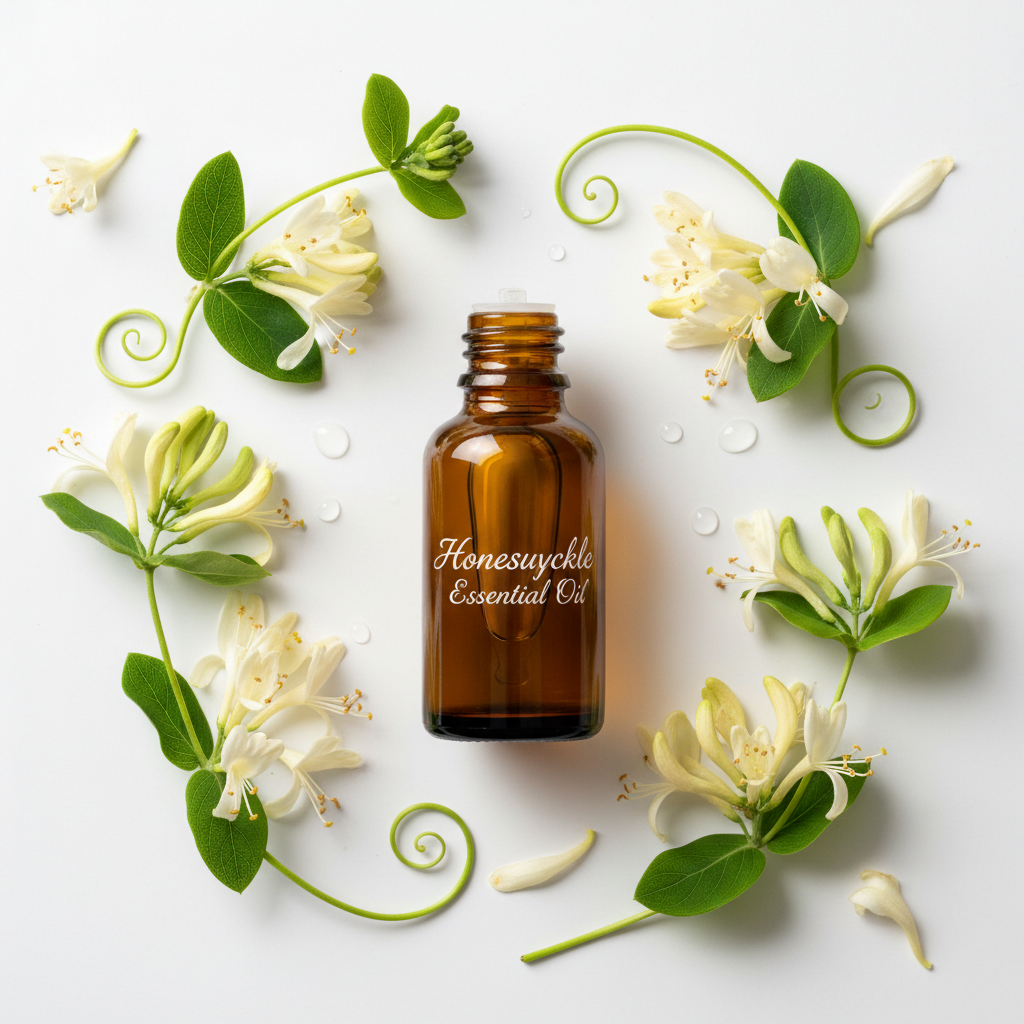
Honeysuckle Essential Oil
Lonicera caprifolium
Plant Source
flowers
Scent Family
Floral
"Discover the enchanting world of Honeysuckle Essential Oil, known for soothing properties, aromatic sweetness, and diverse applications in wellness."
Honeysuckle Essential Oil: Benefits, Uses, and Properties
Honeysuckle Essential Oil, derived from the delicate blossoms of Lonicera caprifolium (also known as the Common Honeysuckle), is gaining popularity in both aromatherapy and holistic practices. This enchanting oil is cherished not only for its sweet, floral aroma but also for its vast therapeutic benefits, which make it a valuable addition to any essential oil collection.
Origin and Extraction Method
Honeysuckle Essential Oil is primarily extracted through the steam distillation process. This method carefully captures the fragrant essence of the flowers, ensuring that the oil retains its potent properties. Lonicera caprifolium is native to Europe but has spread to various regions, making it widely accessible. The blossoms are typically harvested during the peak blooming period when they are most fragrant and potent.
Botanical Information
The Honeysuckle plant is characterized by climbing vines and clusters of tubular flowers that range in color from white to yellow and sometimes orange. The plant can grow in various environments, thriving in woodlands, gardens, and even as ground cover. Botanically, the species belongs to the Caprifoliaceae family, making it part of a larger group of flowering plants known for their aromatic qualities.
Therapeutic Properties and Benefits
Honeysuckle Essential Oil is esteemed for its therapeutic properties, which include:
- Mood Enhancement: The sweet aroma of honeysuckle is known to uplift spirits and help alleviate feelings of sadness or stress. It's often used in aromatherapy blends designed to promote emotional well-being.
- Calming Effects: Its soothing properties can aid in reducing anxiety, making it a popular choice for meditation practices. It encourages a grounding sensation, which helps individuals feel safe and secure.
- Respiratory Support: This essential oil can assist in soothing throat irritation and promoting clear breathing. It’s often included in blends aimed at easing respiratory discomfort.
- Digestive Aid: When diluted and applied topically, honeysuckle oil may ease digestive discomfort, potentially providing relief from symptoms of indigestion.
- Muscle Relaxation: The oil is beneficial in massages where it can be used to alleviate muscle tension and soreness, promoting overall relaxation.
Historical and Traditional Uses
Historically, honeysuckle has been revered in various cultures. In traditional Chinese medicine, it has been used for centuries for its anti-inflammatory and detoxifying effects. Native American tribes also valued honeysuckle for its potential healing properties, using it in poultices and teas. Its long history as a natural remedy underscores its valued place in wellness practices.
Scientific Facts and Research
Although more research is needed to fully understand its therapeutic potential, preliminary studies suggest that honeysuckle extracts exhibit antioxidant and anti-inflammatory properties. Some studies point towards the presence of beneficial compounds that may support skin health and overall wellness.
Aroma Profile and Characteristics
Honeysuckle Essential Oil boasts a sweet, floral, and honey-like aroma. This delightful scent is refreshing and uplifting, making it an ideal ingredient in perfumes, candles, and personal care products. Its fragrance can fill a room with warmth, evoking feelings of happiness and nostalgia.
Common Applications and Methods
Honeysuckle Essential Oil can be used in various ways, including:
- Diffusion: Add a few drops to a diffuser to fill your space with its soothing aroma.
- Topical Use: When diluted with a carrier oil, it can be massaged into the skin to relieve tension, improve circulation, or hydrate the skin.
- Bath Additive: Adding a few drops to bathwater can enhance relaxation and provide a soothing experience.
- Inhalation: Inhale directly from the bottle or a cotton ball for immediate uplifting effects.
Interesting Facts and Trivia
- Honeysuckle is often associated with love and devotion in various cultures, making it a popular wedding flower.
- The sweet nectar of honeysuckle flowers attracts hummingbirds and butterflies, highlighting its ecological importance.
- Honeysuckle is sometimes used in culinary applications, with flower syrups being a unique addition to beverages or desserts.
In conclusion, Honeysuckle Essential Oil is not just a fragrant delight; it offers a myriad of benefits ranging from emotional support to physical health improvement. Whether used in aromatherapy, personal care, or holistic health practices, it’s a versatile and valuable essential oil that deserves a place in your wellness regimen.
Ask AI About Honeysuckle Essential Oil
Get instant answers about this essential oil
Benefits & Uses
- Acts as a natural mood enhancer, helping to uplift spirits during times of stress.
- Promotes emotional grounding by calming the mind, making it easier to manage anxious thoughts.
- Encourages a sense of safety and tranquility in stressful environments, ideal for meditation practices.
- Can enhance feelings of joy and contentment, contributing to an overall sense of well-being.
- Useful for easing emotional burdens or heartache, fostering emotional healing.
- Aids in respiratory health by soothing throat irritation and supporting clear breathing.
- Supports digestion by potentially easing discomfort associated with indigestion when used properly.
- Can alleviate muscle tension and soreness through topical application, promoting relaxation.
- May promote circulation when used in massage, enhancing overall physical vitality.
- Beneficial for supporting skin hydration and repair in topical formulations.
- Ideal for use in anti-aging formulations due to its antioxidant properties.
- Can be added to creams and lotions for soothing dry skin.
- Useful in soothing inflamed or irritated skin, especially in natural remedies.
- Acts as a natural perfume ingredient in floral blends, enhancing fragrance while nourishing the skin.
- Can be added to homemade cleaning products for its pleasant scent and antibacterial properties.
- Effective in creating serene atmospheres for relaxation spaces such as bedrooms or meditation areas.
- Used as a natural air freshener to uplift moods and refresh indoor environments.
- Can be incorporated into potpourri for a delightful aromatic experience.
How to Use
Diffuser
For a small room, add 3-5 drops to your diffuser; for a medium room, use 5-8 drops; and for a large room, add 8-12 drops. Diffuse for 30-60 minute sessions and repeat 2-3 times daily, particularly in the evening for calming effects.
Topical
For adults, use a dilution of 2-3% (12-18 drops of essential oil per 1 ounce of carrier oil). For children, dilute to 0.5-1% (3-6 drops per 1 oz). For the elderly, dilute to 1-2% (6-12 drops per 1 oz). Apply on pulse points or areas of concern using gentle massage techniques. Allow 20-30 minutes for absorption before covering with clothing.
Inhalation
For direct inhalation, place 1-2 drops on a tissue or cotton ball and inhale. For steam inhalation, add 2-3 drops to hot water, and inhale the steam for 5-10 minutes. Personal inhalers can also be prepared for on-the-go use with a few drops of the oil.
Safety & Precautions
Always perform a patch test before topical application to check for skin sensitivities. Avoid sun exposure for 12 hours if applied topically due to potential photosensitivity. Safety during pregnancy and nursing is not well documented; consult a healthcare provider. Store in a cool, dark place, away from children. Essential oils generally have a shelf life of 1-3 years.
Who should avoid:
- Individuals with sensitivities to floral fragrances.
- Those undergoing chemotherapy or with compromised immune systems should consult a doctor before use.
- Individuals with known allergies to honeysuckle or similar plants.
Recommended Products

Understanding the aromatic layers of Honeysuckle Essential Oil
Top Notes
Heart Notes
Base Notes
Scent Evolution
Top Notes: First impression, evaporate quickly (15-30 min)
Heart Notes: Main character, last 2-4 hours
Base Notes: Lasting foundation, linger for hours
Complementary essential oils that pair beautifully with Honeysuckle Essential Oil
Abyssinian Carrier Oil
Crambe abyssinica
✓similar chemical compositions
Agarwood Essential Oil
Aquilaria
✓enhanced aromatherapy benefits
Ajowan Seed Essential Oil
Trachyspermum ammi
✓traditional pairing in aromatherapy
Allspice Essential Oil
Pimenta dioica
✓enhanced aromatherapy benefits
Ammi Visnaga Essential Oil
Ammi visnaga
✓traditional pairing in aromatherapy
Amyris Essential Oil
Amyris balsamifera
✓traditional pairing in aromatherapy
Blending Tips
- • Start with 2-3 oils for simple blends
- • Use 3-5 drops total per 10ml carrier oil
- • Let blends sit for 24-48 hours to marry
- • Test on a small skin area first
Calculating for: Honeysuckle Essential Oil
Recommended: 2% | Max safe: 5%
29.57 ml
Your Recipe
0.59 ml
28.98 ml
💡 Dilution Tips
- • Always do a patch test before full application
- • Children and elderly need lower dilutions (1-2%)
- • Facial products should be gentle (0.5-1%)
- • 1 drop ≈ 0.05 ml (20 drops per ml)
- • Common carrier oils: fractionated coconut, jojoba, sweet almond
Related Recipes
Aromatherapy Recipe: Under-Bed Storage Drawer Bombs
Discover this simple recipe for Under-Bed Storage Drawer Aroma Bombs, perfect for freshening up your space with delightful scents!

Calming Essential Oil Pillow Mist Recipe for Relaxation
Discover this easy recipe for a soothing pillow mist that features lavender and bergamot for ultimate relaxation and better sleep.

Calming Lavender Linen Spray Recipe
A gentle, relaxing linen and room spray that promotes restful sleep and calm using lavender, chamomile, and cedarwood essential oils.

DIY Acne Calming Gel Spot Treatment Recipe for Clear Skin
Explore our DIY acne calming gel spot treatment recipe to soothe inflammation and fight breakouts using natural ingredients for healthier skin.
DIY Candle Making Fragrance Blend Recipe for Aromatic Bliss
Discover how to create a delightful essential oil blend recipe tailored for your candle making needs, enhancing your home with captivating scents.
DIY Essential Oil Allergy Relief Inhaler Recipe
Discover this essential oil allergy relief recipe to make effective inhalers at home for natural symptom relief from allergies.