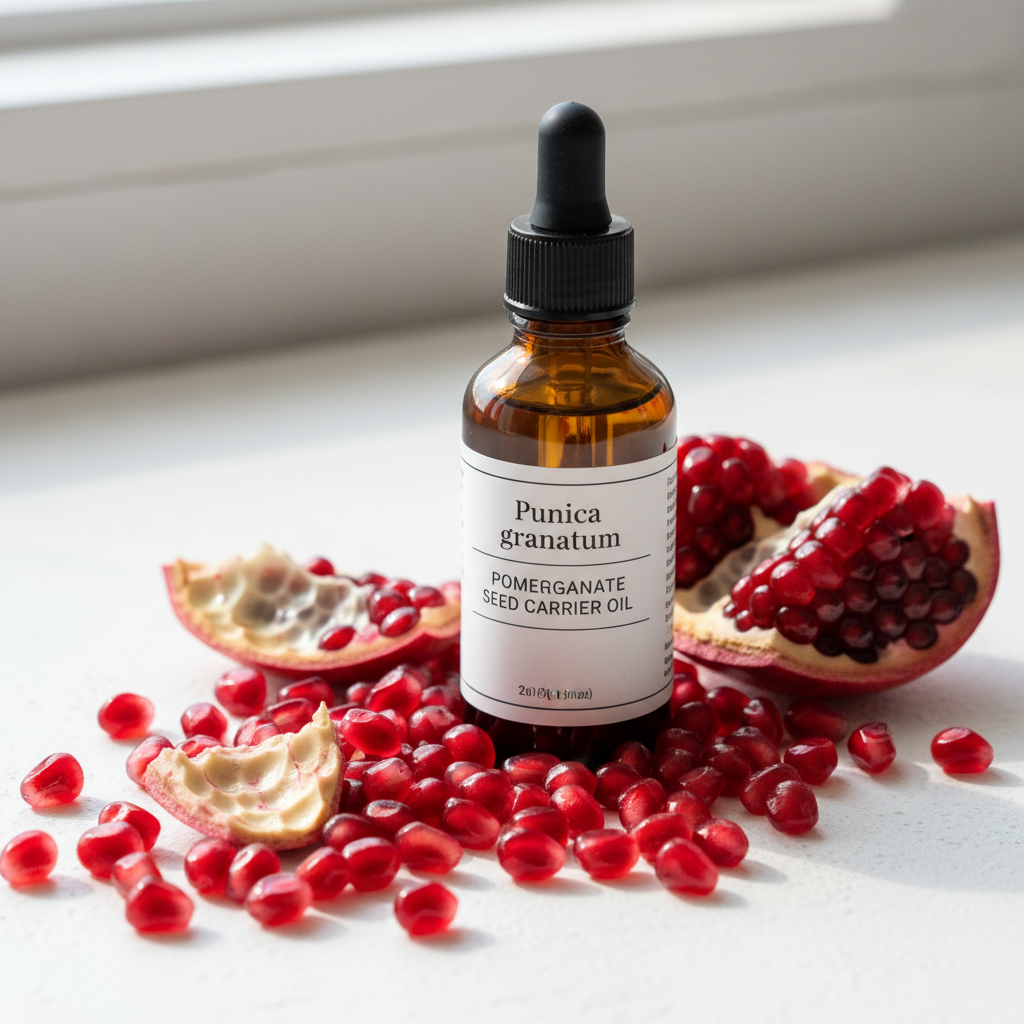
Pomegranate Seed Carrier Oil
Punica granatum
Plant Source
Seeds
Scent Family
Fruity, Earthy
"Explore the benefits and uses of Pomegranate Seed Oil. Discover its rich history, extraction methods, and therapeutic properties for wellness and beauty."
Pomegranate Seed Oil: An In-Depth Guide
Origin and Extraction Method
Pomegranate Seed Oil is derived from the seeds (arils) of the fruit of the Punica granatum tree, commonly known as the pomegranate. This ancient fruit has been celebrated across cultures for millennia, both for its culinary uses and its health benefits. The oil is obtained through a cold-press extraction method, which preserves the nutrients and bioactive compounds found in the seeds. This careful extraction process yields a vibrant, dark red oil that is rich in antioxidants and essential fatty acids.
Botanical Information
Punica granatum, the botanical name for the pomegranate, is a small deciduous tree that typically grows between 5 to 10 meters in height. It produces vibrant red flowers that give way to the iconic fruit, which contains bright red juicy seeds. The pomegranate is native to the Mediterranean region, and its cultivation dates back thousands of years.
Therapeutic Properties and Benefits
- Antioxidant Properties: Pomegranate Seed Oil is renowned for its high content of punicic acid, a potent antioxidant that helps combat free radicals in the body, promoting overall health and slowing signs of aging.
- Skin Benefits: Rich in vitamins C and E, this oil aids in skin repair, reduces inflammation, and enhances skin elasticity. It's particularly beneficial for dry or sensitive skin, helping to retain moisture and improve texture.
- Anti-Aging Properties: The oil's ability to rejuvenate skin makes it a popular choice in anti-aging formulations, as it appears to minimize fine lines and wrinkles.
- Hair Nourishment: Not only is it beneficial for the skin, but Pomegranate Seed Oil is also effective for hair health. It can restore shine, soften dry hair, and even promote scalp health.
- Digestive Support: When consumed appropriately, this oil may support healthy digestion and overall gut health.
Historical and Traditional Uses
Pomegranate has been a symbol of health and fertility since ancient times. This oil has been commonly used in traditional medicine, particularly in Ayurvedic practices, where it has been used to treat various ailments. In Mediterranean cultures, the oil has been regarded as a skin tonic and is often included in cosmetic formulations to enhance beauty.
Scientific Facts and Research
Recent studies highlight the efficacy of Pomegranate Seed Oil in promoting skin health due to its anti-inflammatory and antioxidant properties. Research has also indicated potential benefits in supporting cardiovascular health and hormonal balance. The oil’s unique composition, rich in omega-5 fatty acids, has sparked interest in its application within the health and wellness industry.
Aroma Profile and Characteristics
Pomegranate Seed Oil has a subtle, fruity aroma that is mildly sweet and earthy, making it an appealing addition to skincare formulations and aromatherapy practices. This comforting scent can evoke a sense of relaxation and enjoyment when used in topical applications or diffused in the air.
Common Applications and Methods
- Skincare: Pomegranate Seed Oil can be applied directly to the skin or incorporated into creams and lotions. It is ideal for use in facial serums, moisturizers, and sun protection products.
- Haircare: Use it as a hair serum or mix it with shampoos and conditioners for added nourishment and shine.
- Aromatherapy: Blending it with other essential oils can create a nurturing environment, enhancing mood and promoting emotional well-being.
- Culinary Uses: In moderation, Pomegranate Seed Oil can be used in salad dressings or drizzled over dishes, providing both flavor and health benefits.
Interesting Facts and Trivia
- Pomegranates have been called “the fruit of the gods” in various cultures due to their rich symbolism in mythology and literature.
- The oil is known to have a unique combination of omega-5 fatty acids, which is rare among seed oils.
- Pomegranate is often featured in beauty products aimed at anti-aging due to its ability to regenerate skin cells.
Conclusion
Pomegranate Seed Oil is a remarkable carrier oil with a wide range of therapeutic and cosmetic benefits. Its unique properties make it a valuable ingredient in skincare, haircare, and even culinary applications. As more individuals seek natural and holistic options for health and beauty, this ancient oil continues to stand out as a powerful ally in maintaining wellness and vitality.
Ask AI About Pomegranate Seed Carrier Oil
Get instant answers about this essential oil
Benefits & Uses
- Calming: Helps reduce stress and anxiety, fostering a sense of tranquility.
- Uplifting: Can enhance mood and promote feelings of happiness and vitality.
- Grounding: Provides a sense of connection and stability, beneficial during emotional upheaval.
- Skin Repair: Aids in healing minor wounds and reducing the appearance of scars.
- Hair Nourishment: Restores shine and softens dry, damaged hair.
- Digestive Aid: May support healthy digestion when used internally under guidance.
- Hydration: Ideal for facial oils, moisturizing creams, and serums.
- Anti-aging: Effective in products aimed at reducing wrinkles and improving skin texture.
- Brightening: Enhances complexion and reduces dark spots when applied topically.
- Balancing: Suitable for all skin types, helps to balance oily skin.
- Natural moisturizer for wooden furniture and surfaces.
- Used in home-made skincare products like balms and lotions.
- Can be blended into homemade cleaning products for a natural fresh scent.
How to Use
Diffuser
For a small room, add 3-5 drops of pomegranate seed oil to your diffuser; for a medium room, use 5-8 drops, and for a large room, 8-12 drops. Run the diffuser for 30-60 minutes at a time, up to 2-3 times daily, best during midday or relaxation hours.
Topical
For adults, dilute 2-3% (12-18 drops in 1 oz carrier oil). For children, keep to 0.5-1% (3-6 drops). Elderly individuals should use 1-2% (6-12 drops). Recommended applications include massages on areas of discomfort and dry patches, allowing for at least 30 minutes absorption time.
Inhalation
Direct inhalation: Apply 1-2 drops on a tissue or in your palms and breathe deeply. For steam inhalation, add 2-3 drops to hot water and inhale the steam for 5-10 minutes. Personal inhalers can also be used for on-the-go aromatherapy.
Safety & Precautions
Perform a patch test before topical application to check for allergic reactions. Avoid sun exposure for 12 hours after topical use due to the risk of photosensitivity. Pregnant or nursing women should consult a healthcare provider before use.
Who should avoid:
- Pregnant women, particularly in the first trimester
- Individuals with sensitive skin or allergies to pomegranate
- Those on hypertension medications should consult a doctor prior to use.
Recommended Products

Understanding the aromatic layers of Pomegranate Seed Carrier Oil
Top Notes
Heart Notes
Base Notes
Scent Evolution
Top Notes: First impression, evaporate quickly (15-30 min)
Heart Notes: Main character, last 2-4 hours
Base Notes: Lasting foundation, linger for hours
Complementary essential oils that pair beautifully with Pomegranate Seed Carrier Oil
Abyssinian Carrier Oil
Crambe abyssinica
✓balanced scent profile
Ajowan Seed Essential Oil
Trachyspermum ammi
✓balanced scent profile
Allspice Essential Oil
Pimenta dioica
✓traditional pairing in aromatherapy
Ammi Visnaga Essential Oil
Ammi visnaga
✓complementary therapeutic properties
Amyris Essential Oil
Amyris balsamifera
✓balanced scent profile
Angelica Essential Oil
Angelica archangelica
✓balanced scent profile
Blending Tips
- • Start with 2-3 oils for simple blends
- • Use 3-5 drops total per 10ml carrier oil
- • Let blends sit for 24-48 hours to marry
- • Test on a small skin area first
Calculating for: Pomegranate Seed Carrier Oil
Recommended: 2% | Max safe: 5%
29.57 ml
Your Recipe
0.59 ml
28.98 ml
💡 Dilution Tips
- • Always do a patch test before full application
- • Children and elderly need lower dilutions (1-2%)
- • Facial products should be gentle (0.5-1%)
- • 1 drop ≈ 0.05 ml (20 drops per ml)
- • Common carrier oils: fractionated coconut, jojoba, sweet almond
Related Recipes

Calming Lavender Linen Spray Recipe
A gentle, relaxing linen and room spray that promotes restful sleep and calm using lavender, chamomile, and cedarwood essential oils.

DIY Acne Calming Gel Spot Treatment Recipe for Clear Skin
Explore our DIY acne calming gel spot treatment recipe to soothe inflammation and fight breakouts using natural ingredients for healthier skin.
DIY Essential Oil Body Lotion Recipe
Create your own nourishing body lotion with essential oils that hydrates, softens and rejuvenates your skin, leaving it smooth and supple all day long.
DIY Essential Oil Equipment Cleaner Recipe for Pristine Tools
This DIY essential oil equipment cleaner recipe ensures tools are residue-free, enhancing the quality of your blends while being eco-friendly and effective.
DIY Essential Oil Foaming Hand Soap Recipe
Make your own essential oil foaming hand soap! Quick, easy, and eco-friendly. Perfect for sensitive skin and free from harsh chemicals. Try it today!

DIY Essential Oil Foaming Hand Soap Recipe
Craft your own moisturizing foaming hand soap using essential oils! This DIY recipe combines natural ingredients for clean, soft hands. Perfect for home use!