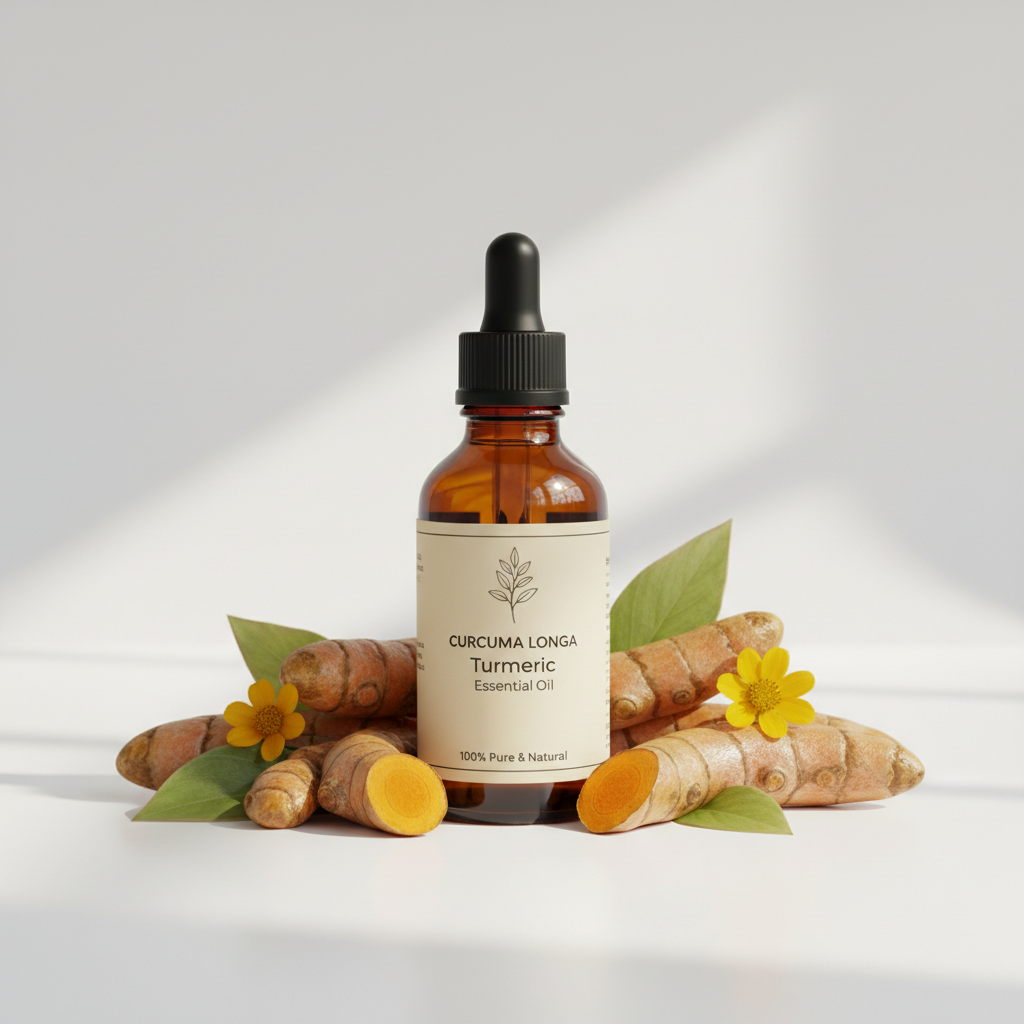
Turmeric Essential Oil
Curcuma longa
Plant Source
Rhizomes
Scent Family
Earthy
"Explore turmeric essential oil's origins, benefits, and uses. Discover how it enhances wellness with its therapeutic properties and delightful aroma."
Turmeric essential oil, extracted from the rhizomes of the Curcuma longa plant, has gained immense popularity in recent years, not just for its vibrant yellow color, but for its myriad of therapeutic benefits. This aromatic oil is predominantly obtained through steam distillation, a method that preserves its potential health properties while enhancing its fragrance.
Botanical Information
The Curcuma longa plant, native to tropical South Asia, particularly India, has a long history of use in traditional medicine systems. Turmeric is a perennial herb with a bright yellow-orange rhizome, which is the root from which the essential oil is extracted. Turmeric's active component, curcumin, is celebrated for its anti-inflammatory and antioxidant properties, making it a key player in various health and wellness applications.
Therapeutic Properties and Benefits
Turmeric essential oil is touted for its numerous health benefits, including:
- Anti-inflammatory: The oil is well-known for relieving inflammation, making it beneficial for conditions like arthritis and muscle soreness.
- Antioxidant: Its powerful antioxidants help combat free radicals, reducing oxidative stress and promoting overall health.
- Mood Enhancer: The uplifting aroma positively influences mood, aiding in alleviating feelings of sadness or anxiety.
- Stress Relief: It has a soothing effect, promoting calmness and reducing anxiety levels, making it a popular choice for aromatherapy.
- Mental Clarity: Many users find that turmeric oil helps support focus and cognitive function, particularly during high-stress tasks.
- Grounding Properties: This oil is said to provide emotional stability, creating a tranquil mental environment conducive to self-acceptance and emotional balancing.
- Circulation Booster: The oil's properties may enhance blood circulation, promoting vitality and energy.
- Digestive Support: By easing discomfort and bloating, turmeric essential oil supports healthy digestion processes.
- Skin Health: It has antiseptic qualities and can assist in healing minor cuts, irritations, and other skin issues.
Historical and Traditional Uses
In Ayurveda, turmeric has been revered for centuries not only as a spice but as a healing herb. Traditionally, it has been used to treat a variety of ailments, from skin conditions to digestive disorders. In many cultures, turmeric is incorporated into rituals and traditional practices, reflecting its significance in heritage and health.
Scientific Research
Scientific studies have explored the myriad benefits of turmeric essential oil, particularly focusing on its active components. Research has validated some of its traditional uses, demonstrating its anti-inflammatory and antioxidant capabilities. This aligns with many modern trends that advocate for natural remedies in health and wellness regimens.
Aroma Profile and Characteristics
The aroma of turmeric essential oil is warm, spicy, and slightly woody, making it an excellent addition to diffusers and blends in aromatherapy. Its distinct fragrance is not only uplifting but can also stimulate the senses, enhancing focus and mental clarity during meditation or yoga.
Common Applications and Methods
Turmeric essential oil can be utilized in various ways:
- Aromatherapy: Add a few drops to a diffuser to enjoy its calming aroma.
- Massage: Dilute with a carrier oil for topical applications to relieve muscle aches and promote relaxation.
- Skincare: Incorporate into skin care products for its healing properties, or mix with a carrier oil for direct skin application.
- Wellness Blends: Combine with other essential oils like lavender or frankincense for enhanced therapeutic effects.
Interesting Facts and Trivia
- Turmeric is often referred to as "the golden spice of life" due to its vibrant hue and vast medicinal properties.
- The use of turmeric dates back over 4,000 years, showcasing its long-standing presence in various cultures.
- Its pigment has been used as a dye in fabrics, demonstrating its versatility beyond just flavor and health benefits.
In conclusion, turmeric essential oil stands out with its rich aromas and diverse health benefits. As a central component in both traditional medicine and contemporary holistic practices, it offers an array of possibilities for enhancing physical wellness and emotional well-being. Whether you're looking to boost your mood, promote skin health or simply enjoy its fragrant presence, turmeric essential oil is a valuable addition to any essential oil collection.
Ask AI About Turmeric Essential Oil
Get instant answers about this essential oil
Benefits & Uses
- Mood enhancer: Positively influences mood and reduces feelings of sadness.
- Stress relief: Soothes anxiety and stress, promoting a sense of calm.
- Mental clarity: Supports focus and cognitive function during stressful tasks.
- Grounding: Provides emotional stability, fostering a tranquil mental state.
- Self-acceptance: Encourages positive self-image and acceptance.
- Soothes muscle aches: Helps relax muscles and alleviate aches post-exercise.
- Boosts circulation: Enhances blood flow, promoting overall vitality.
- Supports joint health: Helps maintain joint flexibility and mobility.
- Enhances skin function: Aids in healing minor cuts and irritations.
- Promotes healthy digestion: Eases digestive discomfort and bloating.
- Brightening complexion: Helps enhance skin radiance and even out skin tone.
- Acne treatment: Exhibits antibacterial properties that can help reduce acne outbreaks.
- Anti-aging: Aids in minimizing wrinkles and promoting youthful skin appearance.
- Heals minor wounds: Accelerates healing of small cuts and scrapes.
- Natural disinfectant: Can be used to purify and clean surfaces.
- Deodorizer: Neutralizes unpleasant odors in home environments.
- Insect repellent: Acts as a natural deterrent to insects.
- Air freshener: Provides a refreshing scent when diffused.
How to Use
Diffuser
For small rooms, use 3-5 drops; for medium rooms, 5-8 drops; and for large rooms, 8-12 drops. Optimal diffusion duration is 30-60 minutes per session, 2-3 times a day, preferably in the morning or during stressful tasks.
Topical
For adults, dilute turmeric oil at 2-3% (approx. 12-18 drops per ounce of carrier oil); for children, use 0.5-1% (3-5 drops per ounce); for elderly, 1-2% (6-10 drops per ounce). Recommended carrier oils include jojoba or coconut. Massage gently into skin for optimal absorption.
Inhalation
For direct inhalation, place 1-2 drops on a tissue or in your cupped hands and inhale deeply. For steam inhalation, add 2-3 drops to a bowl of hot water and inhale the steam for 5-10 minutes. To use a personal inhaler, add 10-15 drops of turmeric oil to the inhaler wick.
Safety & Precautions
Perform a patch test before using topically. Turmeric oil may cause photosensitivity; avoid direct sunlight for 12 hours after topical application. Pregnant women and nursing mothers should consult a healthcare provider before use. Store in a cool, dark place and ensure proper closure to maintain shelf life of 1-3 years.
Who should avoid:
- Pregnant women during the first trimester.
- Individuals with gallbladder disease.
- Those with hypersensitivity to turmeric.
Recommended Products

Understanding the aromatic layers of Turmeric Essential Oil
Top Notes
Heart Notes
Base Notes
Scent Evolution
Top Notes: First impression, evaporate quickly (15-30 min)
Heart Notes: Main character, last 2-4 hours
Base Notes: Lasting foundation, linger for hours
Complementary essential oils that pair beautifully with Turmeric Essential Oil
Abyssinian Carrier Oil
Crambe abyssinica
✓balanced scent profile
Ajowan Seed Essential Oil
Trachyspermum ammi
✓enhanced aromatherapy benefits
Anise Seed Essential Oil
Pimpinella anisum
✓traditional pairing in aromatherapy
Balsam Fir Essential Oil
Abies balsamea
✓similar chemical compositions
Balsam Peru Essential Oil
Myroxylon balsamum var. pereirae
✓similar chemical compositions
Bamboo Fragrance Oil
Bambusa vulgaris
✓traditional pairing in aromatherapy
Blending Tips
- • Start with 2-3 oils for simple blends
- • Use 3-5 drops total per 10ml carrier oil
- • Let blends sit for 24-48 hours to marry
- • Test on a small skin area first
Calculating for: Turmeric Essential Oil
Recommended: 2% | Max safe: 5%
29.57 ml
Your Recipe
0.59 ml
28.98 ml
💡 Dilution Tips
- • Always do a patch test before full application
- • Children and elderly need lower dilutions (1-2%)
- • Facial products should be gentle (0.5-1%)
- • 1 drop ≈ 0.05 ml (20 drops per ml)
- • Common carrier oils: fractionated coconut, jojoba, sweet almond
Related Recipes

Calming Essential Oil Pillow Mist Recipe for Relaxation
Discover this easy recipe for a soothing pillow mist that features lavender and bergamot for ultimate relaxation and better sleep.

Calming Lavender Linen Spray Recipe
A gentle, relaxing linen and room spray that promotes restful sleep and calm using lavender, chamomile, and cedarwood essential oils.
DIY Essential Oil Equipment Cleaner Recipe for Pristine Tools
This DIY essential oil equipment cleaner recipe ensures tools are residue-free, enhancing the quality of your blends while being eco-friendly and effective.
DIY Peppermint Inhaler Recipe for Energy and Focus
Boost your mental clarity and energy with this invigorating DIY peppermint inhaler recipe, perfect for alleviating headaches anytime!
DIY Sal Suds All-Purpose Cleaner Recipe
Discover how to make an all-purpose cleaner spray using essential oils. Our easy recipe with Sal Suds is perfect for tackling dirt and grime effectively.
Deep Tissue Pain Relief Oil Recipe
Discover the powerful essential oil recipe for deep tissue pain relief. Learn how to relieve muscle tension and soreness with all-natural ingredients.