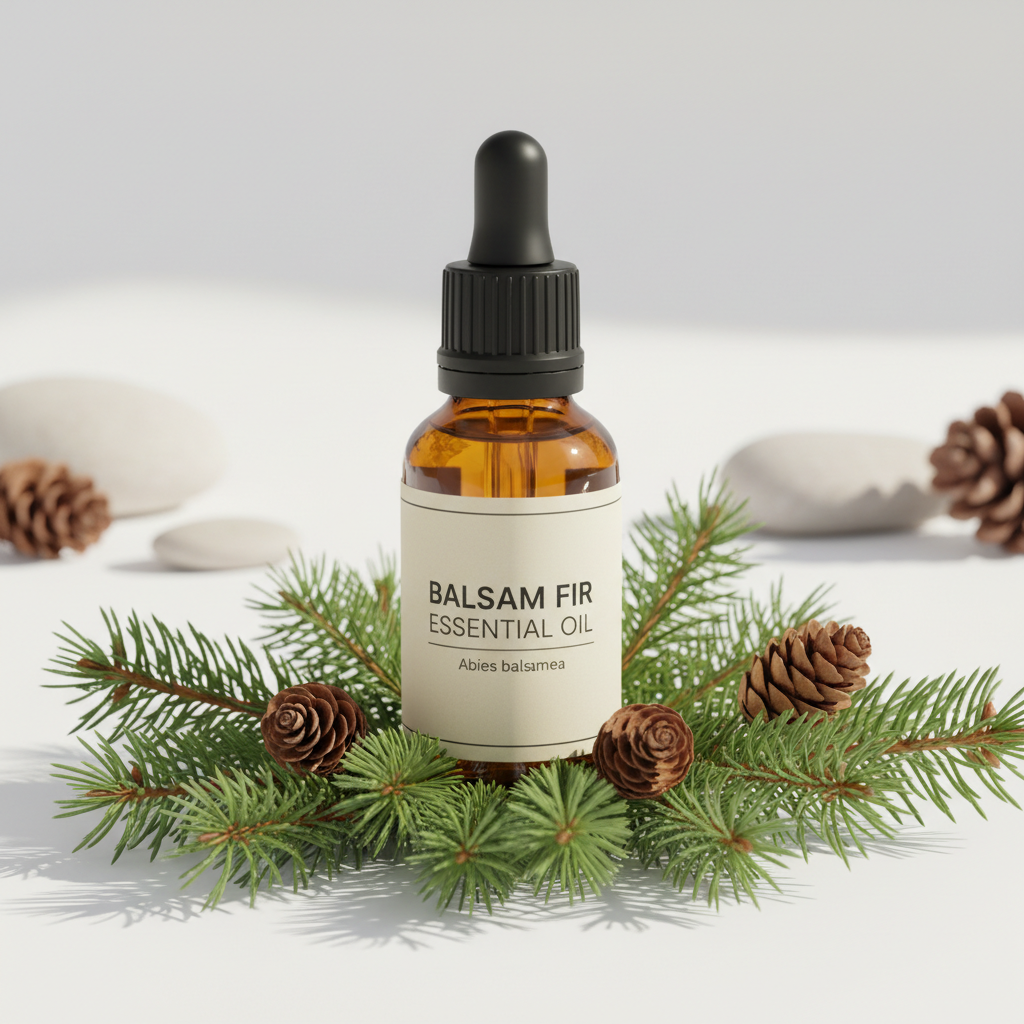
Balsam Fir Essential Oil
Abies balsamea
Plant Source
resin, needles
Scent Family
Woody
"Explore the benefits and uses of Balsam Fir Essential Oil. Learn about its origin, therapeutic properties, and how to use it in your wellness routine."
Balsam Fir Essential Oil, derived from the needles and resin of the Abies balsamea tree, is a treasured oil in the fields of aromatherapy and holistic health. This majestic evergreen, predominantly found in the cool, moist forests of North America—especially in the northeastern United States and Canada—has been celebrated for both its beauty and healing properties for many centuries. The oil is extracted through a meticulous steam distillation process, which captures the rich aromatic compounds from both the resinous bark and the evergreen needles.
Origin and Extraction Method
Balsam Fir Essential Oil has deep roots in numerous indigenous cultures, where it has long been recognized for its medicinal properties. The steam distillation process is vital as it preserves the oil's chemical integrity, ensuring that it retains its synergistic therapeutic potentials and aromatic characteristics. Upon extraction, the oil emanates a fresh, crisp scent that evokes the tranquility of serene forest landscapes, paving the way for relaxation and rejuvenation.
Botanical Information
Botanically classified under the Pinaceae family, the Balsam Fir tree can reach impressive heights of up to 80 feet and can live for over 200 years. Its dark green, needle-like leaves contribute to its distinctive aroma, which is integral to the oil’s profile. These towering evergreens play a crucial role in their ecosystems, providing vital habitats for wildlife, enhancing biodiversity, and contributing to the health of forest environments.
Therapeutic Properties and Benefits
Balsam Fir Essential Oil is revered for its extensive therapeutic benefits. Rich in compounds such as alpha-pinene and bornyl acetate, this oil offers a multitude of health advantages. It is notably effective in promoting respiratory health, making it a valuable ally for those struggling with colds or allergies. Users often find relief by inhaling its refreshing aroma, which helps to clear airways and alleviate congestion.
Moreover, this essential oil is known for its calming properties that help soothe emotional distress, facilitating emotional stability and relaxation. The uplifting woody aroma can enhance mood and mental clarity, making Balsam Fir an excellent addition to meditation and mindfulness practices.
Historical and Traditional Uses
Historically, Native Americans utilized Balsam Fir for various medicinal applications, including wound healing. The resin was often used topically to prevent infections and promote healing due to its natural antiseptic qualities. Modern scientific research has supported many of these traditional applications, demonstrating its antibacterial and anti-inflammatory properties, validating its historical use.
Scientific Facts and Research
Recent studies have highlighted the potential health benefits of Balsam Fir Essential Oil. Research indicates that several compounds within the oil possess anti-inflammatory, analgesic (pain-relieving), and antioxidant properties. These findings underscore its relevance in contemporary herbal medicine and validate its use in treating various ailments.
Aroma Profile and Characteristics
The aroma profile of Balsam Fir Essential Oil is a refreshing blend of woodsy, slightly sweet notes reminiscent of a tranquil forest. This delightful scent makes it a popular choice for candles, diffusers, and personal care products, fostering a peaceful atmosphere conducive to relaxation and grounding.
Common Applications and Methods
Balsam Fir Essential Oil can be utilized in numerous ways:
- Aromatherapy: Diffuse the oil to create a calming atmosphere, perfect for relaxation and focus.
- Topical Application: When mixed with a carrier oil, it can be massaged onto sore muscles or joints, accessing its anti-inflammatory benefits.
- Cleaning Products: Its natural antibacterial qualities make it an excellent choice for homemade cleaning products, imparting a fresh scent while effectively sanitizing surfaces.
- Baths and Saunas: Adding a few drops of the oil to bath water or during sauna sessions creates a rejuvenating and aromatic experience, refreshing both body and spirit.
Interesting Facts and Trivia
Interestingly, Balsam Fir trees are often associated with Christmas, providing a nostalgic quality for many and evoking memories of festive celebrations. Furthermore, these trees contribute significantly to their ecosystems, offering shelter and food for various forms of wildlife. The invigorating scent of Balsam Fir Essential Oil is recognized for improving focus and boosting energy levels, making it a common choice in workplaces and study areas.
In conclusion, Balsam Fir Essential Oil stands as a versatile and highly beneficial oil that brings the essence of nature into everyday life. Its multifaceted uses and rich historical background make it a valuable addition to any essential oil collection, fostering feelings of peace, tranquility, and connection to nature.
Ask AI About Balsam Fir Essential Oil
Get instant answers about this essential oil
Benefits & Uses
- Promotes a sense of peace and tranquility, ideal for reducing stress and anxiety.
- Enhances mood and emotional clarity, making it useful during periods of emotional turmoil.
- Supports emotional healing, helping to release negative emotions and past trauma.
- Encourages feelings of connection to nature, fostering grounding and stability.
- May boost confidence and courage in the face of challenges.
- Helps alleviate muscle and joint pain when applied topically, especially after exercise.
- Supports respiratory health; often used in steam inhalation to relieve congestion.
- Can be applied to soothe tired or aching muscles during massages.
- Used in saunas or baths for its aromatic benefits to enhance relaxation and well-being.
- May aid in enhancing circulation when used in massage blends.
- Used in formulations for acne-prone skin due to its antimicrobial properties.
- Can be incorporated into creams and lotions for its soothing effects on irritated skin.
- Added to hair care products for promoting a healthy scalp and adding shine to hair.
- Often used in natural deodorants for its fresh scent and odor-fighting properties.
- Can be used in diffusers to freshen indoor air and promote a calming atmosphere.
- Added to cleaning products due to its antimicrobial properties and woodsy scent.
- Can be mixed with carrier oils for wood finishes, bringing out the natural beauty of wood surfaces.
- Used in potpourri or homemade candles for its invigorating fragrance.
How to Use
Diffuser
For effective diffusion, use 3-5 drops for a small room, 5-8 drops for a medium room, and 8-12 drops for larger areas. It is best to diffuse for 30-60 minute sessions and can be repeated 2-3 times daily, particularly in the morning to enhance mood and focus.
Topical
For topical use, adults should dilute to 2-3% (12-18 drops per ounce of carrier oil), children should use a 0.5-1% dilution (3-6 drops), and the elderly should use a 1-2% dilution (6-12 drops). Suitable carrier oils include jojoba, sweet almond, or fractionated coconut oil. Recommended application areas include temples, back of the neck, or chest, using a gentle massage for deeper absorption.
Inhalation
For direct inhalation: place 1-2 drops on a tissue and inhale or add drops to cupped hands and breathe deeply. For steam inhalation: add 2-3 drops to hot water and inhale for 5-10 minutes. Use personal inhalers for convenience during the day.
Safety & Precautions
Always conduct a skin patch test before widespread topical application. Balsam Fir may cause photosensitivity; avoid sun exposure after topical application. Consult a healthcare provider if pregnant or nursing. Should be stored in a cool, dark place, with a shelf life of 1-2 years. Avoid contact with eyes and mucous membranes.
Who should avoid:
- Individuals with sensitive skin conditions such as eczema or dermatitis.
- People with known allergies to pine or fir species.
- Pregnant or nursing women should avoid unless advised by a healthcare provider.
Recommended Products

Understanding the aromatic layers of Balsam Fir Essential Oil
Top Notes
Heart Notes
Base Notes
Scent Evolution
Top Notes: First impression, evaporate quickly (15-30 min)
Heart Notes: Main character, last 2-4 hours
Base Notes: Lasting foundation, linger for hours
Complementary essential oils that pair beautifully with Balsam Fir Essential Oil
Abyssinian Carrier Oil
Crambe abyssinica
✓enhanced aromatherapy benefits
Allspice Essential Oil
Pimenta dioica
✓balanced scent profile
Ammi Visnaga Essential Oil
Ammi visnaga
✓enhanced aromatherapy benefits
Amyris Essential Oil
Amyris balsamifera
✓complementary therapeutic properties
Angelica Essential Oil
Angelica archangelica
✓enhanced aromatherapy benefits
Angelica Root Essential Oil
Angelica archangelica
✓traditional pairing in aromatherapy
Blending Tips
- • Start with 2-3 oils for simple blends
- • Use 3-5 drops total per 10ml carrier oil
- • Let blends sit for 24-48 hours to marry
- • Test on a small skin area first
Calculating for: Balsam Fir Essential Oil
Recommended: 2% | Max safe: 5%
29.57 ml
Your Recipe
0.59 ml
28.98 ml
💡 Dilution Tips
- • Always do a patch test before full application
- • Children and elderly need lower dilutions (1-2%)
- • Facial products should be gentle (0.5-1%)
- • 1 drop ≈ 0.05 ml (20 drops per ml)
- • Common carrier oils: fractionated coconut, jojoba, sweet almond
Related Recipes

DIY Acne Calming Gel Spot Treatment Recipe for Clear Skin
Explore our DIY acne calming gel spot treatment recipe to soothe inflammation and fight breakouts using natural ingredients for healthier skin.
DIY Essential Oil Equipment Cleaner Recipe for Pristine Tools
This DIY essential oil equipment cleaner recipe ensures tools are residue-free, enhancing the quality of your blends while being eco-friendly and effective.

DIY Essential Oil Foaming Hand Soap Recipe
Craft your own moisturizing foaming hand soap using essential oils! This DIY recipe combines natural ingredients for clean, soft hands. Perfect for home use!

DIY Essential Oil Inhaler Recipe for Focus
Boost your mental clarity and energy with this DIY essential oil inhaler recipe! Learn how to craft your invigorating inhalers at home easily.
DIY Sal Suds All-Purpose Cleaner Recipe
Discover how to make an all-purpose cleaner spray using essential oils. Our easy recipe with Sal Suds is perfect for tackling dirt and grime effectively.
Deep Tissue Pain Relief Oil Recipe
Discover the powerful essential oil recipe for deep tissue pain relief. Learn how to relieve muscle tension and soreness with all-natural ingredients.