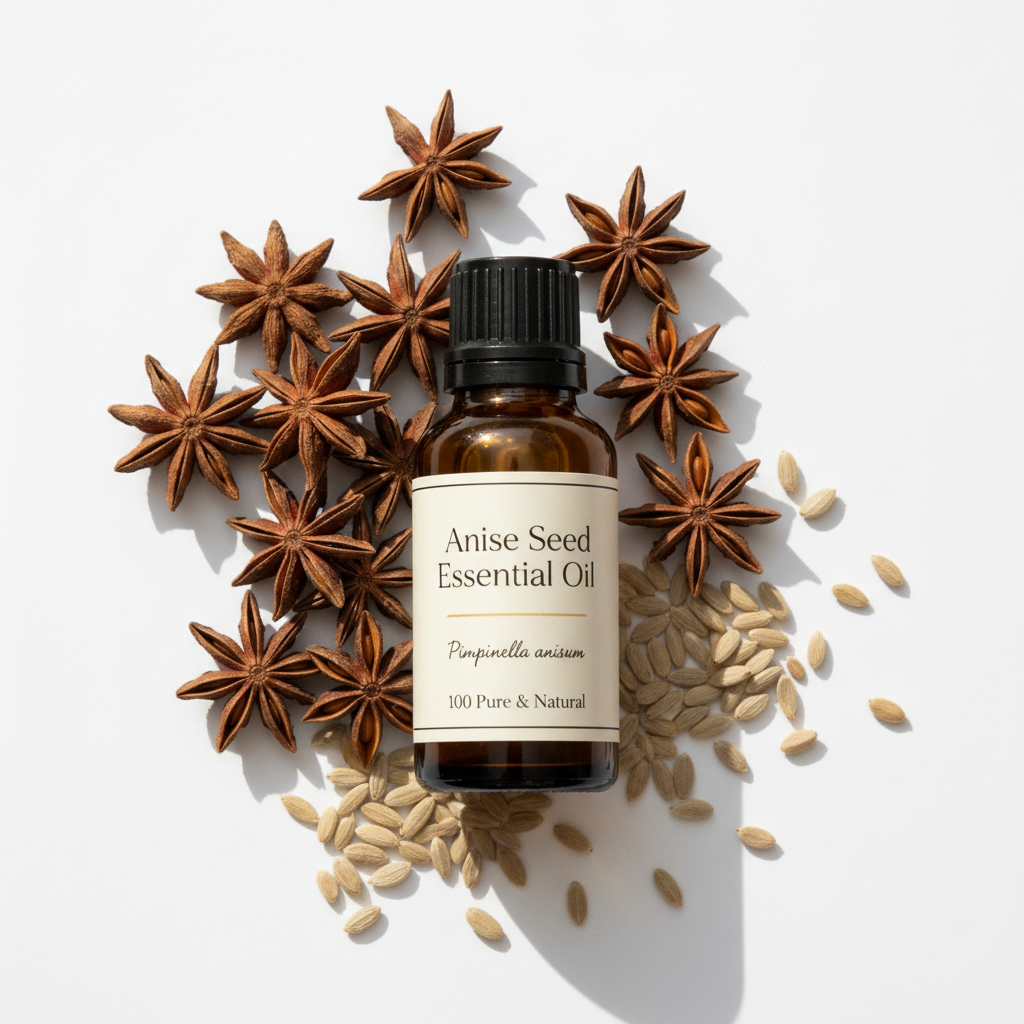
Anise Seed Essential Oil
Pimpinella anisum
Plant Source
seeds
Scent Family
Spicy
"Discover the benefits of Anise Seed Essential Oil, derived from Pimpinella anisum. Explore its history, properties, and uses in aromatherapy and wellness."
Anise Seed Essential Oil: Overview and Benefits
Anise Seed Essential Oil is extracted from the seeds of Pimpinella anisum, a plant native to the Eastern Mediterranean and Southwest Asia. Known for its exceptional culinary and medicinal properties, this essential oil has a rich history that dates back to ancient civilizations, where it was highly valued for its sweet, licorice-like flavor and therapeutic benefits.
Origin and Extraction Method
The oil is extracted through steam distillation of the dried seeds of the anise plant. This method preserves the delicate compounds that contribute to the oil's unique aroma and therapeutic properties. The resulting oil contains potent active compounds, such as anethole, which is responsible for its distinctive scent and many of its health benefits.
Botanical Information
- Botanical Name: Pimpinella anisum
- Family: Apiaceae
- Common Names: Anise, Sweet Cumin
- Plant Type: Anise is an herbaceous annual plant that can grow up to 1 meter tall, with delicate feathery leaves and small white flowers that bloom in umbel clusters.
Therapeutic Properties and Benefits
Anise Seed Essential Oil is celebrated in aromatherapy for its wide range of therapeutic benefits, including:
- Calming and Relaxing: The oil emits a soothing scent that promotes relaxation and calmness, making it ideal for use in stress-relief applications, especially during meditation or yoga.
- Mood Lifter: Its sweet fragrance has uplifting properties that enhance overall mood and emotional wellbeing. Many users report feeling happier and more energized when diffusing this oil.
- Stress Relief: Anise Seed Essential Oil is effective in reducing tension and anxiety, making it a great companion during stressful times.
- Mental Clarity: The oil can enhance focus and concentration, making it beneficial for those needing to improve productivity during work or study sessions.
- Eases Discomfort: Anise essential oil may provide relief from respiratory symptoms such as coughs and colds, thanks to its soothing properties.
- Supports Digestive Health: It has been used traditionally to alleviate stomach discomfort, gas, and bloating, making it a great natural remedy after heavy meals.
- Menstrual Relief: Its spasmolytic properties may help relieve menstrual cramps and discomfort, providing a natural alternative for women seeking relief.
- Warming Sensation: When applied topically, it creates a warming sensation that can be soothing during colder weather or when experiencing muscle tension.
Historical and Traditional Uses
Throughout history, anise has been used for its flavoring and therapeutic properties in various cultures. Ancient Egyptians utilized it in their cooking and medicine, while in Roman times, it was often baked into bread to aid digestion during meals. Traditional herbalists recommend anise tea for promoting sleep and as a digestive aid, further cementing its long-standing reputation in natural remedies.
Aroma Profile and Characteristics
The aroma of Anise Seed Essential Oil is sweet, spicy, and reminiscent of licorice. Its rich scent makes it a popular choice for use in perfumery and candle-making, as it elicits feelings of warmth and comfort. The oil blends well with other essential oils such as fennel, cardamom, and citrus oils, and can enhance a variety of formulations.
Common Applications and Methods
Anise Seed Essential Oil can be used in several ways:
- Aromatherapy Diffusion: Add a few drops to a diffuser to enjoy its uplifting aroma and therapeutic properties.
- Topical Use: Dilute the oil with a carrier oil (like coconut or jojoba oil) before applying to the skin to relieve pain or discomfort.
- Baths: Add to bath water for a soothing experience that promotes relaxation.
- Massage: Incorporate it into massage oils for a calming impact on sore muscles.
Interesting Facts and Trivia
- Anise is often mistaken for star anise, but they are different plants with distinctive flavors and uses.
- Anise seeds have been used in traditional medicine in many cultures, believed to possess various healing abilities.
- The oil is a main ingredient in several global cuisines, particularly in Indian and Middle Eastern cooking, where it enhances dishes with its unique flavor.
In conclusion, Anise Seed Essential Oil is a versatile and beneficial oil that offers a wealth of therapeutic properties, historical significance, and delightful aroma. Whether used in aromatherapy, cooking, or natural medicine, it continues to hold a special place in wellness practices around the world.
Ask AI About Anise Seed Essential Oil
Get instant answers about this essential oil
Benefits & Uses
- Calming & Relaxing: Anise Seed essential oil can help create a soothing atmosphere, promoting relaxation and calmness.
- Mood Lifter: Its sweet aroma has uplifting properties that can help improve overall mood and emotional wellbeing.
- Stress Relief: The oil is beneficial in reducing feelings of tension and stress, making it suitable for use during stressful situations.
- Mental Clarity: Can enhance focus and concentration, making it useful for boosting productivity during work or study.
- Eases Discomfort: Can be used to relieve symptoms of colds, coughs, and other respiratory issues.
- Supports Digestive Health: Particularly effective for stomach aches and discomfort.
- Menstrual Relief: May assist in relieving menstrual cramps and discomfort due to its spasmolytic properties.
- Warmth: Produces a warming sensation when applied topically, which can be comforting during colder weather.
- Acne Treatment: Helps to balance oil production and can be beneficial for acne-prone skin.
- Soothing Creams: Can be added to lotions to provide soothing properties for irritated skin.
- Anti-aging: Its antioxidant properties may help improve skin texture and appearance.
- Massage Oils: Blends well in massage oils for enhancing relaxation and easing tension.
- Air Freshener: Can be added to DIY air freshening sprays for a refreshing scent.
- Cleaning Products: Useful in natural cleaning solutions for its antimicrobial properties.
- Wardrobe Freshener: Acts as a natural insect repellent when placed in closets or drawers.
- Potpourri: Adds a pleasant aroma to potpourri blends, making home environments more inviting.
How to Use
Diffuser
For a small room, use 3-5 drops of Anise Seed Essential Oil; for a medium room, use 5-8 drops; for a large space, 8-12 drops are recommended. Diffuse for 30-60 minutes, 2-3 times daily. Optimal times for use include morning hours or during periods of stress or concentration.
Topical
For adults, dilute Anise Seed Essential Oil to 2-3% (12-18 drops per ounce of carrier oil). Children (ages 2-12) should use a 0.5-1% dilution (2-6 drops per ounce), and elderly individuals should use a 1-2% dilution. Suitable carrier oils include jojoba, sweet almond, and coconut. Massage gently into the skin for optimal absorption, especially over areas of discomfort.
Inhalation
For direct inhalation, place 1-2 drops on a tissue and inhale deeply. For steam inhalation, use 2-3 drops in a bowl of hot water and inhale the steam for 5-10 minutes. Personal inhalers can be created by adding a few drops to an inhaler wick.
Safety & Precautions
Perform a patch test before topical application. Avoid sun exposure for 12 hours after use due to potential photosensitivity. Pregnant or nursing women should consult a healthcare provider before use. Store in a cool, dark place and use within 2-3 years. Ensure proper dilution to prevent skin sensitivity.
Who should avoid:
- Pregnant women, especially in the first trimester.
- Individuals with epilepsy or seizure disorders.
- Those with allergies to plants in the Apiaceae family.
Recommended Products

Understanding the aromatic layers of Anise Seed Essential Oil
Top Notes
Heart Notes
Base Notes
Scent Evolution
Top Notes: First impression, evaporate quickly (15-30 min)
Heart Notes: Main character, last 2-4 hours
Base Notes: Lasting foundation, linger for hours
Complementary essential oils that pair beautifully with Anise Seed Essential Oil
Ajowan Seed Essential Oil
Trachyspermum ammi
✓traditional pairing in aromatherapy
Allspice Essential Oil
Pimenta dioica
✓traditional pairing in aromatherapy
Ammi Visnaga Essential Oil
Ammi visnaga
✓complementary therapeutic properties
Amyris Essential Oil
Amyris balsamifera
✓enhanced aromatherapy benefits
Angelica Essential Oil
Angelica archangelica
✓complementary therapeutic properties
Angelica Root Essential Oil
Angelica archangelica
✓balanced scent profile
Blending Tips
- • Start with 2-3 oils for simple blends
- • Use 3-5 drops total per 10ml carrier oil
- • Let blends sit for 24-48 hours to marry
- • Test on a small skin area first
Calculating for: Anise Seed Essential Oil
Recommended: 2% | Max safe: 5%
29.57 ml
Your Recipe
0.59 ml
28.98 ml
💡 Dilution Tips
- • Always do a patch test before full application
- • Children and elderly need lower dilutions (1-2%)
- • Facial products should be gentle (0.5-1%)
- • 1 drop ≈ 0.05 ml (20 drops per ml)
- • Common carrier oils: fractionated coconut, jojoba, sweet almond
Related Recipes
DIY Acne Calming Gel Spot Treatment Recipe for Clear Skin
Explore our DIY acne calming gel spot treatment recipe to soothe inflammation and fight breakouts using natural ingredients for healthier skin.
DIY Essential Oil Equipment Cleaner Recipe for Pristine Tools
This DIY essential oil equipment cleaner recipe ensures tools are residue-free, enhancing the quality of your blends while being eco-friendly and effective.
DIY Essential Oil Foaming Hand Soap Recipe
Craft your own moisturizing foaming hand soap using essential oils! This DIY recipe combines natural ingredients for clean, soft hands. Perfect for home use!
DIY Sal Suds All-Purpose Cleaner Recipe
Discover how to make an all-purpose cleaner spray using essential oils. Our easy recipe with Sal Suds is perfect for tackling dirt and grime effectively.
Deep Tissue Pain Relief Oil Recipe
Discover the powerful essential oil recipe for deep tissue pain relief. Learn how to relieve muscle tension and soreness with all-natural ingredients.
Easy Oil-Free Hydrating Face Mask Recipe for Glowing Skin
This recipe shows you how to make a hydrating face mask without oils, perfect for all skin types and packed with nourishing ingredients.