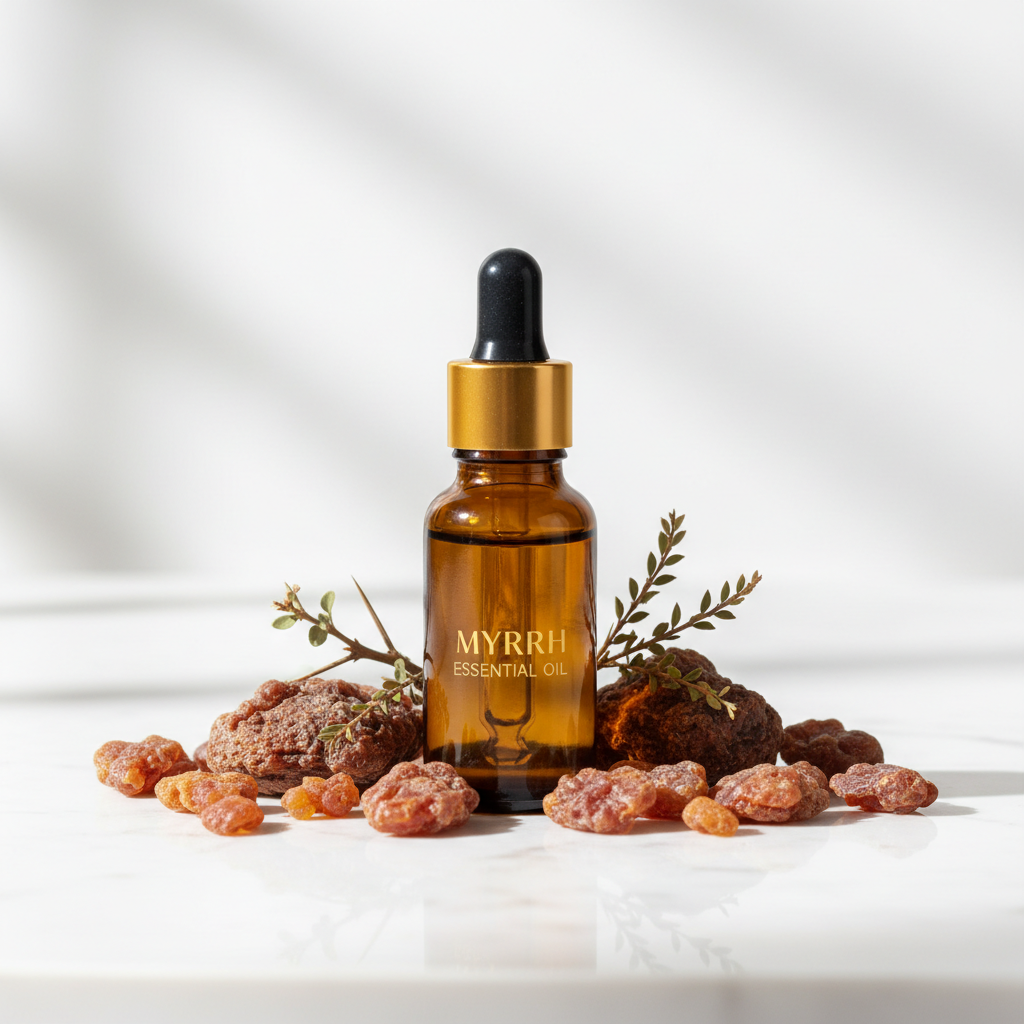
Myrrh Essential Oil
Commiphora myrrha
Plant Source
resin
Scent Family
Resinous
"Explore the wonders of Myrrh essential oil: its benefits, uses, historical significance, and healing properties for holistic well-being."
Myrrh essential oil is a powerful and aromatic oil derived from the resin of the Commiphora myrrha tree, also known as myrrh. This ancient oil has been revered for centuries, celebrated for its numerous therapeutic properties and versatility in various applications.
Origin and Extraction Method
The Commiphora myrrha tree, native to the arid regions of East Africa and the Arabian Peninsula, produces myrrh resin when its bark is cut. This resin is then harvested and subjected to steam distillation to create myrrh essential oil, capturing its potent benefits and aromatic qualities.
Botanical Information
Myrrh belongs to the family Burseraceae, which encompasses various aromatic resins. The tree can grow up to 4 meters tall and has distinctive, gnarled branches and small yellow flowers. Myrrh resin’s sticky sap has a rich, earthy scent which plays a crucial role in its therapeutic appeal.
Therapeutic Properties and Benefits
The therapeutic benefits of myrrh essential oil are vast. Here are some notable properties:
- Anti-inflammatory: Myrrh helps reduce inflammation in the body, which can alleviate symptoms of various conditions, providing comfort and easing discomfort.
- Anxiolytic: With its calming properties, myrrh can help alleviate anxiety and promote emotional stability, assisting individuals during stressful times.
- Meditative: Used for centuries in spiritual practices, myrrh enhances meditation and mindfulness, fostering a deeper connection to one’s inner self.
- Emotional Healing: It is often used in therapeutic settings to help individuals process grief and trauma, promoting emotional clearing and healing.
- Skin Rejuvenation: Myrrh essential oil is beneficial for skin care; it can reduce the appearance of scars and fine lines due to its regenerative properties.
- Immune System Support: It strengthens the immune system, helping the body defend against infections and illnesses.
- Respiratory Health: Known for its beneficial effects on the respiratory system, myrrh can support respiratory health during colds or infections.
- Oral Health: Its antimicrobial properties may assist in promoting healthy gums and maintaining oral hygiene.
- Anti-aging: The antioxidants found in myrrh oil contribute to reducing the signs of aging.
Historical and Traditional Uses
Myrrh has a rich history, celebrated not only for its aromatic qualities but also for its use in ancient medicine and religious rituals. In ancient Egypt, it was used in the embalming process, symbolizing preservation for the afterlife. Myrrh also has a significant presence in various religious texts, often symbolizing sacrifice and healing. Its use in traditional medicine spans several cultures, where it has been employed to treat wounds and ailments, further demonstrating its therapeutic prowess.
Scientific Facts and Research
Recent studies have validated many traditional claims regarding myrrh essential oil. Research indicates its effectiveness in combating inflammation, fighting pathogens, and even its potential role in cancer prevention. Ongoing studies delve into its biochemical properties and how they may benefit modern health practices.
Aroma Profile and Characteristics
Myrrh essential oil has a warm, earthy aroma that is both calming and grounding. The scent is often described as rich and slightly sweet, making it a captivating addition to various aromatic blends and therapeutic formulations.
Common Applications and Methods
- Aromatherapy: Use myrrh in diffusers or oil burners to create a calming atmosphere.
- Topical Uses: Dilute in carrier oils for application on the skin, particularly for skincare routines or massage blends.
- Meditation Practices: Add a few drops to your meditation space to enhance your spiritual practices.
- Baths: Incorporate into bathwater for a relaxing and rejuvenating soaking experience.
Interesting Facts and Trivia
- Myrrh was one of the gifts brought by the Magi to the infant Jesus, emphasizing its historical significance.
- It was used as a medicinal treatment in ancient India, highlighting its global recognition for healing.
- Myrrh is still used today in various forms, such as in perfumes, herbal remedies, and even as a flavoring agent.
In conclusion, myrrh essential oil is a remarkable oil with a rich history and immense therapeutic benefits. Its applications are diverse, ranging from emotional support to skin care, solidifying its place in holistic and aromatherapeutic practices. Whether you’re exploring essential oils for the first time or are a seasoned enthusiast, myrrh's unique properties make it a valuable addition to your collection.
Ask AI About Myrrh Essential Oil
Get instant answers about this essential oil
Benefits & Uses
- Grounding: Myrrh is known to promote feelings of stability and calm, helping to center the mind.
- Anxiolytic: its sedative properties can help alleviate anxiety, making it beneficial during times of stress.
- Meditative: often used in spiritual practices, it can enhance meditation and mindfulness by fostering a deeper connection to self.
- Emotional Healing: may assist in processing grief and emotional trauma, promoting emotional clearing and healing.
- Balance: helps in stabilizing emotional fluctuations, fostering a sense of inner peace.
- Skin Rejuvenation: helps in reducing the appearance of scars and wrinkles.
- Immune System Support: strengthens the immune defense, aiding the body to fight against infections.
- Respiratory Health: supports respiratory health, particularly during colds and respiratory infections.
- Oral Health: may promote healthy gums and support oral hygiene due to its antimicrobial properties.
- Anti-aging: its antioxidant properties contribute to reducing signs of aging.
- Anti-aging serums: included in formulations designed to reduce wrinkles and improve skin tone.
- Wound care: applied (diluted) to minor cuts and abrasions for its healing properties.
- Moisturizers: used in creams and lotions for its ability to enhance skin hydration and elasticity.
- Scar reduction: aids in diminishing the appearance of scars and blemishes when incorporated in skincare regimens.
- Natural antiseptic: can be blended into cleaning solutions for its antimicrobial properties.
- Air freshener: used in diffusers to purify the air and provide a grounding aroma.
- Insect repellent: may be added to homemade insect repellents due to its ability to deter pests.
- Deodorizer: effective in neutralizing unwanted odors in indoor environments.
How to Use
Diffuser
For small rooms (up to 100 sqft), use 3-5 drops of myrrh essential oil; for medium rooms (100-200 sqft), add 5-8 drops; and for large rooms (200+ sqft), use 8-12 drops. Diffuse for 30-60 minutes, 2-3 times daily. Ideal times are in the evening or during meditation practices.
Topical
For adults, dilute myrrh essential oil to 2-3% (10-15 drops per ounce of carrier oil). For children, use a dilution of 0.5-1%. For the elderly, a dilution of 1-2% is recommended. Suitable carrier oils include jojoba, sweet almond, and coconut oil. Apply to affected areas using gentle massage techniques, allowing time for absorption.
Inhalation
For direct inhalation, place 1-2 drops on a tissue or palm and inhale deeply. For steam inhalation, add 2-3 drops to a bowl of hot water and inhale the steam for 5-10 minutes. Personal inhalers can also be used for convenience.
Safety & Precautions
Perform a patch test before use to check for skin sensitivity. Myrrh may cause photosensitivity; avoid sun exposure for 12 hours after topical use. Not recommended during the first trimester of pregnancy. Store in a cool, dark place and keep out of reach of children. Shelf life is typically 2-3 years. Consult with a healthcare provider for potential interactions with medications.
Who should avoid:
- Pregnant individuals, especially in the first trimester.
- Individuals with known hypersensitivity to resinous oils.
- People taking anticoagulant or blood-thinning medications.
- Individuals with diabetes should use caution due to potential blood sugar effects.
Recommended Products

Understanding the aromatic layers of Myrrh Essential Oil
Top Notes
Heart Notes
Base Notes
Scent Evolution
Top Notes: First impression, evaporate quickly (15-30 min)
Heart Notes: Main character, last 2-4 hours
Base Notes: Lasting foundation, linger for hours
Complementary essential oils that pair beautifully with Myrrh Essential Oil
Abyssinian Carrier Oil
Crambe abyssinica
✓traditional pairing in aromatherapy
Agarwood Essential Oil
Aquilaria
✓complementary therapeutic properties
Allspice Essential Oil
Pimenta dioica
✓similar chemical compositions
Ammi Visnaga Essential Oil
Ammi visnaga
✓balanced scent profile
Amyris Essential Oil
Amyris balsamifera
✓traditional pairing in aromatherapy
Angelica Essential Oil
Angelica archangelica
✓complementary therapeutic properties
Blending Tips
- • Start with 2-3 oils for simple blends
- • Use 3-5 drops total per 10ml carrier oil
- • Let blends sit for 24-48 hours to marry
- • Test on a small skin area first
Calculating for: Myrrh Essential Oil
Recommended: 2% | Max safe: 5%
29.57 ml
Your Recipe
0.59 ml
28.98 ml
💡 Dilution Tips
- • Always do a patch test before full application
- • Children and elderly need lower dilutions (1-2%)
- • Facial products should be gentle (0.5-1%)
- • 1 drop ≈ 0.05 ml (20 drops per ml)
- • Common carrier oils: fractionated coconut, jojoba, sweet almond
Related Recipes

Calming Lavender Linen Spray Recipe
A gentle, relaxing linen and room spray that promotes restful sleep and calm using lavender, chamomile, and cedarwood essential oils.

DIY Acne Calming Gel Spot Treatment Recipe for Clear Skin
Explore our DIY acne calming gel spot treatment recipe to soothe inflammation and fight breakouts using natural ingredients for healthier skin.
DIY Essential Oil Body Lotion Recipe
Create your own nourishing body lotion with essential oils that hydrates, softens and rejuvenates your skin, leaving it smooth and supple all day long.

DIY Essential Oil Foaming Hand Soap Recipe
Craft your own moisturizing foaming hand soap using essential oils! This DIY recipe combines natural ingredients for clean, soft hands. Perfect for home use!
DIY Men's Cologne Recipe for Confidence & Focus
Discover how to craft a unique men's cologne with essential oils that boosts confidence and improves mood. Learn about each ingredient's benefits and uses.
Immune Support Recipe: Seasonal Essential Oil Diffuser
Discover this immune support recipe to create an essential oil diffuser blend that boosts health, especially during seasonal changes.