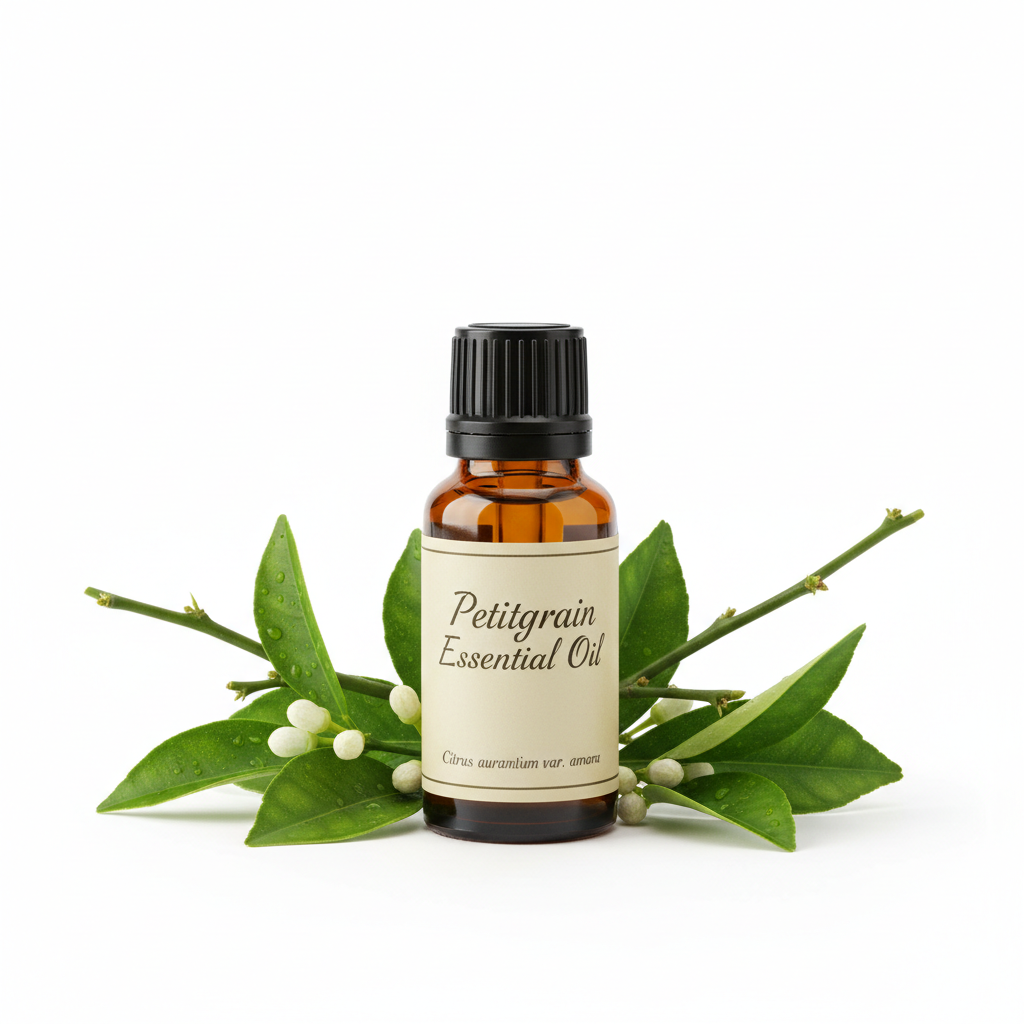
Petitgrain Essential Oil
Citrus aurantium var. amara
Plant Source
Leaves and twigs
Scent Family
Citrus
"Explore Petitgrain essential oil benefits, origin, aroma, and uses for mental calm and skin healing. Uncover this oil’s therapeutic properties and applications."
Petitgrain essential oil is a unique and versatile oil derived from the leaves and twigs of the bitter orange tree, scientifically known as Citrus aurantium var. amara. This oil, often overlooked in the many applications of essential oils, has a host of benefits and uses that make it a valuable addition to any aromatherapy toolkit. Here, we delve into the various aspects of Petitgrain essential oil, including its origin, extraction process, therapeutic properties, historical uses, scientific research, aroma profile, and common applications.
Origin and Extraction Method
Petitgrain essential oil is predominantly extracted through the process of steam distillation. This method allows the oil to retain the fresh, green scent characteristic of its citrus origins, as it captures the aromatic compounds from the leaves and twigs of the bitter orange tree. The tree is native to Asia but has been widely cultivated in various regions, especially in France, where the oil is primarily produced. The name "Petitgrain" translates to "little grains," which originally referred to the small unripe oranges processed to extract essential oil; however, the name now primarily pertains to the oil sourced from the leaves and twigs.
Botanical Information
The bitter orange tree grows up to 10 meters tall and features glossy green leaves and white fragrant flowers. It belongs to the Rutaceae family and is cherished not only for its essential oil but also for its fruit, which is used in making marmalade and flavoring for liqueurs. The extraction of Petitgrain oil helps in utilizing parts of the tree that might otherwise go unharvested, promoting sustainability.
Therapeutic Properties and Benefits
Petitgrain essential oil possesses numerous therapeutic properties. Known for its calming effects, it is traditionally used to alleviate feelings of stress and anxiety. The oil's sedative characteristics can help promote better sleep quality, making it an excellent choice for those struggling with insomnia. Additionally, Petitgrain can enhance mood by fostering a positive emotional state and reducing irritability, contributing to emotional resilience in the face of life's challenges.
The oil's benefits extend beyond mental well-being; it may also assist with physical issues. For example, it has been noted to help with muscle tension and spasms, providing relief and promoting physical relaxation. Its calming effect has been used to ease headaches related to stress and tension. Furthermore, Petitgrain may support digestive ease, particularly for individuals experiencing bloating and cramping.
Historical and Traditional Uses
Historically, Petitgrain essential oil has been cherished in perfumery due to its fresh, invigorating scent. It was commonly used in traditional medicine practices across various cultures to treat anxiety and improve emotional well-being. Even today, many find it beneficial as part of a holistic approach to wellness, utilizing its properties in massage therapy and other relaxation techniques.
Scientific Facts and Research
Research into the effects of Petitgrain essential oil has highlighted its potential in promoting relaxation and reducing anxiety. Studies indicate that its application can lower heart rate and reduce stress markers, suggesting physiological benefits in addition to its psychological effects. While more research is needed to fully understand the scope of its benefits, initial findings support its use in aromatherapy.
Aroma Profile and Characteristics
The aroma of Petitgrain essential oil is often described as fresh, crisp, and slightly floral, with hints of woodiness and green notes. This unique fragrance profile lends itself well to a variety of applications. It can be used in diffusers for aromatherapy, added to bath oils for a relaxing soak, or blended into carrier oils for topical use.
Common Applications and Methods
- Aromatherapy: Add a few drops to a diffuser to promote relaxation and improve mood.
- Massage Oils: Mix with carrier oils for a soothing massage experience.
- Bath Products: Incorporate into bath salts for a calming soak.
- Skin Care: Dilute for topical application, where its skin-healing properties can be beneficial.
Interesting Facts and Trivia
Many enthusiasts of essential oils do not realize that Petitgrain oil is often a primary ingredient in high-end perfumes due to its exquisite fragrance. Additionally, it can serve as a natural insect repellent, making it useful in outdoor settings. Its sustainability aspect is also noteworthy, as using the leaves and twigs of the bitter orange tree contributes to the overall utilization of the plant.
In conclusion, Petitgrain essential oil is a remarkable oil packed with numerous benefits for both mental and physical well-being. Its calming properties, rich historical background, and versatility in application make it an essential item for anyone interested in harnessing the power of natural remedies.
Ask AI About Petitgrain Essential Oil
Get instant answers about this essential oil
Benefits & Uses
- Promotes calmness and relaxation, helping to alleviate stress and anxiety.
- Enhances mood by contributing to a positive emotional state and reducing feelings of sadness.
- Helps to create a sense of peace and balance, which can enhance meditation practices.
- May reduce feelings of agitation and irritability, promoting a more serene mindset.
- Supports emotional resilience, helping individuals cope with life's challenges.
- Improvements in sleep quality due to its sedative properties.
- Reduction of muscle tension and spasms, contributing to physical relaxation.
- Relief from headaches that may be stress-related.
- Support in alleviating digestive discomfort such as bloating or cramping.
- Can help in skin healing and regeneration when diluted and applied topically.
- Used in skincare formulations to balance oily skin and reduce blemishes.
- Can be added to anti-aging products to promote skin elasticity.
- Serves as a natural fragrance in lotions and creams, providing a refreshing scent.
- Aids in soothing minor skin irritations when mixed with a carrier oil.
- Effective in natural cleaning products due to its antimicrobial properties.
- Can be diffused to freshen the air and create a calming environment.
- Used in room sprays to enhance mood and reduce stress levels.
- Can be added to laundry for a refreshing scent boost.
How to Use
Diffuser
For small rooms, use 3-5 drops; for medium rooms, use 5-8 drops; for large rooms, use 8-12 drops. Optimal duration is 30-60 minutes per session, repeating 2-3 times daily, ideally during times of stress or anxiety.
Topical
For adults, dilute to 2-3%. For children, use 0.5-1%, and for the elderly, 1-2%. Recommended carriers include sweet almond oil, jojoba oil, or coconut oil. Apply to the neck, shoulders, or areas of tension with a light massage. Allow time for absorption.
Inhalation
For direct inhalation, place 1-2 drops on a tissue or cotton ball and inhale. For steam inhalation, add 2-3 drops to a bowl of hot water and inhale steam for 5-10 minutes. Personal inhalers can also be used for on-the-go application.
Safety & Precautions
Perform patch tests before widespread topical use. Avoid sun exposure for at least 12 hours after topical application, as Petitgrain can cause photosensitivity. Pregnant or nursing women should consult a healthcare provider before use. Store in a cool, dark place; shelf life is around 2-3 years.
Who should avoid:
- Pregnant or nursing women without professional guidance.
- Individuals with citrus allergies or sensitivities.
- Those taking medications that affect blood pressure.
Recommended Products

Understanding the aromatic layers of Petitgrain Essential Oil
Top Notes
Heart Notes
Base Notes
Scent Evolution
Top Notes: First impression, evaporate quickly (15-30 min)
Heart Notes: Main character, last 2-4 hours
Base Notes: Lasting foundation, linger for hours
Complementary essential oils that pair beautifully with Petitgrain Essential Oil
Agarwood Essential Oil
Aquilaria
✓traditional pairing in aromatherapy
Allspice Essential Oil
Pimenta dioica
✓enhanced aromatherapy benefits
Ammi Visnaga Essential Oil
Ammi visnaga
✓similar chemical compositions
Amyris Essential Oil
Amyris balsamifera
✓similar chemical compositions
Angelica Essential Oil
Angelica archangelica
✓complementary therapeutic properties
Angelica Root Essential Oil
Angelica archangelica
✓similar chemical compositions
Blending Tips
- • Start with 2-3 oils for simple blends
- • Use 3-5 drops total per 10ml carrier oil
- • Let blends sit for 24-48 hours to marry
- • Test on a small skin area first
Calculating for: Petitgrain Essential Oil
Recommended: 2% | Max safe: 5%
29.57 ml
Your Recipe
0.59 ml
28.98 ml
💡 Dilution Tips
- • Always do a patch test before full application
- • Children and elderly need lower dilutions (1-2%)
- • Facial products should be gentle (0.5-1%)
- • 1 drop ≈ 0.05 ml (20 drops per ml)
- • Common carrier oils: fractionated coconut, jojoba, sweet almond
Related Recipes
Allergy Calming Mattress Spray Recipe for Better Sleep
Discover the calming recipe for a mattress spray that relieves allergy symptoms and promotes a restful night's sleep in your home.

Calming Essential Oil Pillow Mist Recipe for Relaxation
Discover this easy recipe for a soothing pillow mist that features lavender and bergamot for ultimate relaxation and better sleep.

Calming Lavender Linen Spray Recipe
A gentle, relaxing linen and room spray that promotes restful sleep and calm using lavender, chamomile, and cedarwood essential oils.

DIY Acne Calming Gel Spot Treatment Recipe for Clear Skin
Explore our DIY acne calming gel spot treatment recipe to soothe inflammation and fight breakouts using natural ingredients for healthier skin.

DIY Essential Oil Foaming Hand Soap Recipe
Craft your own moisturizing foaming hand soap using essential oils! This DIY recipe combines natural ingredients for clean, soft hands. Perfect for home use!
Delightful Sleep-Enhancing Pillow Sachets Recipe for Restful Nights
Discover how to create a calming sleep environment with this easy recipe for pillow sachets infused with soothing essential oils to improve your sleep quality.