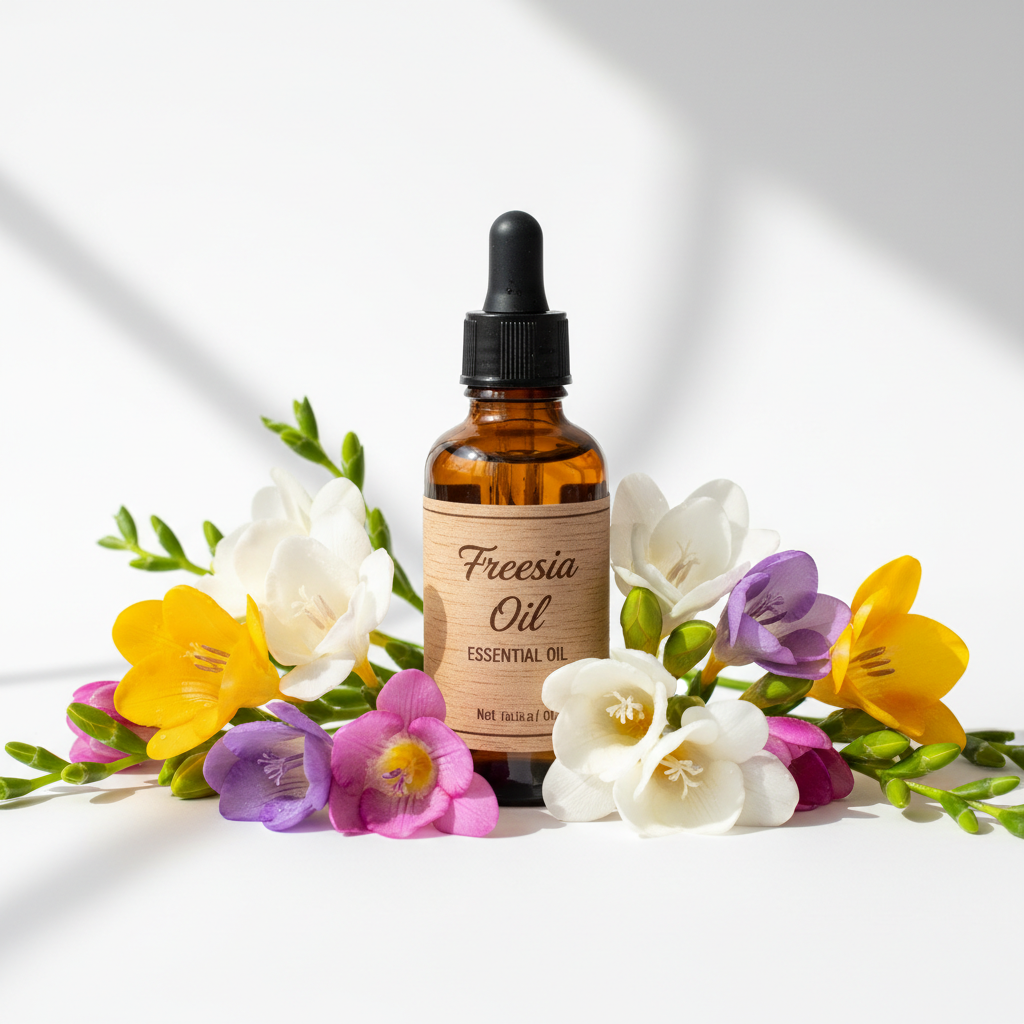
Freesia Oil Essential Oil
Freesia refracta (Jacq.) Klatt
Plant Source
Flowers
Scent Family
Floral
"Discover Freesia Essential Oil, a fragrant oil renowned for its uplifting benefits and therapeutic properties. Learn how to use it effectively in your wellness routine."
Introduction to Freesia Essential Oil
Freesia Essential Oil is derived from the stunning blooms of the Freesia refracta plant, a vibrant flower with a captivating fragrance. Known for its delightful aroma and soothing properties, Freesia Oil is obtained through the process of steam distillation, which preserves the delicate compounds found in its petals. This essential oil has become increasingly popular in aromatherapy and wellness practices due to its mood-enhancing capabilities and various health benefits.
Origin and Extraction Method
The Freesia plant is native to South Africa, flourishing in a warm climate that allows its flowers to bloom beautifully. The oil is extracted specifically from the plant’s blossoms, which are harvested at the peak of their fragrance. The steam distillation process ensures that the oil maintains the integrity of its natural aroma and beneficial properties, making it ideal for therapeutic use.
Botanical Information
Freesia belongs to the Iridaceae family, which contains over 50 species. Freesia refracta, the primary species used for extracting essential oil, typically blooms in bright colors such as yellow, white, and purple. Each bloom emits a unique and potent floral scent that contributes to the oil's overall aromatic profile. Botanically, Freesia is characterized by its slender leaves and tubular flowers that attract pollinators with their sweet fragrance.
Therapeutic Properties and Benefits
Freesia Essential Oil is revered for its therapeutic properties that promote emotional balance and mental well-being. The essential oil is commonly used for:
- Reducing Stress: The floral aroma interacts positively with brain receptors, helping to alleviate feelings of anxiety and promoting relaxation.
- Enhancing Mood: It can uplift spirits and evoke feelings of happiness, making it beneficial during periods of emotional distress or sadness.
- Supporting Meditation and Yoga: Freesia Oil is a popular choice for enhancing mindfulness practices, allowing users to deepen their focus and connection.
- Promoting Self-Esteem: By improving emotional health, it supports self-acceptance and confidence.
- Respiratory Support: When diffused, the oil can help clear the airways, making breathing easier and relieving respiratory tension.
- Headache Relief: Its soothing scent can help ease tension headaches caused by stress.
- Improving Sleep Quality: Utilizing Freesia Oil in a diffuser before bedtime can enhance sleep quality, leading to more restorative rest.
Historical and Traditional Uses
Historically, Freesia has been celebrated not only for its aesthetic appeal but also for its floral fragrance, often used in perfumes and sacred rituals. In many cultures, Freesia is associated with friendship, trust, and childhood innocence, making it a popular flower in botanical art and scented offerings. Traditional uses of Freesia include employing its fragrance in ceremonies to promote communal harmony and joy.
Scientific Facts and Research
Research into essential oils, including Freesia, is an expanding field. Studies suggest that the aromatic compounds in Freesia can influence mood and emotional health through the limbic system connection. The calming properties of floral aromas are often highlighted in studies focusing on reducing stress and anxiety in various populations. While specific studies on Freesia Oil are limited, its constituents align with known benefits of other floral essential oils.
Aroma Profile and Characteristics
Freesia Essential Oil is characterized by a sweet, floral aroma that is both uplifting and calming. It has a light and refreshing scent, making it an excellent addition to any blend or standalone application. The aroma is often described as ethereal and soft, creating a serene atmosphere suitable for relaxation and emotional healing.
Common Applications and Methods
Freesia Oil can be utilized in various ways:
- Aromatherapy Diffusion: Add a few drops of Freesia Oil to a diffuser to create a calming ambiance.
- Topical Application: Dilute Freesia Oil with a carrier oil (such as jojoba or sweet almond oil) and apply it to pulse points for emotional support.
- Bath Soak: Add several drops to a warm bath to enhance relaxation.
- Massage: Incorporate Freesia Oil into massage oils for added emotional balance during treatments.
Interesting Facts and Trivia
- Freesia is often used in floral arrangements and is a favorite among florists due to its vibrant colors and delightful fragrance.
- The name "Freesia" originates from the German botanist Friedrich Freese.
- Freesia blooms symbolize friendship and trust, often being gifted to friends and loved ones.
Conclusion
Freesia Essential Oil is more than just a delightful floral scent. Its therapeutic properties, coupled with its historical significance and practicality, make it a valuable addition to any essential oil collection. Whether you seek emotional balance, respiratory support, or simply want to enhance your environment’s aroma, Freesia Oil offers a world of benefits waiting to be explored.
Ask AI About Freesia Oil Essential Oil
Get instant answers about this essential oil
Benefits & Uses
- Promotes a serene atmosphere, helping to reduce feelings of anxiety and stress.
- Encourages feelings of happiness and joy, making it suitable for use during times of emotional distress.
- Can enhance self-esteem and promote overall emotional balance.
- Serves as a gentle support during meditation or yoga practices, fostering mindfulness.
- Avoids feelings of loneliness, offering soothing comfort and companionship.
- Supports respiratory health by helping to clear the airways and enhance breathing.
- May help soothe headaches and tension related to stress.
- Can improve sleep quality when diffused in the bedroom before rest.
- Aids in easing muscle tension and discomfort through topical application.
- Contributes to overall wellness when used in conjunction with relaxation techniques.
- Can be incorporated into creams and lotions to promote hydration and nourishment of the skin.
- Used in facial steams to help brighten and refresh dull skin.
- Ideal as a natural perfume due to its alluring fragrance.
- May help improve the appearance of skin due to its antimicrobial properties.
- Aromatic enhancer when blended in home diffusers for a pleasant, fresh ambiance.
- Can be used to naturally scent household cleaning products, providing a floral fragrance.
- Effective in creating a calming environment in living spaces, reducing stress.
- Contributes to potpourri blends for natural home fragrance.
How to Use
Diffuser
For small rooms, use 3-5 drops; for medium rooms, use 5-8 drops; and for large rooms, 8-12 drops. Optimal duration for use is between 30-60 minutes sessions, 2-3 times per day, ideally in the morning or when needing calm.
Topical
For adult use, dilute Freesia Oil to 2-3%. For children (2-12 years), use a dilution of 0.5-1%. For the elderly, a dilution of 1-2% is recommended. Suggested carrier oils include jojoba or sweet almond; apply to areas of tension using gentle massage techniques and allow for 20-30 minutes for absorption.
Inhalation
For direct inhalation, place 1-2 drops on a tissue or in your hands, and inhale deeply. For steam inhalation, add 2-3 drops to a bowl of hot water, covering your head with a towel, and inhale for 5-10 minutes. Personal inhalers can be prepared for individual use.
Safety & Precautions
Always perform a patch test to check for skin sensitivity. May cause a mild allergic reaction in some individuals. Avoid sun exposure for 12 hours after topical use due to potential photosensitivity. Should be avoided during pregnancy and nursing unless under professional guidance. Store in a cool, dark place, and be mindful of shelf life (generally 1-3 years).
Who should avoid:
- Pregnant or nursing individuals without medical supervision.
- Those with a history of severe allergic reactions to floral oils.
- Individuals taking medications for blood pressure or mood disorders without consulting a healthcare provider.
Recommended Products

Understanding the aromatic layers of Freesia Oil Essential Oil
Top Notes
Heart Notes
Base Notes
Scent Evolution
Top Notes: First impression, evaporate quickly (15-30 min)
Heart Notes: Main character, last 2-4 hours
Base Notes: Lasting foundation, linger for hours
Complementary essential oils that pair beautifully with Freesia Oil Essential Oil
Abyssinian Carrier Oil
Crambe abyssinica
✓enhanced aromatherapy benefits
Agarwood Essential Oil
Aquilaria
✓enhanced aromatherapy benefits
Ajowan Seed Essential Oil
Trachyspermum ammi
✓traditional pairing in aromatherapy
Allspice Essential Oil
Pimenta dioica
✓traditional pairing in aromatherapy
Ammi Visnaga Essential Oil
Ammi visnaga
✓balanced scent profile
Amyris Essential Oil
Amyris balsamifera
✓enhanced aromatherapy benefits
Blending Tips
- • Start with 2-3 oils for simple blends
- • Use 3-5 drops total per 10ml carrier oil
- • Let blends sit for 24-48 hours to marry
- • Test on a small skin area first
Calculating for: Freesia Oil Essential Oil
Recommended: 2% | Max safe: 5%
29.57 ml
Your Recipe
0.59 ml
28.98 ml
💡 Dilution Tips
- • Always do a patch test before full application
- • Children and elderly need lower dilutions (1-2%)
- • Facial products should be gentle (0.5-1%)
- • 1 drop ≈ 0.05 ml (20 drops per ml)
- • Common carrier oils: fractionated coconut, jojoba, sweet almond
Related Recipes
Aromatherapy Recipe: Under-Bed Storage Drawer Bombs
Discover this simple recipe for Under-Bed Storage Drawer Aroma Bombs, perfect for freshening up your space with delightful scents!

Calming Essential Oil Pillow Mist Recipe for Relaxation
Discover this easy recipe for a soothing pillow mist that features lavender and bergamot for ultimate relaxation and better sleep.

Calming Lavender Linen Spray Recipe
A gentle, relaxing linen and room spray that promotes restful sleep and calm using lavender, chamomile, and cedarwood essential oils.

DIY Acne Calming Gel Spot Treatment Recipe for Clear Skin
Explore our DIY acne calming gel spot treatment recipe to soothe inflammation and fight breakouts using natural ingredients for healthier skin.
DIY Candle Making Fragrance Blend Recipe for Aromatic Bliss
Discover how to create a delightful essential oil blend recipe tailored for your candle making needs, enhancing your home with captivating scents.
DIY Essential Oil Allergy Relief Inhaler Recipe
Discover this essential oil allergy relief recipe to make effective inhalers at home for natural symptom relief from allergies.