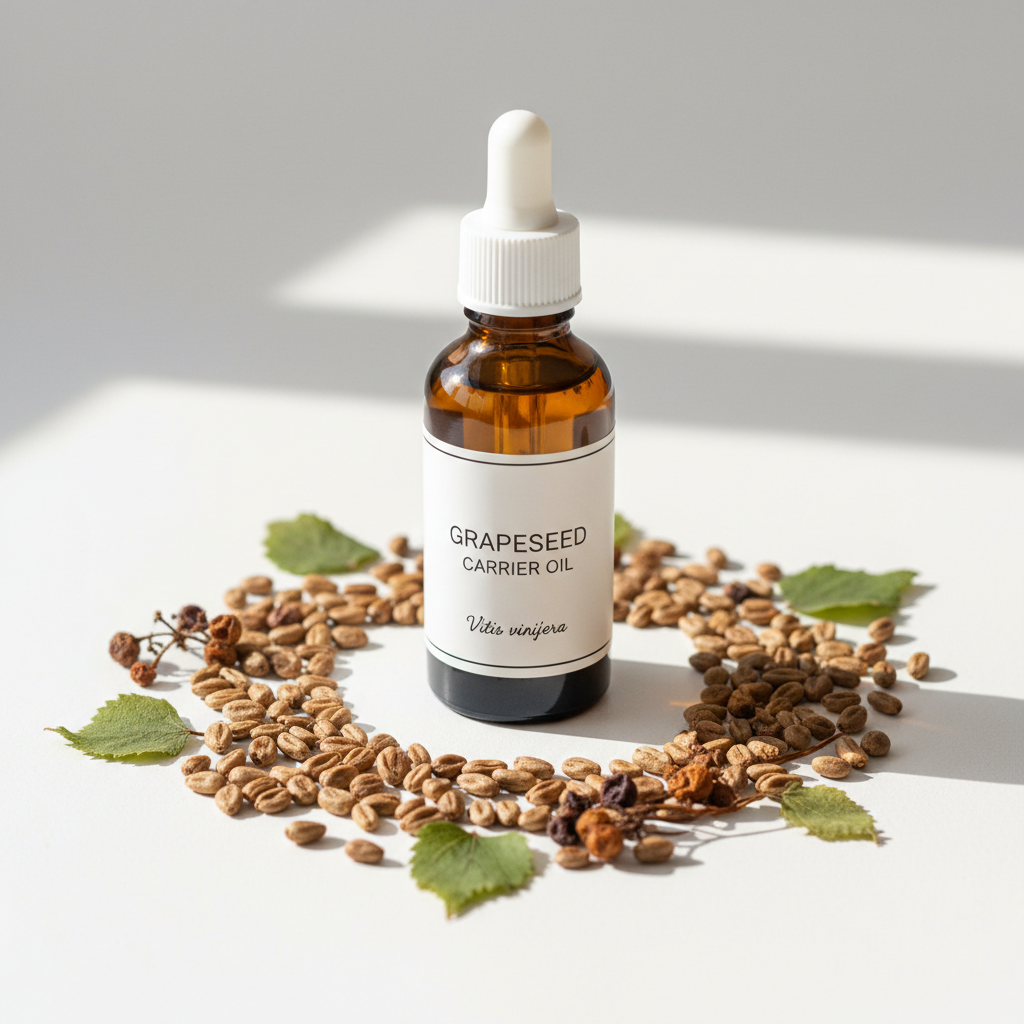
Grapeseed Carrier Oil
Vitis vinifera
Plant Source
seeds
Scent Family
Nutty
"Discover the amazing benefits of Grapeseed carrier oil, its uses in skincare, and why it's a favorite in aromatherapy and culinary applications."
Grapeseed Carrier Oil: Uses, Benefits, and Properties
Grapeseed carrier oil is a versatile oil derived from the seeds of the Vitis vinifera plant. Known for its light, non-greasy texture, it has become a favorite among beauty enthusiasts and aromatherapy practitioners alike. This oil offers a myriad of benefits, making it an essential oil for anyone interested in natural health and beauty.
Origin and Extraction Method
Grapeseed oil is primarily extracted through a process called cold pressing. This method involves applying pressure to the seeds without the use of heat, preserving its natural nutrients and beneficial compounds. The seeds of Vitis vinifera, commonly known as grape vines, are abundant in many regions worldwide, especially in countries with a strong wine production industry, such as France, Italy, and the United States.
Botanical Information
The Vitis vinifera plant is a climbing vine that can grow up to 30 meters tall. It produces small green flowers and grapes, which are cultivated primarily for wine production. The extraction of oil from grape seeds is a by-product of winemaking, emphasizing the sustainable use of these agricultural resources.
Therapeutic Properties and Benefits
Grapeseed carrier oil is celebrated for its numerous therapeutic benefits:
- Rich in Nutrients: It contains high levels of vitamins E and C, antioxidants, and essential fatty acids, making it a great choice for skin and hair care.
- Moisturizing: Its emollient properties help to hydrate and prevent moisture loss from the skin. It’s an excellent option for those with dry or sensitive skin.
- Anti-inflammatory and Antioxidant: Grapeseed oil has anti-inflammatory properties that can help reduce redness and irritation. The antioxidants present combat free radicals, potentially reducing the signs of aging.
- Supports Healthy Skin: This oil can improve the skin’s elasticity and is beneficial for treating conditions like acne, as it does not clog pores.
Historical and Traditional Uses
Historically, grapeseed oil has been used for centuries in both cooking and cosmetic applications. Ancient cultures utilized it for skincare due to its hydrating properties, and it has a long-standing reputation in traditional medicine as a soothing agent for various skin conditions.
Scientific Facts and Research
Research has demonstrated grapeseed oil's effectiveness in supporting heart health due to its high content of polyunsaturated fatty acids. Studies have shown that incorporating grapeseed oil into a diet can help lower cholesterol levels. Additionally, the oil’s rich antioxidant profile has been linked to improved overall health and wellness.
Aroma Profile and Characteristics
Grapeseed oil has a neutral scent, which makes it an excellent carrier oil for blending with essential oils. Its light consistency allows essential oils to diffuse properly without overwhelming the blend's intended scent. This quality makes it ideal for use in aromatherapy, where a subtle, non-intrusive base is desired.
Common Applications and Methods
Grapeseed oil is incredibly versatile, with applications in various areas:
- Skincare: Widely used in lotions, creams, and serums to nourish and hydrate the skin. It is particularly popular in DIY skincare recipes.
- Aromatherapy: It serves as a carrier oil, diluting essential oils for safe topical application or diffusion.
- Cooking: With a high smoke point, grapeseed oil is suitable for sautéing, baking, and salad dressings, imparting a mild flavor.
- Massage Oil: Its glide and absorptive qualities make it perfect for therapeutic massage blends.
Interesting Facts and Trivia
- Grapeseed oil is often regarded as a by-product of the wine industry, highlighting the sustainability of utilizing grape seeds which might otherwise be discarded.
- This oil is rich in linoleic acid, which is essential for maintaining healthy skin and hair.
- Grapeseed oil can also aid in reducing the appearance of scars and stretch marks when applied consistently.
In conclusion, grapeseed carrier oil is not just a light and non-greasy option for moisturizing; it encompasses a plethora of benefits that can enhance both health and beauty. Its rich nutrient profile, gentle characteristics, and versatility make it a standout choice in the realm of essential oils.
Ask AI About Grapeseed Carrier Oil
Get instant answers about this essential oil
Benefits & Uses
- Calms anxiety: The soothing properties can contribute to a sense of calmness when used in aromatherapy.
- Improves mood: Light and pleasant aroma may help elevate mood and create a relaxing environment.
- Enhances focus: Can be used in diffuser blends to promote mental clarity and concentration.
- Hydrates skin: Effective in moisturizing dry skin, preventing flaking and roughness.
- Supports wound healing: Can accelerate the healing of minor cuts and abrasions.
- Reduces stretch marks: Regular application can help improve skin elasticity during pregnancy or weight changes.
- Massage Oil: Ideal for diluting essential oils for body massages, offering hydration and skin nourishment.
- Facial Oil: Used on its own or blended for facial treatments, particularly for oily and combination skin.
- Hair Conditioner: Adds shine and manages frizz when applied to hair ends.
- Furniture Polish: Mixed with essential oils can create a natural cleaner and polish for wood surfaces.
- Oil Diffuser: Acts as a base oil for essential oil blends in aroma diffusers, enhancing scent dispersion.
- DIY Candles: Used as a base for making natural candles with essential oils for aromatherapy.
How to Use
Diffuser
Use 3-5 drops of essential oil with grapeseed oil in a small diffuser, 5-8 in a medium diffuser, and 8-12 in a large diffuser. Diffuse for 30-60 minutes at a time, 2-3 times daily, preferably during times of relaxation or focus.
Topical
For adults, mix essential oils with grapeseed oil to a dilution of 2-3% (approximately 12-18 drops of essential oil per 30 ml of carrier). For children, keep it at 0.5-1% and for elderly 1-2%. Apply to pulse points or massage into desired areas, allowing time for absorption.
Inhalation
For direct inhalation, place 1-2 drops on a tissue and breathe deeply. For steam inhalation, add 2-3 drops to a bowl of hot water and inhale steam for 5-10 minutes. Create personal inhalers with an appropriate essential oil blend.
Safety & Precautions
Always conduct a patch test before topical application to check for allergies. Store oil in a cool, dark place to maintain quality. Grapeseed oil is generally considered safe for most, but individuals with sensitive skin should consult a healthcare provider. Pregnant or nursing mothers should consult a healthcare provider before use.
Who should avoid:
- Individuals with known grape allergies.
- Those on blood-thinning medications.
- Patients with chronic skin conditions should consult a doctor before use.
Recommended Products

Understanding the aromatic layers of Grapeseed Carrier Oil
Top Notes
Heart Notes
Base Notes
Scent Evolution
Top Notes: First impression, evaporate quickly (15-30 min)
Heart Notes: Main character, last 2-4 hours
Base Notes: Lasting foundation, linger for hours
Complementary essential oils that pair beautifully with Grapeseed Carrier Oil
Abyssinian Carrier Oil
Crambe abyssinica
✓enhanced aromatherapy benefits
Allspice Essential Oil
Pimenta dioica
✓traditional pairing in aromatherapy
Angelica Essential Oil
Angelica archangelica
✓traditional pairing in aromatherapy
Angelica Root Essential Oil
Angelica archangelica
✓similar chemical compositions
Anise Essential Oil
Pimpinella anisum
✓traditional pairing in aromatherapy
Anise Star Essential Oil
Illicium verum
✓complementary therapeutic properties
Blending Tips
- • Start with 2-3 oils for simple blends
- • Use 3-5 drops total per 10ml carrier oil
- • Let blends sit for 24-48 hours to marry
- • Test on a small skin area first
Calculating for: Grapeseed Carrier Oil
Recommended: 2% | Max safe: 5%
29.57 ml
Your Recipe
0.59 ml
28.98 ml
💡 Dilution Tips
- • Always do a patch test before full application
- • Children and elderly need lower dilutions (1-2%)
- • Facial products should be gentle (0.5-1%)
- • 1 drop ≈ 0.05 ml (20 drops per ml)
- • Common carrier oils: fractionated coconut, jojoba, sweet almond
Related Recipes

DIY Acne Calming Gel Spot Treatment Recipe for Clear Skin
Explore our DIY acne calming gel spot treatment recipe to soothe inflammation and fight breakouts using natural ingredients for healthier skin.
DIY Essential Oil Body Lotion Recipe
Create your own nourishing body lotion with essential oils that hydrates, softens and rejuvenates your skin, leaving it smooth and supple all day long.

DIY Essential Oil Foaming Hand Soap Recipe
Craft your own moisturizing foaming hand soap using essential oils! This DIY recipe combines natural ingredients for clean, soft hands. Perfect for home use!
Easy Oil-Free Hydrating Face Mask Recipe for Glowing Skin
This recipe shows you how to make a hydrating face mask without oils, perfect for all skin types and packed with nourishing ingredients.

Lavender Essential Oil Body Wash Recipe
Discover the perfect Sandalwood essential oil body wash recipe that promotes relaxation, relieves stress, and moisturizes your skin with natural ingredients.
Luxurious DIY Essential Oil Foaming Hand Soap Recipe
Discover this nourishing recipe for a luxurious DIY essential oil foaming hand soap that cleans and hydrates sensitive skin beautifully!