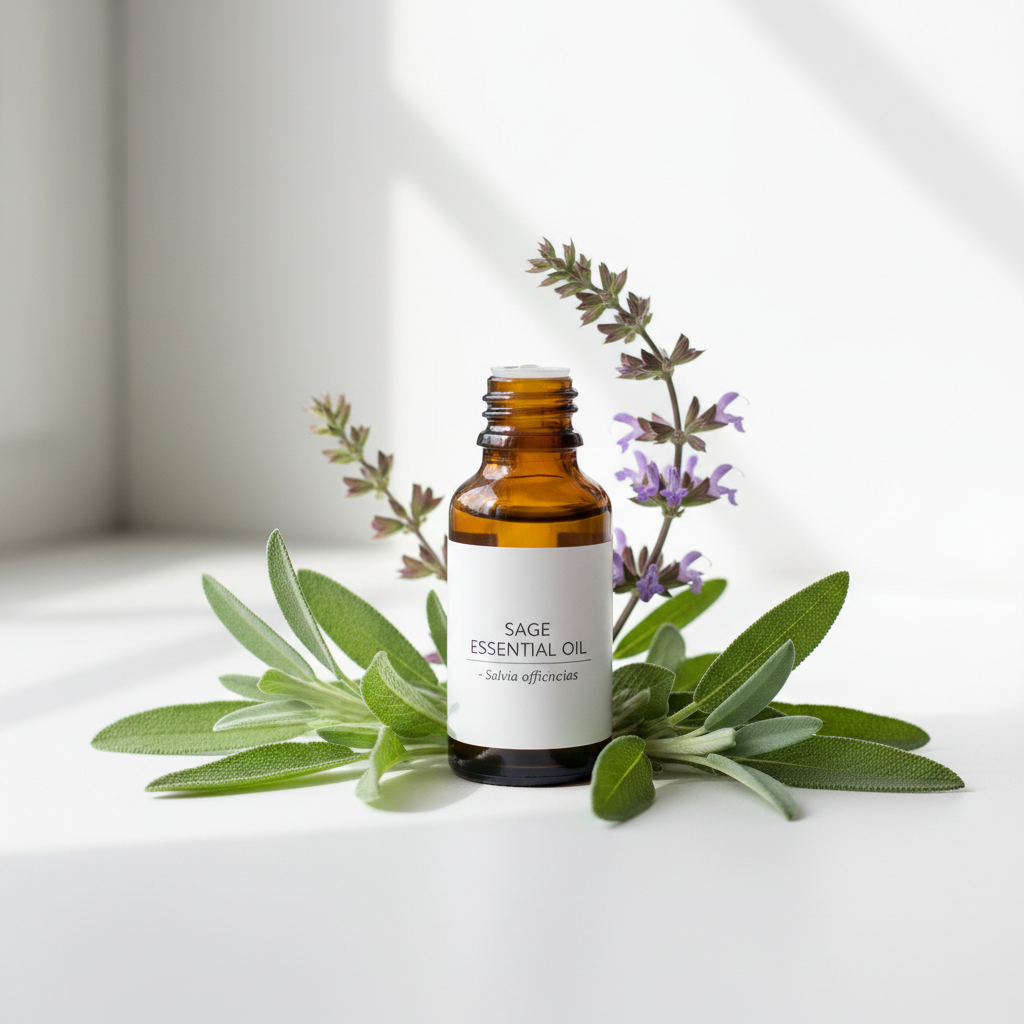
Sage Essential Oil
Salvia officinalis
Plant Source
Leaves
Scent Family
Herbal
"Discover the benefits and uses of Sage Essential Oil, extracted from Salvia officinalis. Explore its therapeutic properties, aroma, and applications."
Sage Essential Oil: An In-Depth Overview
Sage essential oil, extracted from the fragrant leaves of the Salvia officinalis plant, holds a prominent place in both the culinary and medicinal realms. Known for its vibrant aroma and myriad health benefits, sage essential oil is a versatile oil that has captured the essence of wellness since ancient times.
Origin and Extraction Method
Sage essential oil originates from the Mediterranean region, where it has been cultivated for centuries. The plant is characterized by its grayish-green leaves and woody stems. The oil is typically extracted through steam distillation, a method that preserves its holistic properties and aromatic profile. This extraction method involves passing steam through the plant material, causing the essential oils to evaporate. The steam is then cooled, and the condensed liquid collected contains both water and essential oil, which can be separated easily.
Botanical Information
Sage (Salvia officinalis), belonging to the mint family (Lamiaceae), is a perennial herb that thrives in warm climates. It has a long history in herbal medicine and is often recognized for its distinct, earthy scent. The plant not only serves as an excellent culinary herb but is revered for its therapeutic properties that extend beyond the kitchen.
Therapeutic Properties and Benefits
Sage essential oil is renowned for its numerous health benefits:
- Anti-inflammatory: Reduces inflammation and soothes skin irritations.
- Antiseptic: Helps prevent infection and promotes healing.
- Calming Effects: Known to ease anxiety, promote relaxation, and support emotional balance.
In aromatherapy, sage oil is particularly effective in promoting relaxation and mental clarity. It has properties that may alleviate headaches, improve concentration, and uplift moods, which can be beneficial during stressful situations.
Historical and Traditional Uses
Historically, sage has been used not only as a culinary herb but also as a healing agent. Ancient Greeks and Romans recognized its medicinal value, using it for digestive issues and as a natural remedy for various ailments. In traditional practices, sage was burned as a sacred plant to ward off negativity, a practice known as smudging.
Scientific Facts and Research
Recent studies have highlighted the antimicrobial properties of sage essential oil, showcasing its effectiveness against certain bacteria and fungi. Additionally, research suggests that the oil's components, such as thujone and camphor, may contribute to cognitive enhancement, making it a valuable ally for mental performance when diffused or inhaled.
Aroma Profile and Characteristics
Sage essential oil possesses a warm, herbaceous aroma with subtle hints of earthiness. Its complex scent profile makes it a popular choice in fragrance blends, providing depth and grounding to various formulations. The aroma is sweet yet slightly peppery, which contributes to its uplifting and invigorating qualities.
Common Applications and Methods
Sage essential oil can be incorporated into daily routines in several ways:
- Aromatherapy Diffusion: Add a few drops to a diffuser to cleanse the air and promote a calm environment.
- Topical Application: Dilute with a carrier oil for massage or to soothe skin issues. Always conduct a patch test to avoid allergic reactions.
- Bath Soaks: Adding a few drops to your bathwater can enhance relaxation and offer a sensory experience.
Interesting Facts and Trivia
- Sage is often referred to as the "Holy Herb" due to its traditional use in religious rituals and ceremonies.
- In medieval times, sage was considered a symbol of wisdom and was commonly depicted in art and literature.
- A saying goes, "Why should a man die who has sage in his garden?" highlighting its perceived ability to promote longevity.
Conclusion
Sage essential oil is not just a flavorful culinary addition; it's a powerful ally in holistic health and wellness practices. From its rich historical background to its diverse therapeutic applications, sage essential oil provides numerous health benefits and is a must-have in any essential oil collection. Whether used for aromatherapy or in natural healing remedies, sage essential oil continues to offer remarkable qualities that have stood the test of time.
Ask AI About Sage Essential Oil
Get instant answers about this essential oil
Benefits & Uses
- Relaxation: Promotes a sense of calm and tranquility, helping to ease tension and worry.
- Clarity: Enhances mental clarity and focus, which is beneficial for decision-making.
- Mood Enhancement: Helps to uplift spirits and alleviate feelings of sadness.
- Grounding: Provides a stabilizing effect during stressful times, promoting emotional balance.
- Confidence: Encourages self-assurance and empowerment in challenging situations.
- Muscle Relaxation: Eases muscle tension and promotes relaxation after strenuous activities.
- Mild Pain Relief: May provide relief from headaches or muscular discomfort.
- Respiratory Support: Assists in relieving common respiratory issues by promoting clear breathing.
- Skin Healing: Supports minor skin irritations and wound healing.
- Detoxification: Aids in liver detoxification and supports healthy body function.
- Acne Treatment: Helps reduce acne breakouts due to its antimicrobial properties.
- Anti-aging: May help reduce the appearance of fine lines and wrinkles when used in skincare.
- Soothing Skin Irritations: Calms and heals minor burns and irritations.
- Balanced Oily Skin: Reduces excess oiliness and helps maintain healthy skin balance.
- Natural Cleaner: Acts as an antibacterial agent in homemade cleaning products.
- Air Purifier: Cleanses and purifies the air when diffused in living spaces.
- Insect Repellent: Deters household pests when used in sprays.
How to Use
Diffuser
For small rooms, use 3-5 drops; for medium rooms, use 5-8 drops; and for large spaces, use 8-12 drops. Diffuse for 30-60 minutes at a time, two to three times daily. Best diffused during early to late afternoon.
Topical
For adults, dilute Sage Oil to 2-3% (6-9 drops per 30ml carrier oil). For children, use 0.5-1% dilution (1-3 drops per 30ml carrier oil). Applying to the wrist or back of the neck may aid in absorption and effectiveness. Massage gently to promote absorption.
Inhalation
For direct inhalation, place 1-2 drops on a tissue and breathe in. For steam inhalation, add 2-3 drops to hot water and inhale for 5-10 minutes. Use personal inhalers for on-the-go respiratory support.
Safety & Precautions
Perform patch tests before topical application to prevent allergic reactions. Avoid sun exposure for 12 hours post topical use due to potential photosensitivity. Pregnant or nursing women and individuals with specific health conditions should consult a healthcare provider. Store in a cool, dark place to maintain potency; shelf life is around 2-4 years.
Who should avoid:
- Pregnant women, especially in the first trimester.
- Individuals with hormone-sensitive conditions (e.g., breast cancer).
- People taking certain medications, including anticoagulants or antihypertensives.
Recommended Products

Understanding the aromatic layers of Sage Essential Oil
Top Notes
Heart Notes
Base Notes
Scent Evolution
Top Notes: First impression, evaporate quickly (15-30 min)
Heart Notes: Main character, last 2-4 hours
Base Notes: Lasting foundation, linger for hours
Complementary essential oils that pair beautifully with Sage Essential Oil
Allspice Essential Oil
Pimenta dioica
✓balanced scent profile
Ammi Visnaga Essential Oil
Ammi visnaga
✓traditional pairing in aromatherapy
Amyris Essential Oil
Amyris balsamifera
✓balanced scent profile
Angelica Essential Oil
Angelica archangelica
✓complementary therapeutic properties
Angelica Root Essential Oil
Angelica archangelica
✓balanced scent profile
Anise Essential Oil
Pimpinella anisum
✓complementary therapeutic properties
Blending Tips
- • Start with 2-3 oils for simple blends
- • Use 3-5 drops total per 10ml carrier oil
- • Let blends sit for 24-48 hours to marry
- • Test on a small skin area first
Calculating for: Sage Essential Oil
Recommended: 2% | Max safe: 5%
29.57 ml
Your Recipe
0.59 ml
28.98 ml
💡 Dilution Tips
- • Always do a patch test before full application
- • Children and elderly need lower dilutions (1-2%)
- • Facial products should be gentle (0.5-1%)
- • 1 drop ≈ 0.05 ml (20 drops per ml)
- • Common carrier oils: fractionated coconut, jojoba, sweet almond
Related Recipes

DIY Acne Calming Gel Spot Treatment Recipe for Clear Skin
Explore our DIY acne calming gel spot treatment recipe to soothe inflammation and fight breakouts using natural ingredients for healthier skin.
DIY Detoxifying Nail Soak Recipe with Essential Oils
Learn how to create a holistic detoxifying nail soak recipe that promotes healthy nails and cuticles while providing essential oils’ soothing benefits.

DIY Essential Oil Foaming Hand Soap Recipe
Craft your own moisturizing foaming hand soap using essential oils! This DIY recipe combines natural ingredients for clean, soft hands. Perfect for home use!

DIY Essential Oil Inhaler Recipe for Focus
Boost your mental clarity and energy with this DIY essential oil inhaler recipe! Learn how to craft your invigorating inhalers at home easily.

Lavender Essential Oil Body Wash Recipe
Discover the perfect Sandalwood essential oil body wash recipe that promotes relaxation, relieves stress, and moisturizes your skin with natural ingredients.
Luxurious DIY Essential Oil Foaming Hand Soap Recipe
Discover this nourishing recipe for a luxurious DIY essential oil foaming hand soap that cleans and hydrates sensitive skin beautifully!
Frequently Bought Together

Dried Rose Petals Red 6 Oz (170g) Large Bag

Himalayan Pink Salt Coarse Grain, 5 lbs Plastic Jar

Epsom Salt Soak, Magnesium Sulfate USP, 3 Pound, 1-Pack

Dried Chamomile Flowers Organic, 1 lb.

Dried lavender buds, Imported 16oz
