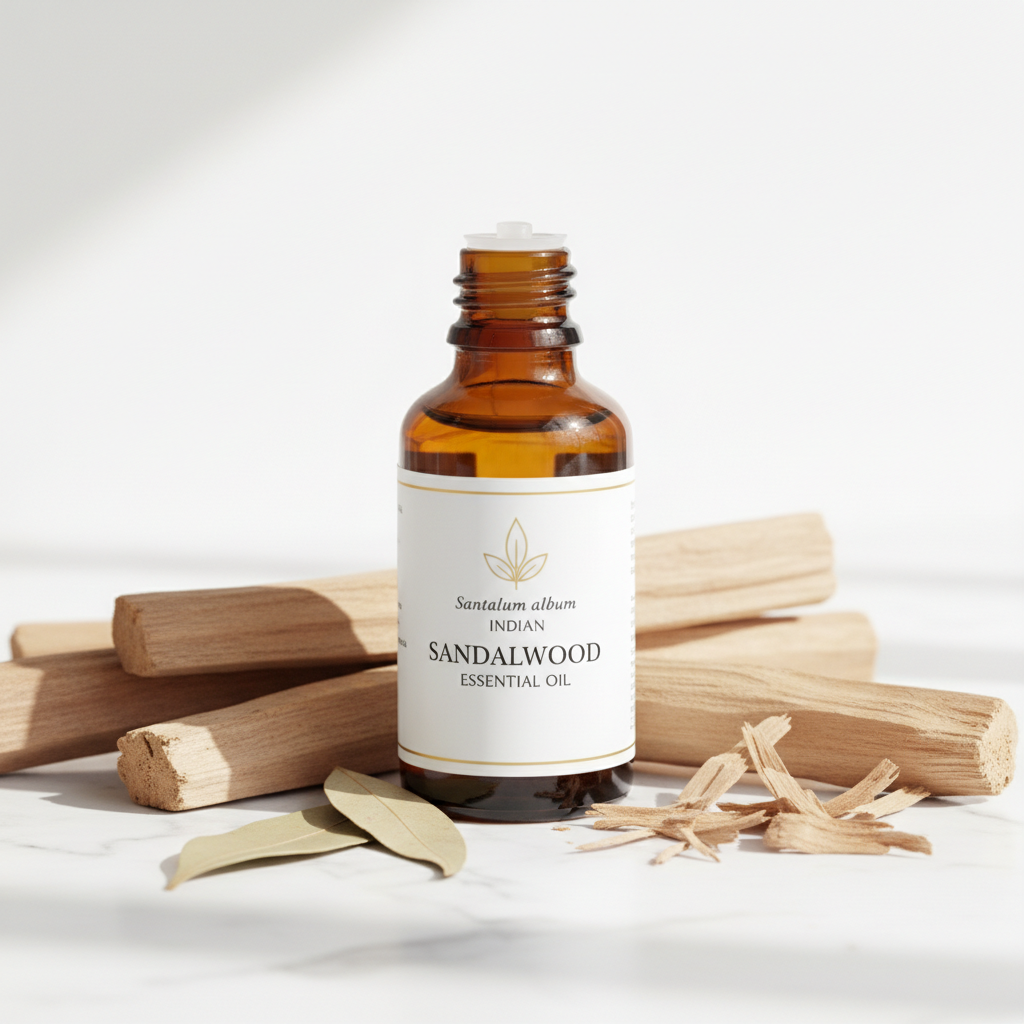
Sandalwood Indian Essential Oil
Santalum album
Plant Source
Wood
Scent Family
Woody
"Discover the calming benefits of Sandalwood Essential Oil. Learn about its origins, extraction methods, and holistic applications for wellness."
Introduction to Sandalwood Essential Oil
Sandalwood Essential Oil is a highly prized oil, extracted from the heartwood of the Santalum album tree, native to India and parts of Southeast Asia. Renowned for its rich, creamy aroma, this essential oil has been utilized for millennia in various cultures and traditions for its multitude of therapeutic benefits.
Origin and Extraction Method
The Santalum album tree takes years to mature, which contributes to its high value. The essential oil is typically extracted through steam distillation of the heartwood, yielding a golden to pale yellow liquid. This method preserves the integrity of the oil's aromatic and therapeutic properties.
Botanical Information
- Botanical Name: Santalum album
- Family: Santalaceae
- Common Names: Sandalwood, White Sandalwood
- Scent Profile: Rich, woody, creamy, slightly sweet
The oil’s composition includes santalol, which is primarily responsible for its calming properties, along with other constituents that enhance its aromatic profile.
Therapeutic Properties and Benefits
Sandalwood Essential Oil offers an array of therapeutic benefits:
- Calming Effect: Known to soothe the mind, Sandalwood helps in reducing anxiety and creating a sense of tranquility.
- Mood Lifter: The oil can help alleviate feelings of sadness or despair, enhancing overall mood and allowing for greater emotional balance.
- Meditation Enhancement: Its grounding aroma assists practitioners in enhancing their meditation practices.
- Focus and Clarity: Many users report improved concentration and mental clarity, making it a useful companion during study or work sessions.
- Skin Benefits: Sandalwood Oil is often included in skincare formulations for its anti-inflammatory and moisturizing properties. It can soothe irritations and redness, making it suitable for sensitive skin.
Historical and Traditional Uses
Historically, Sandalwood has held great significance in various cultures. In ancient India, it was used in Ayurvedic medicine not just for its fragrance but also for its healing properties. Sandalwood has also been a deeply rooted component in rituals, often used as a sacred offering in religious ceremonies. Its aromatic profile made it popular in perfumery as well, symbolizing purity and calmness.
Aroma Profile and Characteristics
Sandalwood Essential Oil boasts a warm, woody scent, interlaced with creamy, soft undertones. This distinctive aroma is both grounding and uplifting, making it ideal for use in aromatherapy recipes, personal fragrances, and spiritual rituals. The oil's lingering scent profile is known to provoke nostalgia and emotional healing, fostering a calming environment.
Common Applications and Methods
- Aromatherapy: Diffusing Sandalwood Essential Oil can create a serene atmosphere, perfect for meditation or personal enjoyment.
- Topical Use: Diluted in a carrier oil, it can be applied to the skin to help with irritation and redness or used in massage to alleviate tension.
- Bathing: Adding a few drops to a warm bath can enhance relaxation and calm the senses.
- Skincare: Its natural emollient properties make it excellent for moisturizing formulations, particularly for dry or sensitive skin types.
- Candle Making: Utilizing Sandalwood in candle formulations can provide an enchanting scent and create a peaceful glow in any space.
Scientific Facts and Research
Studies have shown that the main constituent santalol found in Sandalwood Essential Oil possesses anti-inflammatory, antimicrobial, and calming properties. Research indicates that inhalation of sandalwood oil can lead to lower levels of stress hormones and enhanced mood.
Interesting Facts and Trivia
- Sustainability: Sustainable sourcing is essential for Santalum album, as over-harvesting has threatened natural populations.
- Cultural Significance: In Indian culture, sandalwood is often carved into intricate designs and used in various handicrafts, making it both an aromatic and artistic treasure.
- Market Value: Due to its rarity and the long growing period of the Santalum album tree, Sandalwood Oil is considered one of the most expensive essential oils available.
Conclusion
Sandalwood Essential Oil is much more than just a fragrant oil; it embodies a rich history of therapeutic uses and cultural significance. Its calming properties, coupled with numerous applications, make it a staple in the realms of aromatherapy, skincare, and spiritual practices. Whether used for relaxation, meditation, or skin care, Sandalwood Oil continues to be cherished for its timeless benefits.
Ask AI About Sandalwood Indian Essential Oil
Get instant answers about this essential oil
Benefits & Uses
- Grounding: Calms racing thoughts, helping users feel more centered and balanced.
- Meditative: Enhances meditation practices, promoting deeper states of awareness and relaxation.
- Nostalgic: The distinctive scent can invoke pleasant memories and foster a sense of peace.
- Mood-lifting: Can enhance overall mood and reduce feelings of sadness or melancholy.
- Focus-enhancing: Supports clarity of thought and mental focus, making it ideal for study or work.
- Skin-soothing: Helps to calm skin irritations and redness, effective in formulations for sensitive skin.
- Moisturizing: Acts as a natural emollient, providing hydration and nourishment to the skin.
- Respiratory support: Can assist in relieving symptoms associated with colds and congested airways.
- Pain relief: May provide relief from minor aches and pains when used topically in a diluted form.
- Digestive aid: Known to support digestive health when incorporated in mindful aromatic practices.
- Anti-aging skincare: Effective in formulations aimed at reducing fine lines and promoting a youthful appearance.
- Acne treatment: Helps to balance oily skin and prevent breakouts when added to facial blends.
- After-sun care: Soothes irritated skin post-sun exposure, promoting healing.
- Moisturizing lotion: Can be blended with carrier oils or lotions for enhanced skin hydration.
- Air freshening: Used in diffusers or as a room spray to create a peaceful atmosphere.
- Natural insect repellent: May deter insects when used in household sprays.
- Mood-lifting ambiance: Promotes a calming environment ideal for relaxation or meditation sessions.
- Laundry fragrance: Adds a pleasant scent to linens and fabrics when used in washing.
How to Use
Diffuser
In a diffuser, use 3-5 drops for small rooms (up to 150 sq ft), 5-8 drops for medium rooms (150-300 sq ft), and 8-12 drops for large spaces (300 sq ft and above). Diffuse for 30-60 minutes, 2-3 times a day. Best times to use include early morning for focus or evening for relaxation.
Topical
For adults, dilute Sandalwood at 2-3% (12-15 drops per 1 oz of carrier oil). For children, use a dilution of 0.5-1% (3-5 drops). For the elderly, a 1-2% dilution is recommended. Recommended carriers include jojoba, sweet almond, or fractionated coconut oil. Apply to pulse points and massage lightly. Allow a few minutes for the oil to absorb.
Inhalation
For direct inhalation, add 1-2 drops to a tissue and inhale. For steam inhalation, place 2-3 drops in a bowl of hot water, and lean over the bowl with a towel over your head for 5-10 minutes. A personal inhaler can be filled with a few drops for on-the-go use.
Safety & Precautions
Perform a patch test prior to topical application to check for sensitivity. Sandalwood may cause irritation for some individuals. Pregnant and nursing women should consult a healthcare provider before use. Store in a cool, dark place with the lid tightly closed. Shelf life is typically 3-5 years.
Who should avoid:
- Individuals with allergies to sandalwood.
- Those with severe skin conditions or sensitivities.
- Pregnant women, particularly in the first trimester.
- People on medication for blood pressure.
Recommended Products

Understanding the aromatic layers of Sandalwood Indian Essential Oil
Top Notes
Heart Notes
Base Notes
Scent Evolution
Top Notes: First impression, evaporate quickly (15-30 min)
Heart Notes: Main character, last 2-4 hours
Base Notes: Lasting foundation, linger for hours
Complementary essential oils that pair beautifully with Sandalwood Indian Essential Oil
Agarwood Essential Oil
Aquilaria
✓traditional pairing in aromatherapy
Allspice Essential Oil
Pimenta dioica
✓balanced scent profile
Ammi Visnaga Essential Oil
Ammi visnaga
✓traditional pairing in aromatherapy
Amyris Essential Oil
Amyris balsamifera
✓traditional pairing in aromatherapy
Angelica Essential Oil
Angelica archangelica
✓similar chemical compositions
Angelica Root Essential Oil
Angelica archangelica
✓traditional pairing in aromatherapy
Blending Tips
- • Start with 2-3 oils for simple blends
- • Use 3-5 drops total per 10ml carrier oil
- • Let blends sit for 24-48 hours to marry
- • Test on a small skin area first
Calculating for: Sandalwood Indian Essential Oil
Recommended: 2% | Max safe: 5%
29.57 ml
Your Recipe
0.59 ml
28.98 ml
💡 Dilution Tips
- • Always do a patch test before full application
- • Children and elderly need lower dilutions (1-2%)
- • Facial products should be gentle (0.5-1%)
- • 1 drop ≈ 0.05 ml (20 drops per ml)
- • Common carrier oils: fractionated coconut, jojoba, sweet almond
Related Recipes
Allergy Calming Mattress Spray Recipe for Better Sleep
Discover the calming recipe for a mattress spray that relieves allergy symptoms and promotes a restful night's sleep in your home.

Calming Essential Oil Pillow Mist Recipe for Relaxation
Discover this easy recipe for a soothing pillow mist that features lavender and bergamot for ultimate relaxation and better sleep.

Calming Lavender Linen Spray Recipe
A gentle, relaxing linen and room spray that promotes restful sleep and calm using lavender, chamomile, and cedarwood essential oils.

DIY Acne Calming Gel Spot Treatment Recipe for Clear Skin
Explore our DIY acne calming gel spot treatment recipe to soothe inflammation and fight breakouts using natural ingredients for healthier skin.

DIY Essential Oil Foaming Hand Soap Recipe
Craft your own moisturizing foaming hand soap using essential oils! This DIY recipe combines natural ingredients for clean, soft hands. Perfect for home use!

DIY Essential Oil Inhaler Recipe for Focus
Boost your mental clarity and energy with this DIY essential oil inhaler recipe! Learn how to craft your invigorating inhalers at home easily.