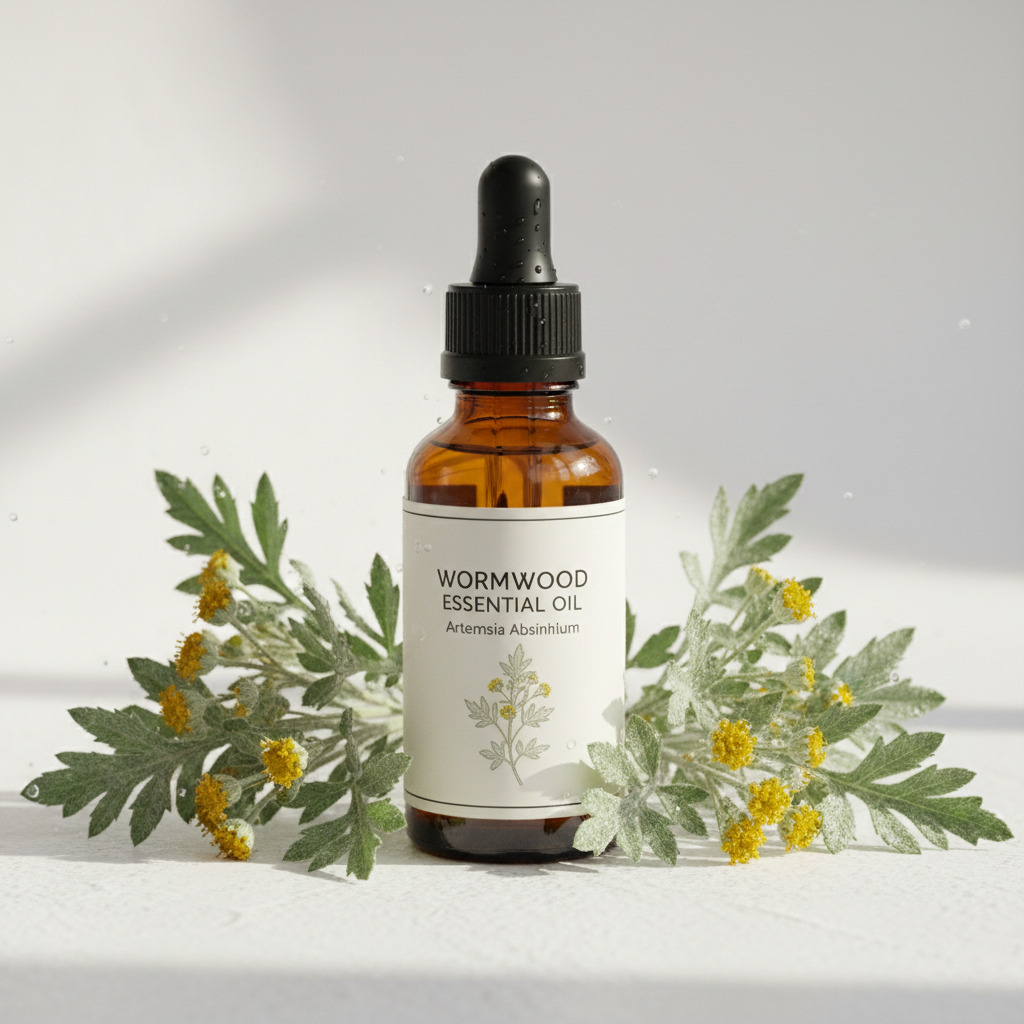
Wormwood Essential Oil
Artemisia absinthium
Plant Source
Leaves and flowering tops
Scent Family
Herbal
"Discover wormwood essential oil, its extraction, therapeutic benefits, and historical uses in aromatherapy for mood and digestive health. Explore today!"
Wormwood essential oil, extracted from the leaves and flowering tops of the Artemisia absinthium plant, holds a significant place both in history and modern wellness practices. This unique essential oil is renowned for its complex composition and myriad of therapeutic applications, making it a valuable addition to any essential oil collection.
Origin and Extraction Method
Wormwood, a perennial shrub native to Europe, Asia, and North Africa, has been used for centuries for its medicinal properties. The oil is obtained through steam distillation of the plant’s foliage and flowers, a method that captures the oil's potent active compounds while preserving its aromatic profile. The extraction process necessitates careful timing, as the ideal period for harvesting is when the plant is in bloom, ensuring maximum oil yield and potency.
Botanical Information
The botanical name of wormwood is Artemisia absinthium, belonging to the Asteraceae family. This herbaceous plant can grow up to 1.2 meters in height, with gray-green leaves that are deeply lobed and a strong, bitter taste. Its flowers are small, yellow, and grouped in clusters, which makes it distinguishable during the summer months. The plant has been historically associated with various culinary uses, especially in absinthe, a famous alcoholic beverage.
Therapeutic Properties and Benefits
Wormwood essential oil is believed to possess numerous therapeutic properties, making it a versatile choice in aromatherapy. It is particularly valued for its potential to:
- Aid Digestion: Traditionally, wormwood has been associated with stimulating appetite and alleviating digestive discomfort. This can be particularly beneficial for those suffering from bloating or gastrointestinal issues.
- Reduce Stress and Anxiety: The calming effect of wormwood essential oil may help manage stress levels and foster emotional stability, making it a popular choice for those seeking tranquility in their daily lives.
- Enhance Mood: This essential oil might uplift mood and assist in reducing feelings of despair or sadness, promoting overall emotional well-being.
- Improve Focus and Clarity: Many users report enhanced mental clarity and concentration, making it beneficial for studying, working, or any task requiring prolonged focus.
- Support Respiratory Health: Its potential to clear congestion can be advantageous during seasonal allergies or respiratory challenges, offering relief during colds or flu.
- Alleviate Pain: Wormwood essential oil also shows promise for natural pain relief, particularly for headaches and muscle aches, by potentially reducing inflammation and discomfort.
- Exhibit Anti-parasitic Properties: Historically, this oil has been used to address intestinal parasites, suggesting that it could play a role in cleansing protocols.
Historical and Traditional Uses
Wormwood has a rich traditional background, having been used since ancient civilizations for various medicinal purposes. The name "wormwood" itself is derived from its historical use as a remedy for intestinal worms. In folklore, it was believed to ward off evil spirits, which led to its inclusion in various rituals and practices.
Scientific Facts and Research
Recent studies have begun to unravel the scientific basis for some of wormwood's claimed benefits. Research indicates that certain compounds within the oil, such as thujone, exhibit antimicrobial and anti-inflammatory properties. These findings add credibility to its traditional uses while promoting further exploration in the fields of natural medicine and aromatherapy.
Aroma Profile and Characteristics
Wormwood essential oil has a distinctive, sharp, and herbaceous aroma, often described as bitter and slightly sweet with earthy undertones. Its unique scent can help create a grounding atmosphere, making it a popular choice for diffusing in spaces designated for meditation or relaxation. The oil is typically considered potent, so it is important to use it in moderation.
Common Applications and Methods
Wormwood essential oil can be used in various ways:
- Aromatherapy: Diffusing the oil or adding it to a personal inhaler can help with stress relief and mood enhancement.
- Topical Use: When diluted with a carrier oil, wormwood can be applied to the skin to support digestion or alleviate muscle soreness.
- Baths: Adding a few drops to a warm bath can enhance relaxation and provide soothing benefits.
Interesting Facts and Trivia
- Wormwood is one of the core ingredients in absinthe, contributing to its characteristic flavor and effects.
- In ancient times, it was often used in ritualistic practices, believed to have protective qualities.
- Despite its bitter taste, wormwood has been used in various culinary solutions, particularly in Italian vermouths.
In summary, wormwood essential oil is much more than just a fragrant extraction; it is a complex blend of therapeutic properties, a rich historical legacy, and a valuable tool for emotional and physical well-being. Its diverse applications in aromatherapy make it an essential oil worth exploring.
Ask AI About Wormwood Essential Oil
Get instant answers about this essential oil
Benefits & Uses
- Stress Relief: Known to help manage stress levels, leading to a more relaxed state of mind.
- Mood Enhancer: May uplift mood and reduce feelings of despair, enhancing overall emotional well-being.
- Focus Improvement: Can aid in enhancing mental clarity and concentration, making it beneficial for studying and work.
- Anxiolytic Effects: Provides calming effects that may help to ease anxiety and promote tranquility.
- Emotional Balance: Promotes emotional stability, making it a comforting presence during times of emotional upheaval.
- Improved Digestion: Facilitates digestive processes, promoting healthy appetite and easing discomfort.
- Pain Management: Natural properties that may help reduce discomfort from headaches and muscle aches.
- Anti-parasitic: Historically used to address intestinal parasites, potentially aiding in cleansing protocols.
- Respiratory Support: May help clear congestion and support respiratory health during seasonal changes.
- Toning Skin: Can be utilized in skin toners to help balance and refresh the complexion.
- Scar Healing: May assist in the healing process of scars due to its skin regenerative properties.
- Acne Treatment: Has potential antiseptic qualities that can benefit acne-prone skin.
- Oil Control: Effective in formulations for oily skin types, helping to regulate sebum production.
- Natural Insect Repellent: Effective in warding off insects when diffused or used in sprays.
- Air Purification: Can help in cleansing the air and eliminating unwanted odors when diffused.
- Laundry Freshener: Add a few drops to laundry for a fresh, herbaceous scent.
- Cleaning Agent: Can be incorporated into homemade cleaning solutions for its antimicrobial properties.
How to Use
Diffuser
For diffuser use, add 3-5 drops for small rooms, 5-8 drops for medium-sized spaces, and 8-12 drops in larger areas. Allow to diffuse for 30-60 minutes per session, 2-3 times daily, with morning and early afternoon being the most beneficial.times.
Topical
For adults, dilute Wormwood oil to 2-3% (12-18 drops in 1 oz carrier oil). Children should use a 0.5-1% dilution (3-6 drops in 1 oz), and elderly should use 1-2% (6-12 drops in 1 oz). Use carrier oils such as sweet almond, coconut, or jojoba. Apply to the recommended areas gently, employing light massage, and allow time for personal absorption.
Inhalation
For direct inhalation, place 1-2 drops on a tissue and breathe in deeply. For steam inhalation, add 2-3 drops to a bowl of hot water and inhale steam for 5-10 minutes. For use in personal inhalers, add 5-10 drops to the inhaler wick.
Safety & Precautions
Perform a patch test before extensive topical application, especially if using for the first time. Wormwood may cause photosensitivity; avoid sun exposure for 12 hours after use. Pregnant or nursing women, as well as individuals with liver issues or taking anticoagulants, should consult a healthcare provider before use. Store in a cool, dark place away from children. Shelf life is generally 2-3 years with proper storage.
Who should avoid:
- Pregnant women, especially in the first trimester.
- Individuals with liver disorders.
- Children under 2 years of age.
- Women who are breastfeeding without consulting a healthcare provider.
Recommended Products

Understanding the aromatic layers of Wormwood Essential Oil
Top Notes
Heart Notes
Base Notes
Scent Evolution
Top Notes: First impression, evaporate quickly (15-30 min)
Heart Notes: Main character, last 2-4 hours
Base Notes: Lasting foundation, linger for hours
Complementary essential oils that pair beautifully with Wormwood Essential Oil
Agarwood Essential Oil
Aquilaria
✓enhanced aromatherapy benefits
Ajowan Seed Essential Oil
Trachyspermum ammi
✓complementary therapeutic properties
Allspice Essential Oil
Pimenta dioica
✓traditional pairing in aromatherapy
Ammi Visnaga Essential Oil
Ammi visnaga
✓traditional pairing in aromatherapy
Amyris Essential Oil
Amyris balsamifera
✓enhanced aromatherapy benefits
Angelica Essential Oil
Angelica archangelica
✓similar chemical compositions
Blending Tips
- • Start with 2-3 oils for simple blends
- • Use 3-5 drops total per 10ml carrier oil
- • Let blends sit for 24-48 hours to marry
- • Test on a small skin area first
Calculating for: Wormwood Essential Oil
Recommended: 2% | Max safe: 5%
29.57 ml
Your Recipe
0.59 ml
28.98 ml
💡 Dilution Tips
- • Always do a patch test before full application
- • Children and elderly need lower dilutions (1-2%)
- • Facial products should be gentle (0.5-1%)
- • 1 drop ≈ 0.05 ml (20 drops per ml)
- • Common carrier oils: fractionated coconut, jojoba, sweet almond
Related Recipes

Calming Essential Oil Pillow Mist Recipe for Relaxation
Discover this easy recipe for a soothing pillow mist that features lavender and bergamot for ultimate relaxation and better sleep.

Calming Lavender Linen Spray Recipe
A gentle, relaxing linen and room spray that promotes restful sleep and calm using lavender, chamomile, and cedarwood essential oils.

DIY Acne Calming Gel Spot Treatment Recipe for Clear Skin
Explore our DIY acne calming gel spot treatment recipe to soothe inflammation and fight breakouts using natural ingredients for healthier skin.

DIY Essential Oil Foaming Hand Soap Recipe
Craft your own moisturizing foaming hand soap using essential oils! This DIY recipe combines natural ingredients for clean, soft hands. Perfect for home use!

DIY Essential Oil Inhaler Recipe for Focus
Boost your mental clarity and energy with this DIY essential oil inhaler recipe! Learn how to craft your invigorating inhalers at home easily.
Deep Tissue Pain Relief Oil Recipe
Discover the powerful essential oil recipe for deep tissue pain relief. Learn how to relieve muscle tension and soreness with all-natural ingredients.