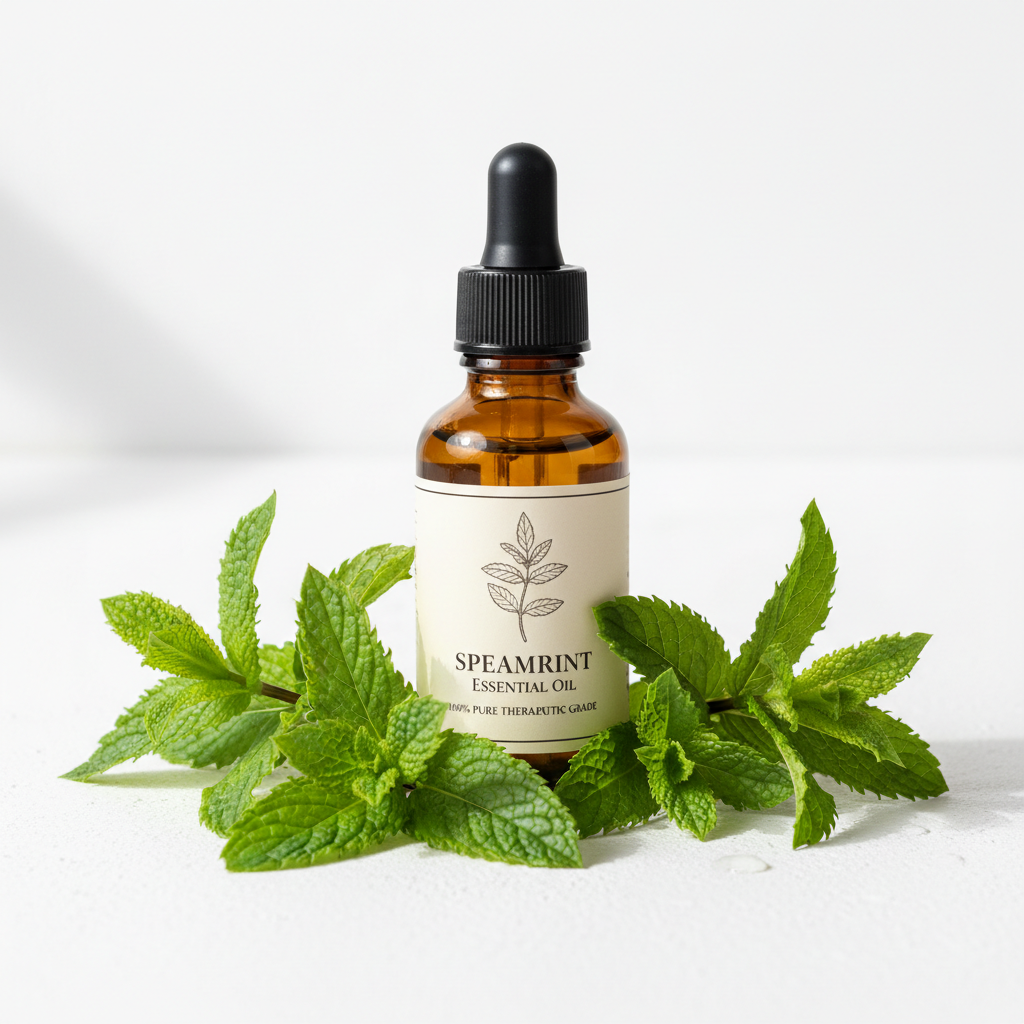
Spearmint Essential Oil
Mentha spicata
Plant Source
Leaves
Scent Family
Minty
"Discover the benefits of Spearmint Essential Oil, extracted from Mentha spicata, and explore its uses, properties, and aromatic qualities for wellness."
Spearmint Essential Oil, scientifically known as Mentha spicata, is derived from the vibrant green leaves of the spearmint plant, a member of the Lamiaceae (mint) family. This essential oil is extracted through steam distillation, a method that ensures the retention of the plant’s natural aromatic properties while providing a high-quality oil that is refreshing and invigorating.
Origin and Extraction Method
Spearmint is native to Europe but is now cultivated in various parts of the world, thanks to its popularity and many benefits. The oil is extracted from the fresh leaves of the spearmint plant, which have a characteristic bright green color and a bright, fresh scent. The steam distillation process involves passing steam through the plant material, causing the oil to evaporate and subsequently condense into liquid form, resulting in an essential oil that is both potent and aromatic.
Botanical Information
The botanical name, Mentha spicata, highlights its distinctive flowering spikes, with leaves that are lanceolate and serrated. The plant grows to about 30-100 cm in height and is known for attracting various pollinators, including bees and butterflies, making it a beneficial addition to gardens.
Therapeutic Properties and Benefits
Spearmint Essential Oil is celebrated for its numerous therapeutic benefits:
- Digestive Aid: Traditionally used to alleviate digestive discomfort, it can help to soothe symptoms like bloating and gas.
- Mental Clarity: The oil is known to promote mental clarity, enhance focus, and improve mood, making it a popular choice for aromatherapy applications aimed at reducing mental fatigue.
- Stress Relief: Inhaling spearmint oil can uplift the spirits and provide a feeling of rejuvenation, helping to alleviate stress and anxiety.
Historical and Traditional Uses
Historically, spearmint has been valued not only for its delightful flavor in culinary dishes but also as a remedy in traditional medicine. Ancient cultures have utilized spearmint for its digestive health benefits, often consumed in teas or as an infusion. It was also used in baths and during massage practices for its soothing and refreshing properties.
Scientific Facts and Research
Recent studies have recognized the antimicrobial properties of spearmint oil, finding it effective against certain bacterial strains. Research into its potential benefits continues, with findings suggesting that its aroma can enhance cognitive function and potentially have a positive impact on mood disorders.
Aroma Profile and Characteristics
Spearmint Essential Oil is characterized by its sweet, minty, and refreshing aroma. The scent is often described as more gentle and sweeter compared to other mints like peppermint, making it a favorite in many homes and wellness practices. The oil’s fresh scent can invigorate the air and create an uplifting atmosphere when diffused.
Common Applications and Methods
Spearmint Oil has various applications:
- Aromatherapy: Use in a diffuser to improve mood and clarity of thought.
- Topical Use: Dilute with a carrier oil and apply to temples to relieve tension headaches or sore muscles.
- Baths: Add a few drops to warm water for a refreshing bathing experience.
- Cooking Uses: Sometimes used in culinary applications, although it is essential to ensure it is food-grade quality.
Interesting Facts and Trivia
- Spearmint is often added to dental products for its flavor and freshening effect, symbolizing its longstanding association with oral health.
- In folklore, spearmint has been linked with love and devotion, often used as a garnish for romantic meals.
- The oil is also used in natural insect repellents, capitalizing on its strong aroma to deter pests.
In conclusion, Spearmint Essential Oil is a versatile and beneficial oil with a rich history of use for wellness and health. Its fresh and lively aroma, along with its therapeutic properties, make it a must-have for aromatherapy enthusiasts and those seeking natural health solutions.
Ask AI About Spearmint Essential Oil
Get instant answers about this essential oil
Benefits & Uses
- Promotes clarity of thought, helping to enhance focus and concentration.
- Uplifting aroma that can improve mood and reduce feelings of stress.
- Encourages feelings of freshness and rejuvenation, ideal for mental fatigue.
- Supports emotional balance, making it useful during times of uncertainty or turmoil.
- Can enhance feelings of happiness, often used in practices aimed at boosting positivity.
- Relieves tension headaches when used aromatically or topically in a diluted form.
- Soothes stomach discomfort and digestive issues when inhaled or used in a diluted topical application.
- May help reduce muscle pain and soreness when blended with a carrier oil and massaged onto affected areas.
- Encourages respiratory health by helping to clear nasal congestion and improve breathing.
- Can cool and refresh the skin when diluted and applied topically, especially in warm weather.
- Can be used in DIY facial cleansers to refresh oily or acne-prone skin.
- Diluted spearmint oil may be added to lotions for a cooling sensation in hot weather.
- Used in foot soaks for its refreshing and soothing properties.
- Can enhance aroma in homemade body scrubs, promoting a refreshing, uplifting experience.
- Makes an excellent natural cleaner when blended with vinegar or baking soda due to its antimicrobial properties.
- Acts as a natural deodorizer, perfect for keeping rooms smelling fresh when diffused.
- Can be added to laundry products for a fresh scent and antibacterial effect.
- Insect repellent: may help deter ants and mosquitoes when mixed with water and sprayed in affected areas.
How to Use
Diffuser
For small rooms, use 3-5 drops; for medium rooms, use 5-8 drops; for large rooms, use 8-12 drops. Diffuse for sessions of 30-60 minutes, 2-3 times daily, ideally in the morning or early afternoon for mental clarity and refreshment.
Topical
For adults, dilute to 2-3% (12-18 drops per 1 oz of carrier oil). For children age 2-12, dilute to 0.5-1% (3-6 drops per 1 oz). For elderly users, dilute to 1-2% (6-12 drops per 1 oz). Recommended carriers include jojoba, sweet almond, or coconut oil. Apply to pulse points or sore areas with gentle massaging.
Inhalation
For direct inhalation, place 1-2 drops on a tissue or inhale from the bottle. For steam inhalation, add 2-3 drops to a bowl of hot water and lean over it with a towel for 5-10 minutes. Personal inhalers can be prepared for convenience.
Safety & Precautions
Perform a patch test before topical use. May cause photosensitivity; avoid sun exposure for 12 hours after topical application. Consult a healthcare provider if pregnant, nursing, or on medication. Store in a cool, dark place; shelf life is typically 1-2 years depending on storage conditions.
Who should avoid:
- Pregnant individuals during the first trimester.
- Children younger than 2 years old without guidance from a healthcare provider.
- Individuals with known allergies to mint family plants.
- Persons on medications that affect blood pressure.
Recommended Products

Understanding the aromatic layers of Spearmint Essential Oil
Top Notes
Heart Notes
Base Notes
Scent Evolution
Top Notes: First impression, evaporate quickly (15-30 min)
Heart Notes: Main character, last 2-4 hours
Base Notes: Lasting foundation, linger for hours
Complementary essential oils that pair beautifully with Spearmint Essential Oil
Ajowan Seed Essential Oil
Trachyspermum ammi
✓traditional pairing in aromatherapy
Allspice Essential Oil
Pimenta dioica
✓enhanced aromatherapy benefits
Ammi Visnaga Essential Oil
Ammi visnaga
✓similar chemical compositions
Amyris Essential Oil
Amyris balsamifera
✓similar chemical compositions
Angelica Essential Oil
Angelica archangelica
✓similar chemical compositions
Angelica Root Essential Oil
Angelica archangelica
✓complementary therapeutic properties
Blending Tips
- • Start with 2-3 oils for simple blends
- • Use 3-5 drops total per 10ml carrier oil
- • Let blends sit for 24-48 hours to marry
- • Test on a small skin area first
Calculating for: Spearmint Essential Oil
Recommended: 2% | Max safe: 5%
29.57 ml
Your Recipe
0.59 ml
28.98 ml
💡 Dilution Tips
- • Always do a patch test before full application
- • Children and elderly need lower dilutions (1-2%)
- • Facial products should be gentle (0.5-1%)
- • 1 drop ≈ 0.05 ml (20 drops per ml)
- • Common carrier oils: fractionated coconut, jojoba, sweet almond
Related Recipes

DIY Acne Calming Gel Spot Treatment Recipe for Clear Skin
Explore our DIY acne calming gel spot treatment recipe to soothe inflammation and fight breakouts using natural ingredients for healthier skin.
DIY Essential Oil All-Purpose Cleaner Recipe for a Fresh Home
Discover the benefits of this DIY essential oil all-purpose cleaner recipe for a clean, safe, and aromatic household environment.
DIY Essential Oil Dishwasher Detergent Recipe
Discover the ultimate DIY dishwasher detergent recipe using essential oils, safe for your dishes and the environment. Make your kitchen eco-friendly!

DIY Essential Oil Foaming Hand Soap Recipe
Craft your own moisturizing foaming hand soap using essential oils! This DIY recipe combines natural ingredients for clean, soft hands. Perfect for home use!

DIY Essential Oil Inhaler Recipe for Focus
Boost your mental clarity and energy with this DIY essential oil inhaler recipe! Learn how to craft your invigorating inhalers at home easily.
DIY Germ Neutralizing Room Spray Recipe
Learn how to make a germ neutralizing room spray recipe that freshens the air and creates a healthier home for you and your family.