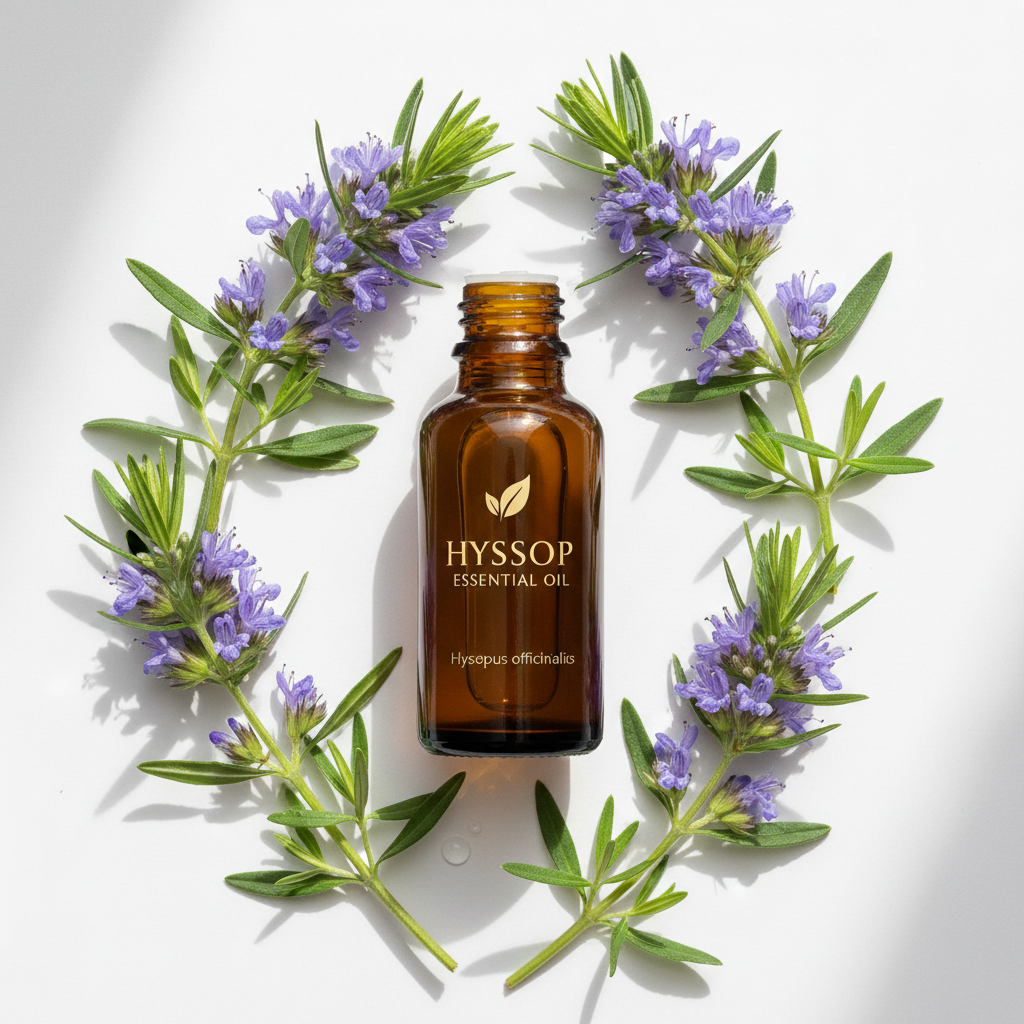
Hyssop Essential Oil
Hyssopus officinalis
Plant Source
Leaves and flowering tops
Scent Family
Herbal
"Explore the amazing benefits of Hyssop essential oil! Discover its emotional, respiratory, and historical significance and learn how to use it effectively."
Hyssop essential oil, derived from the leaves and flowering tops of the Hyssopus officinalis plant, is a powerful oil known for its myriad of therapeutic benefits and deeply rooted historical significance. Native to the Mediterranean region, Hyssop has been celebrated for centuries for its culinary and medicinal values. The essential oil is extracted through steam distillation, a method that maintains the integrity of its delicate aromatic compounds, resulting in a high-quality oil with a fresh, sweet, and slightly herbaceous scent.
Origin and Extraction Method
Hyssop essential oil’s history can be traced back to ancient civilizations, including the Egyptians, who utilized it for both culinary enhancements and medicinal purposes. The steam distillation process used to extract Hyssop essential oil is key to capturing its aromatic properties, allowing for the preservation and potent delivery of essential compounds, which are central to its various uses.
Botanical Information
Hyssopus officinalis is a member of the Lamiaceae family, distinguished by its small purple flowers and linear green leaves. Rich in bioactive compounds such as pinocamphone and camphor, Hyssop essential oil stands out for its therapeutic and aromatic qualities. Due to its wide-ranging applications, Hyssop oil is frequently confused with other botanical oils, underscoring its remarkable versatility.
Therapeutic Properties and Benefits
Hyssop essential oil is renowned for its extensive range of therapeutic benefits, making it a crucial component in both traditional herbal medicine and contemporary aromatherapy practices. Some of its most notable benefits include:
- Respiratory Support: Hyssop oil enhances respiratory health by easing symptoms associated with coughs and colds, providing soothing effects for throat irritation and improving breathing when diffused or inhaled.
- Emotional Balance: Frequently used in meditation, it promotes emotional well-being and clarity, helping individuals combat feelings of anxiety and promoting tranquility.
- Digestive Health: This essential oil can aid digestion, alleviate discomfort, and may stimulate appetite, making it beneficial for various digestive issues.
- Immune Support: Hyssop essential oil provides immune system support, particularly useful during seasonal illnesses.
Historical and Traditional Uses
Hyssop is steeped in folklore and historical significance. It is referenced in biblical texts for its purification properties, highlighting its importance across various cultures as a healing herb. This long-standing use underscores Hyssop’s effectiveness in addressing diverse ailments, establishing its credibility in herbal medicine.
Scientific Facts and Research
Recent scientific research has validated many of Hyssop essential oil’s traditional uses by exploring its antimicrobial and antioxidant properties. Ongoing studies aim to further investigate its impacts on mental clarity and emotional health, bridging the gap between ancient practices and modern scientific understanding.
Aroma Profile and Characteristics
With a fresh, sweet, and herbaceous aroma, Hyssop essential oil provides an uplifting yet grounding scent, making it perfect for enhancing focus and mental clarity. The oil’s unique aroma properties make it favored in both aromatherapy and natural perfumery.
Common Applications and Methods:
Hyssop essential oil can be incorporated into daily wellness practices through various methods:
- Aromatherapy: Use a diffuser with a few drops to promote emotional balance and clarity.
- Topical Use: Dilute with a carrier oil for localized application to sore muscles or skin issues, ensuring a patch test is performed first.
- Bathing: Add a few drops to a warm bath for a soothing and relaxing experience.
- Steam Inhalation: Great for respiratory support, inhale the steam by adding a few drops to hot water.
- Skin Care: Incorporate in small amounts into skincare routines for clearer skin due to its antimicrobial properties.
Interesting Facts and Trivia
Despite being less popular than some essential oils, Hyssop essential oil is a treasure for its diverse applications in holistic wellness. It’s often noted in herbal medicine texts for its rich legacy and versatility, which continues to matter in modern wellness practices around the world. Its historical context and practical benefits make Hyssop a compelling addition to any essential oil collection.
In summary, Hyssop essential oil is a remarkable and adaptable oil worth considering for anyone interested in the therapeutic qualities of essential oils. Whether for respiratory support, emotional stability, or as part of traditional health practices, exploring Hyssop essential oil can significantly enhance your overall well-being.
Ask AI About Hyssop Essential Oil
Get instant answers about this essential oil
Benefits & Uses
- Promotes emotional balance by reducing feelings of anxiety and tension.
- Enhances mental clarity and focus, making it supportive for tasks requiring concentration.
- Encourages a sense of calm and tranquility, helpful in meditation and spiritual practices.
- May uplift mood and ward off feelings of sadness or despair, promoting a brighter outlook.
- Supports grounding during overwhelming emotions, fostering a feeling of stability.
- Promotes respiratory health by easing coughs and soothing sore throats when used in steam inhalation or diffusers.
- Can help alleviate muscle tension and pain when applied diluted to affected areas.
- Known to support the immune system, especially during seasonal changes.
- May aid in reducing symptoms of indigestion when used in aromatherapy practices.
- Potentially helps to enhance skin health by promoting a clear complexion when used in skincare products.
- Used in small quantities in skincare formulations for its antibacterial properties which may help with acne management.
- Acts as a natural astringent, making it beneficial for oily skin types.
- Can be infused in carrier oils for use in massages, promoting relaxation while nourishing the skin.
- May be included in homemade toners to improve skin clarity and texture.
- Effective for purifying air, particularly in respiratory conditions when diffused in living areas.
- Can be added to cleaning products for its antimicrobial properties, aiding in sanitizing surfaces.
- Used in making natural air fresheners by blending with water and essential oils for a fresh scent.
- Helpful for creating a serene environment during meditation and yoga sessions when used in diffusers.
How to Use
Diffuser
For small rooms, use 3-5 drops of hyssop essential oil. In medium rooms, 5-8 drops are appropriate, and for large spaces, use 8-12 drops. Optimal diffusion time is 30-60 minutes. It is best to diffuse 2-3 times a day, especially during morning routines or when focused work is needed.
Topical
For adults, dilute at 2-3% in carrier oils such as jojoba, sweet almond, or coconut. For children, aim for a 0.5-1% dilution, while elderly should use a 1-2% dilution. Apply on pulse points or massage gently into areas in need of relief, allowing for absorption.
Inhalation
For direct inhalation, place 1-2 drops on a tissue and breathe deeply. For steam inhalation, add 2-3 drops to hot water and inhale the steam for 5-10 minutes. You can also prepare a personal inhaler by adding 5-10 drops to the inhaler base for on-the-go use.
Recommended Products

Understanding the aromatic layers of Hyssop Essential Oil
Top Notes
Heart Notes
Base Notes
Scent Evolution
Top Notes: First impression, evaporate quickly (15-30 min)
Heart Notes: Main character, last 2-4 hours
Base Notes: Lasting foundation, linger for hours
Complementary essential oils that pair beautifully with Hyssop Essential Oil
Abyssinian Carrier Oil
Crambe abyssinica
✓complementary therapeutic properties
Agarwood Essential Oil
Aquilaria
✓enhanced aromatherapy benefits
Ajowan Seed Essential Oil
Trachyspermum ammi
✓balanced scent profile
Ammi Visnaga Essential Oil
Ammi visnaga
✓enhanced aromatherapy benefits
Amyris Essential Oil
Amyris balsamifera
✓similar chemical compositions
Angelica Essential Oil
Angelica archangelica
✓similar chemical compositions
Blending Tips
- • Start with 2-3 oils for simple blends
- • Use 3-5 drops total per 10ml carrier oil
- • Let blends sit for 24-48 hours to marry
- • Test on a small skin area first
Calculating for: Hyssop Essential Oil
Recommended: 2% | Max safe: 5%
29.57 ml
Your Recipe
0.59 ml
28.98 ml
💡 Dilution Tips
- • Always do a patch test before full application
- • Children and elderly need lower dilutions (1-2%)
- • Facial products should be gentle (0.5-1%)
- • 1 drop ≈ 0.05 ml (20 drops per ml)
- • Common carrier oils: fractionated coconut, jojoba, sweet almond
Related Recipes

Calming Essential Oil Pillow Mist Recipe for Relaxation
Discover this easy recipe for a soothing pillow mist that features lavender and bergamot for ultimate relaxation and better sleep.

Calming Lavender Linen Spray Recipe
A gentle, relaxing linen and room spray that promotes restful sleep and calm using lavender, chamomile, and cedarwood essential oils.

DIY Acne Calming Gel Spot Treatment Recipe for Clear Skin
Explore our DIY acne calming gel spot treatment recipe to soothe inflammation and fight breakouts using natural ingredients for healthier skin.

DIY Essential Oil Foaming Hand Soap Recipe
Craft your own moisturizing foaming hand soap using essential oils! This DIY recipe combines natural ingredients for clean, soft hands. Perfect for home use!

DIY Essential Oil Inhaler Recipe for Focus
Boost your mental clarity and energy with this DIY essential oil inhaler recipe! Learn how to craft your invigorating inhalers at home easily.
Delightful Sleep-Enhancing Pillow Sachets Recipe for Restful Nights
Discover how to create a calming sleep environment with this easy recipe for pillow sachets infused with soothing essential oils to improve your sleep quality.