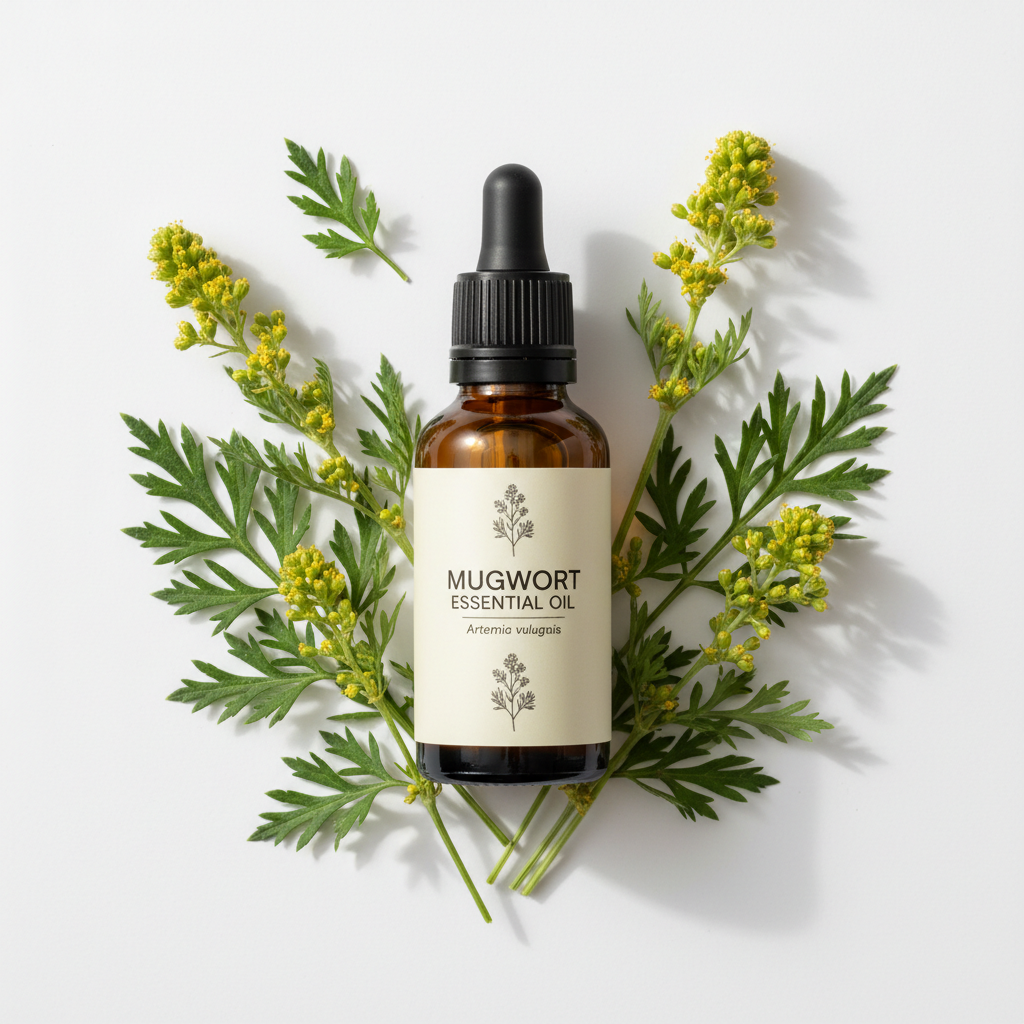
Mugwort Essential Oil
Artemisia vulgaris
Plant Source
leaves and flowering tops
Scent Family
Herbal
"Discover the uses and benefits of Mugwort essential oil. Learn about extraction, therapeutic properties, and traditional uses for wellness and relaxation."
Mugwort Essential Oil: Properties, Uses, and Benefits
Mugwort essential oil, derived from the leaves and flowering tops of the Artemisia vulgaris plant, is steeped in history, with roots in both culinary and medicinal traditions. Known for its calming and soothing properties, this essential oil has been utilized for centuries across various cultures, celebrated not just for its health benefits but also for its enchanting aroma and intriguing qualities.
Origin and Extraction Method
Mugwort essential oil is primarily extracted through steam distillation. The leaves and flowering tops of the plant are harvested at peak oil concentration, usually just before flowering. Artemisia vulgaris is native to Europe, Asia, and North Africa, and it grows abundantly in various climates. This aromatic plant has long been associated with divination, protection, and even culinary uses in European dishes.
Botanical Information
Mugwort is a perennial herb that showcases feathery, dark green leaves and small, clustered flowers that bloom in late summer. Its botanical family is Asteraceae, which includes many well-known herbs. Known by various names globally, including wormwood and common mugwort, this plant carries a rich tradition in herbal medicine and folklore.
Therapeutic Properties and Benefits
Mugwort essential oil is renowned for its therapeutic qualities:
- Enhances Dream Recall: Many enthusiasts use Mugwort oil in dreamwork, claiming it aids in vivid dreams and supports lucid dreaming.
- Reduces Stress: Known for its calming effects, the oil may promote relaxation and alleviate stress and tension.
- Supports Emotional Balance: This oil can assist in achieving emotional clarity and stability, making it a favorite among individuals seeking mental well-being.
- Encourages Creativity: Users often report that Mugwort opens the mind to new ideas and inspirations, beneficial for artists and creatives.
- Fosters a Sense of Grounding: It is believed to help individuals feel centered and connected, enhancing mindfulness practices.
- Headache Relief: Inhalation of Mugwort oil may alleviate headaches and migraines.
- Respiratory Support: The oil can promote easier breathing, benefiting those with respiratory issues.
- Gynecological Health: It's also noted for relieving menstrual discomfort and issues related to women's reproductive health.
- Nausea Relief: Inhalation can help reduce feelings of nausea.
- Improves Circulation: Enhancing blood circulation can lead to elevated energy levels, vital for overall health.
Historical and Traditional Uses
Traditionally, Mugwort has been used in various cultures, from ancient Rome where it was considered a sacred herb, to its role in Chinese medicine for its potent healing properties. Throughout the Middle Ages, it was often used as a protective charm and was believed to ward off evil spirits. In culinary traditions, it has been used to flavor beers and dishes, showcasing its versatility.
Aroma Profile and Characteristics
Mugwort essential oil possesses a unique aroma profile that is often described as warm, herbaceous, and slightly sweet, with earthy undertones. The complexity of its scent makes it a cherished addition to aromatherapy practices, often blended with other oils to enhance the experience. Users enjoy its grounding qualities, which contribute to a calming atmosphere during meditation or relaxation sessions.
Common Applications and Methods
Mugwort essential oil can be utilized in various ways:
- Diffusion: Add a few drops to an essential oil diffuser to create a calming environment. This can be particularly effective before sleep.
- Topical Application: Diluted with a carrier oil, it can be applied to the skin to alleviate localized discomfort.
- Baths: A drop or two in your bathwater can provide relaxation and enhance the bathing experience.
- Inhalation: Inhale directly or use a steam inhalation to enjoy its therapeutic benefits.
Interesting Facts and Trivia
- Historically, Mugwort was called "dream herb" due to its association with dreams. Some cultures even used it during rituals to enhance prophetic dreams.
- Its name, "mugwort," derives from the Old English "mucgwyrt," which means "mugwort," emphasizing its culinary uses.
- Archaeological studies indicate that Mugwort may have been used in ancient brewing processes, hinting at its lengthy history in herbal applications.
In conclusion, Mugwort essential oil is an excellent addition to any essential oil collection, offering multiple therapeutic benefits and a fascinating history. Whether you're seeking relaxation, emotional balance, or creative inspiration, this oil is a powerful ally in promoting overall wellness.
Ask AI About Mugwort Essential Oil
Get instant answers about this essential oil
Benefits & Uses
- Enhances Dream Recall: Supports vivid dreams and lucid dreaming, often used in dreamwork.
- Reduces Stress: Promotes relaxation and reduces feelings of stress and tension.
- Supports Emotional Balance: Assists in achieving emotional stability and clarity.
- Encourages Creativity: Opens the mind to new ideas and inspirations.
- Fosters a Sense of Grounding: Helps individuals feel centered and balanced.
- May alleviate headaches and migraines when used through inhalation.
- Supports respiratory health by promoting easier breathing.
- Can relieve menstrual discomfort and other gynecological issues.
- Aids in reducing symptoms of nausea when inhaled.
- Enhances circulation, which can contribute to improved energy levels.
- Can be added to skincare products for its potential anti-inflammatory properties.
- Used in diluted form to soothe minor skin irritations.
- May assist in toning the skin, providing a fresh appearance.
- Incorporated into herbal baths for skin rejuvenation and relaxation.
- Acts as a natural insect repellent when diffused.
- Can be used in homemade cleaning solutions for its antibacterial properties.
- Incorporated in potpourri to create a calming atmosphere.
- Used to deodorize spaces by neutralizing unwanted odors.
How to Use
Diffuser
For small rooms, add 3-5 drops of Mugwort oil; for medium rooms, use 5-8 drops; large areas can benefit from 8-12 drops. Diffuse for sessions lasting 30-60 minutes, up to 2-3 times daily. Best diffused in the evening or during relaxation practices.
Topical
For adults, dilute Mugwort oil to 2-3% (approximately 12-18 drops per ounce of carrier oil). In children, use a lower dilution of 0.5-1%. For elderly, recommend 1-2%. Popular carrier oil options include jojoba, sweet almond, and coconut. Apply to areas of discomfort or in massage, allowing 30 minutes for full absorption.
Inhalation
Direct inhalation can be done by placing 1-2 drops on a tissue or cupping hands over the nose. For steam inhalation, add 2-3 drops to hot water and inhale the steam for 5-10 minutes. A personal inhaler can also be filled for on-the-go use.
Safety & Precautions
Always conduct a patch test prior to topical applications. Avoid sun exposure for 12 hours after topical usage due to potential photosensitivity. Pregnant or nursing women should avoid use unless directed by a healthcare professional. Store in a dark, cool place to maintain potency. Shelf life is typically 2-3 years.
Who should avoid:
- Pregnant women
- Nursing mothers
- Children under 2 years
- Individuals with liver disease
- People with a history of seizures
Recommended Products

Understanding the aromatic layers of Mugwort Essential Oil
Top Notes
Heart Notes
Base Notes
Scent Evolution
Top Notes: First impression, evaporate quickly (15-30 min)
Heart Notes: Main character, last 2-4 hours
Base Notes: Lasting foundation, linger for hours
Complementary essential oils that pair beautifully with Mugwort Essential Oil
Abyssinian Carrier Oil
Crambe abyssinica
✓enhanced aromatherapy benefits
Agarwood Essential Oil
Aquilaria
✓enhanced aromatherapy benefits
Ajowan Seed Essential Oil
Trachyspermum ammi
✓similar chemical compositions
Ammi Visnaga Essential Oil
Ammi visnaga
✓traditional pairing in aromatherapy
Amyris Essential Oil
Amyris balsamifera
✓balanced scent profile
Angelica Essential Oil
Angelica archangelica
✓traditional pairing in aromatherapy
Blending Tips
- • Start with 2-3 oils for simple blends
- • Use 3-5 drops total per 10ml carrier oil
- • Let blends sit for 24-48 hours to marry
- • Test on a small skin area first
Calculating for: Mugwort Essential Oil
Recommended: 2% | Max safe: 5%
29.57 ml
Your Recipe
0.59 ml
28.98 ml
💡 Dilution Tips
- • Always do a patch test before full application
- • Children and elderly need lower dilutions (1-2%)
- • Facial products should be gentle (0.5-1%)
- • 1 drop ≈ 0.05 ml (20 drops per ml)
- • Common carrier oils: fractionated coconut, jojoba, sweet almond
Related Recipes
Allergy Calming Mattress Spray Recipe for Better Sleep
Discover the calming recipe for a mattress spray that relieves allergy symptoms and promotes a restful night's sleep in your home.

Calming Essential Oil Pillow Mist Recipe for Relaxation
Discover this easy recipe for a soothing pillow mist that features lavender and bergamot for ultimate relaxation and better sleep.

Calming Lavender Linen Spray Recipe
A gentle, relaxing linen and room spray that promotes restful sleep and calm using lavender, chamomile, and cedarwood essential oils.

DIY Acne Calming Gel Spot Treatment Recipe for Clear Skin
Explore our DIY acne calming gel spot treatment recipe to soothe inflammation and fight breakouts using natural ingredients for healthier skin.

DIY Essential Oil Foaming Hand Soap Recipe
Craft your own moisturizing foaming hand soap using essential oils! This DIY recipe combines natural ingredients for clean, soft hands. Perfect for home use!
Delightful Sleep-Enhancing Pillow Sachets Recipe for Restful Nights
Discover how to create a calming sleep environment with this easy recipe for pillow sachets infused with soothing essential oils to improve your sleep quality.