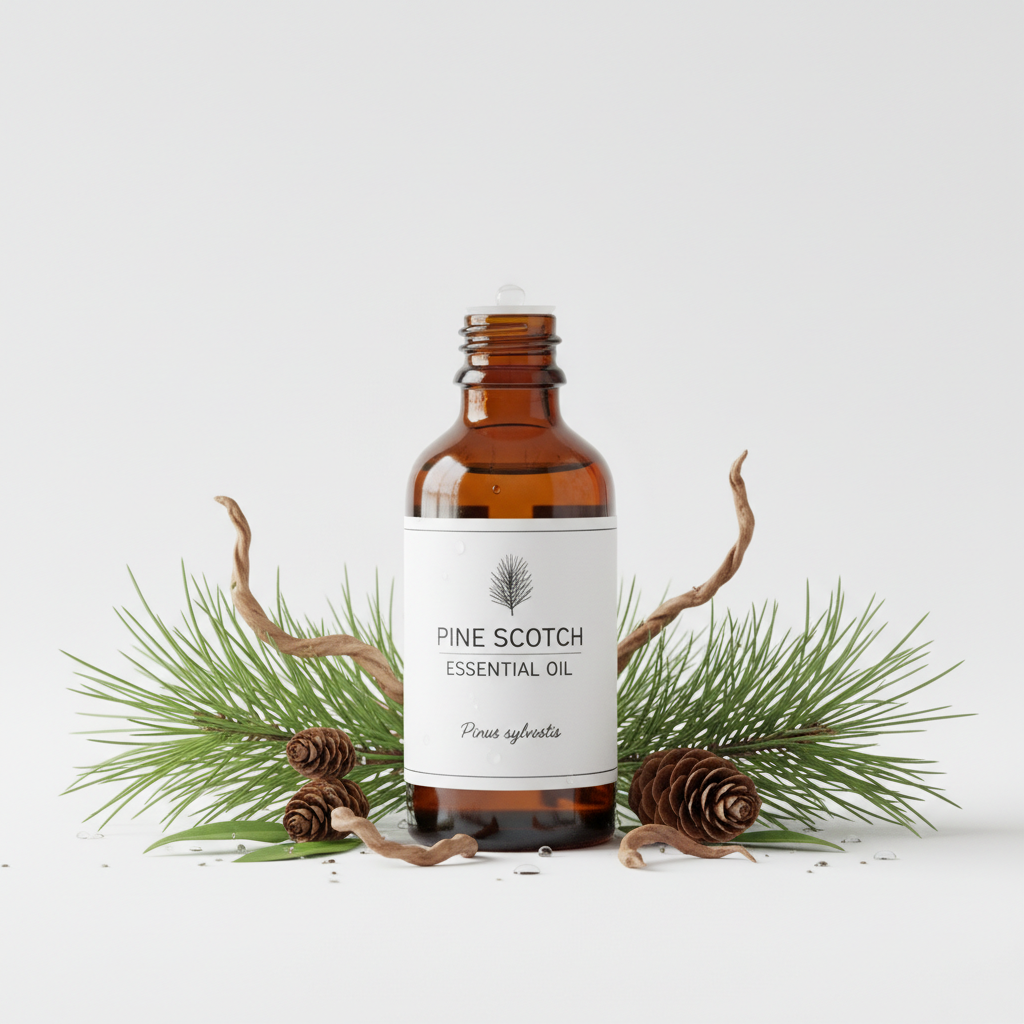
Pine Scotch Essential Oil
Pinus sylvestris
Plant Source
Needles and Twigs
Scent Family
Woody
"Discover Pine Scotch Essential Oil (Pinus sylvestris) benefits, uses, and extraction details. This oil supports respiratory health and promotes relaxation."
Pine Scotch Essential Oil: Detailed Overview
Pine Scotch Essential Oil, derived from Pinus sylvestris, is extracted from the needles and twigs of the Scotch Pine tree, native to Europe and parts of Asia. The extraction through steam distillation preserves the vibrant, fresh aroma that is widely cherished in aromatherapy and beyond.
Origin and Extraction Method
The Scotch Pine, with its tall, majestic stature and characteristic needles, has been a beloved part of European forests for centuries. The essential oil is obtained through steam distillation, a process that ensures the essential components are preserved, resulting in a high-quality oil that retains its natural benefits and aroma.
Botanical Information
The botanical name for Scotch Pine, Pinus sylvestris, reflects its place within the Pinaceae family of conifers. This tree thrives in various regions, adapting well to different climates, which contributes to the unique characteristics of the oil extracted from it. The needles of the Scotch Pine contain multiple therapeutic compounds, primarily alpha-pinene, known for its antimicrobial properties.
Therapeutic Properties and Benefits
Pine Scotch Essential Oil boasts a multitude of therapeutic properties:
- Respiratory Support: Inhalation of this oil can help clear the respiratory tract, making it useful during cold and flu season.
- Emotional Clarity: Its invigorating scent is known to help improve mental clarity, making it ideal for situations requiring focus and concentration.
- Stress Relief: The aroma promotes calmness and reduces anxiety, providing a sense of grounding.
- Antiviral Properties: Research indicates that this oil may possess antiviral attributes, aiding in protecting against seasonal ailments.
- Muscle Recovery: Its anti-inflammatory properties are beneficial post-exercise, aiding muscle recovery and reducing soreness.
- Circulation Enhancement: Inhaling or diffusing the oil may boost circulation, which can lead to increased energy levels.
Historical and Traditional Uses
Historically, Pine Scotch oil has been utilized in folk medicine and traditional practices. Many cultures have used the oil for its cleansing properties, including purifying the air and dispelling negativity. This oil has played a vital role in rituals as well, promoting vitality and strength.
Aroma Profile and Characteristics
Pine Scotch Essential Oil is characterized by a fresh, woody aroma that evokes the tranquil scent of pine forests. Its scent is both uplifting and grounding, making it a favorite in aromatherapy and therapeutic applications. The refreshing fragrance is highly appreciated in creating an uplifting environment and enhancing mood.
Common Applications and Methods
Pine Scotch Essential Oil can be utilized in various ways:
- Aromatherapy: Add a few drops to a diffuser to fill your space with its invigorating scent.
- Topical Applications: Dilute with a carrier oil for skincare applications, known to help with cleansing and minor skin irritations.
- Bathing: Adding this oil to bath water promotes relaxation and enhances the bathing experience.
- Cleaning Products: Its antimicrobial properties make it a great addition to homemade cleaning solutions for freshening up your home.
Interesting Facts and Trivia
- Pine essential oils have been used by many cultures for centuries, symbolizing strength and resilience.
- The fresh scent of Pine Scotch is often associated with winter holidays, making it a popular addition to festive scents.
- Pine oils are recognized for their grounding properties, connecting individuals to nature and encouraging mindfulness.
In conclusion, Pine Scotch Essential Oil is not only valuable for its pleasant aromatic qualities but also for its numerous therapeutic benefits. Whether used in aromatherapy, personal care, or household cleaning, this oil stands out as a versatile and beneficial addition to any essential oil collection.
Ask AI About Pine Scotch Essential Oil
Get instant answers about this essential oil
Benefits & Uses
- Enhances mental clarity and focus, making it ideal for study or work environments.
- Reduces feelings of anxiety and stress, promoting a sense of calm and grounding.
- Supports emotional stability during challenging times, fostering resilience and positivity.
- Encourages feelings of warmth and comfort through its woodsy aroma, enhancing mood and overall wellbeing.
- Invokes a sense of connection to nature, promoting tranquility and relaxation.
- Supports respiratory function, making it beneficial for colds and seasonal allergies.
- Improves circulation, which can enhance energy levels and overall vitality.
- Aids in muscle recovery post-exercise due to its anti-inflammatory properties.
- May help reduce symptoms of fatigue, especially when inhaled or diffused.
- Promotes skin cleansing and can support the healing of minor cuts and abrasions.
- Can be added to cleansers for its antibacterial properties, promoting clearer skin.
- Acts as a natural deodorizer in skincare, helping to neutralize odors.
- Useful in anti-aging products due to its astringent properties, firming the skin.
- Can be blended into massage oils to soothe sore muscles post-workout.
- Effective in oil diffusers to purify air and create a refreshing ambiance.
- Can be added to cleaning products for its natural disinfectant properties.
- Serves as an insect repellent when added to sprays or candles.
- Utilized in steamers or humidifiers to freshen and cleanse indoor air.
How to Use
Diffuser
For small rooms, use 3-5 drops, for medium rooms 5-8 drops, and for large spaces 8-12 drops of Pine Scotch Essential Oil. Diffuse for sessions of 30-60 minutes, 2-3 times daily, ideally during periods of fatigue or mental fog.
Topical
For adults, dilute Pine Scotch to 2-3% (12-18 drops per 30ml carrier oil). For children, recommended dilution is 0.5-1% (2-6 drops per 30ml). The elderly should use a dilution of 1-2% (6-12 drops per 30ml). Apply to sore areas using circular massage motions, allowing absorption for 30-60 minutes.
Inhalation
For direct inhalation, place 1-2 drops on a tissue and breathe in. For steam inhalation, add 2-3 drops into a bowl of hot water and inhale the steam for 5-10 minutes. Personal inhalers can be used by adding 10-15 drops in a personal inhaler bottle.
Safety & Precautions
Always perform a patch test before topical use. Avoid sun exposure for 12 hours after topical application due to potential photosensitivity. Consult a healthcare provider if pregnant, nursing, or on medications. Store in a cool, dark place for up to 2-3 years to retain potency.
Who should avoid:
- Pregnant or nursing women without professional guidance
- Children under 2 years of age unless under guidance of a health professional
- Individuals with serious respiratory conditions should consult a provider before use
- Those with known allergies to pine trees.
Recommended Products

Understanding the aromatic layers of Pine Scotch Essential Oil
Top Notes
Heart Notes
Base Notes
Scent Evolution
Top Notes: First impression, evaporate quickly (15-30 min)
Heart Notes: Main character, last 2-4 hours
Base Notes: Lasting foundation, linger for hours
Complementary essential oils that pair beautifully with Pine Scotch Essential Oil
Ajowan Seed Essential Oil
Trachyspermum ammi
✓enhanced aromatherapy benefits
Allspice Essential Oil
Pimenta dioica
✓traditional pairing in aromatherapy
Ammi Visnaga Essential Oil
Ammi visnaga
✓complementary therapeutic properties
Amyris Essential Oil
Amyris balsamifera
✓traditional pairing in aromatherapy
Angelica Essential Oil
Angelica archangelica
✓similar chemical compositions
Angelica Root Essential Oil
Angelica archangelica
✓complementary therapeutic properties
Blending Tips
- • Start with 2-3 oils for simple blends
- • Use 3-5 drops total per 10ml carrier oil
- • Let blends sit for 24-48 hours to marry
- • Test on a small skin area first
Calculating for: Pine Scotch Essential Oil
Recommended: 2% | Max safe: 5%
29.57 ml
Your Recipe
0.59 ml
28.98 ml
💡 Dilution Tips
- • Always do a patch test before full application
- • Children and elderly need lower dilutions (1-2%)
- • Facial products should be gentle (0.5-1%)
- • 1 drop ≈ 0.05 ml (20 drops per ml)
- • Common carrier oils: fractionated coconut, jojoba, sweet almond
Related Recipes

DIY Acne Calming Gel Spot Treatment Recipe for Clear Skin
Explore our DIY acne calming gel spot treatment recipe to soothe inflammation and fight breakouts using natural ingredients for healthier skin.

DIY Essential Oil Foaming Hand Soap Recipe
Craft your own moisturizing foaming hand soap using essential oils! This DIY recipe combines natural ingredients for clean, soft hands. Perfect for home use!

DIY Essential Oil Inhaler Recipe for Focus
Boost your mental clarity and energy with this DIY essential oil inhaler recipe! Learn how to craft your invigorating inhalers at home easily.
Deep Tissue Pain Relief Oil Recipe
Discover the powerful essential oil recipe for deep tissue pain relief. Learn how to relieve muscle tension and soreness with all-natural ingredients.
Easy Oil-Free Hydrating Face Mask Recipe for Glowing Skin
This recipe shows you how to make a hydrating face mask without oils, perfect for all skin types and packed with nourishing ingredients.

Lavender Essential Oil Body Wash Recipe
Discover the perfect Sandalwood essential oil body wash recipe that promotes relaxation, relieves stress, and moisturizes your skin with natural ingredients.