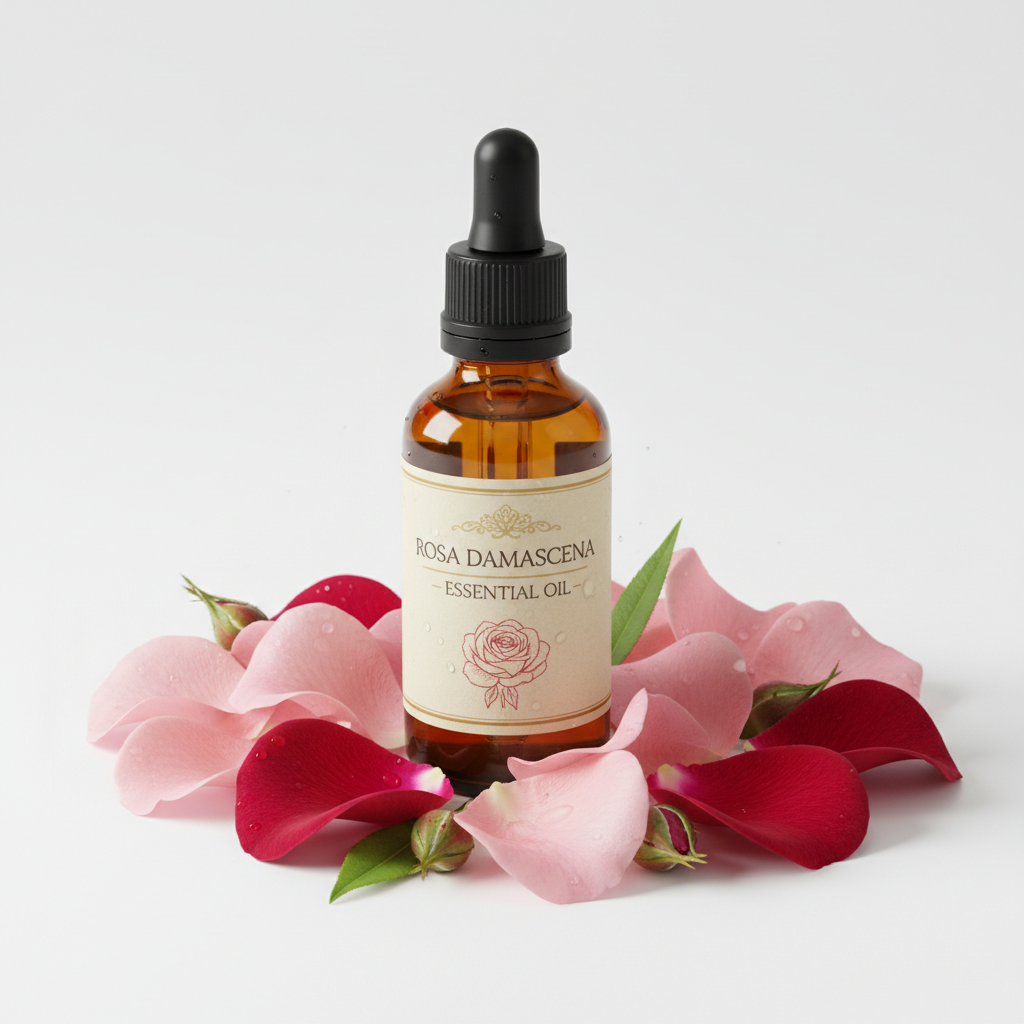
Rose Essential Oil
Rosa damascena
Plant Source
Flower petals
Scent Family
Floral
"Explore the enchanting properties of Rose Essential Oil, from its extraction to benefits for skincare, emotions, and more. Discover its therapeutic uses today!"
Rose Essential Oil: A Comprehensive Guide
Origin and Extraction Method
Rose Essential Oil is derived from the delicate petals of the Rosa damascena plant, commonly known as the Damask rose. This species flourishes in regions such as Bulgaria and Turkey, renowned for producing the highest quality rose oil. The extraction method employed is steam distillation, a technique that preserves the oil's potent aromatic and therapeutic properties. During the distillation process, steam permeates the rose petals, capturing their essential oils, which is then condensed back into liquid form. Approximately 2,000 to 4,000 pounds of rose petals are required to produce just one kilogram of rose oil, highlighting its luxurious and precious nature.
Botanical Information
The Rosa damascena is a multi-petaled flowering plant that flowers during the summer months. This perennial shrub can grow up to six feet tall and is characterized by its fragrant blooms, which can range from pale pink to deep crimson. The rich fragrance and therapeutic properties of rose oil have made it a favorite among essential oil enthusiasts and a staple in both traditional and modern medicine.
Therapeutic Properties and Benefits
Rose Essential Oil possesses numerous therapeutic properties. It is well-known for its emotional uplifting qualities, promoting a sense of well-being and tranquility. Here are some of its key benefits:
- Emotional Support: Rose oil is often used in aromatherapy for its calming effects, helping to relieve stress, anxiety, and depression. It promotes feelings of self-worth and confidence, making it particularly beneficial during challenging times.
- Aphrodisiac Qualities: The oil is traditionally regarded as an aphrodisiac, enhancing romantic experiences and fostering a deeper emotional connection with partners.
- Skin Care: Rich in antioxidants, rose oil helps rejuvenate the skin, reducing signs of aging by diminishing wrinkles and fine lines. Additionally, it aids in soothing irritated or inflamed skin conditions such as eczema and dermatitis.
- Digestive Aid: Rose oil can also support digestive health by alleviating discomfort and bloating, promoting better digestive processes.
Historical and Traditional Uses
Historically, rose oil has been treasured for centuries, dating back to ancient civilizations such as the Egyptians, who utilized it in cosmetics, perfumes, and religious ceremonies. It is mentioned in different ancient texts for its medicinal properties and has been used in traditional medicine practices worldwide. In Indian Ayurvedic medicine, rose oil is valued for balancing the doshas, promoting emotional stability, and detoxifying the body.
Scientific Facts and Research
Modern research has investigated the numerous benefits of rose oil. Studies suggest that the oil possesses anti-inflammatory, antimicrobial, and antioxidant properties, making it effective in treating various ailments. Its unique composition of aromatic compounds such as nerol, geraniol, and phenyl ethanol also contributes to its anti-anxiety effects. Scientists continue to explore rose oil’s effects on mental health, with promising results in reducing symptoms of depression and anxiety in controlled studies.
Aroma Profile and Characteristics
Rose Essential Oil has a distinct, sweet, and floral aroma that is incredibly rich and soothing. Its complex scent can evoke positive emotional responses and is often described as uplifting and balancing. When diffused or inhaled, its aromatic profile can help create a serene and calming environment.
Common Applications and Methods
Rose oil can be utilized in various applications, including:
- Aromatherapy: Utilize a diffuser to disperse the scent throughout a room, promoting relaxation.
- Topical Use: Dilute with a carrier oil, such as jojoba or coconut oil, for skin applications, targeting areas of irritation or signs of aging.
- Bath Soaks: Add a few drops of rose oil to bathwater for a soothing spa-like experience.
Interesting Facts and Trivia
- Symbolism: Rose oil is often viewed as a symbol of love and purity, and its fragrance is used in many love potions.
- Cultural Significance: In various cultures, the rose is celebrated during festivals and rituals, accentuating its importance in human connection and spirituality.
- Sustainability: The rise in popularity has led to sustainable farming practices for rose cultivation, ensuring that the harvesting process remains environmentally friendly.
In conclusion, Rose Essential Oil is not only a beautiful addition to the aromatherapy toolkit but also a multifaceted oil with an array of health benefits. Its rich history intertwined with its contemporary uses ensures that it remains a top choice for those seeking emotional and physical wellness.
Ask AI About Rose Essential Oil
Get instant answers about this essential oil
Benefits & Uses
- Promotes relaxation and peace of mind, which can help relieve stress and tension.
- Enhances feelings of self-worth and confidence, especially beneficial during periods of self-doubt.
- Improves mood and emotional balance by reducing feelings of anger or frustration.
- Promotes feelings of love, compassion, and emotional acceptance, fostering healthier relationships.
- Acts as an aphrodisiac, potentially enhancing intimacy and romantic connections.
- Supports skin rejuvenation, helping to reduce signs of aging such as wrinkles and fine lines.
- Helps in alleviating symptoms of respiratory ailments by promoting easier breathing.
- May assist with digestive processes, reducing bloating and discomfort associated with indigestion.
- Aids in detoxification by increasing circulation and promoting the healing of tissues.
- Helps soothe and hydrate dry skin, alleviating conditions such as eczema and dermatitis.
- Used in formulations for anti-aging products to improve skin elasticity and hydration.
- Acts as a natural fragrance in perfumes and skincare, providing a luxurious scent.
- Used in toners and astringents to help balance oily skin and reduce the appearance of pores.
- Can be incorporated into creams and balms for its soothing properties on irritated skin.
- Utilized in air fresheners to create a calming and inviting atmosphere.
- Added to bathwater for a luxurious and relaxing bathing experience.
- Can be used in homemade candles for an uplifting scent.
- Incorporated into potpourri to add a delightful floral fragrance to living spaces.
How to Use
Diffuser
For small rooms, use 3-5 drops; for medium rooms, use 5-8 drops; and for large rooms, use 8-12 drops. Diffuse for 30-60 minutes, 2-3 times daily. Ideal times to diffuse include morning for mood enhancement or evening for relaxation.
Topical
Adult dilution of 2-3% (approximately 12-18 drops per ounce of carrier oil). For children, dilute to 0.5-1% and for the elderly to 1-2%. Suitable carrier oils include jojoba and sweet almond. Common application areas are the wrists and behind the ears. Use gentle massage techniques for application, allowing time for absorption—about 30 minutes.
Inhalation
For direct inhalation, place 1-2 drops on a tissue or cotton ball and breathe in deeply. For steam inhalation, add 2-3 drops to hot water, lean over with a towel, and inhale for 5-10 minutes. Use a personal inhaler for on-the-go applications.
Safety & Precautions
Conduct a patch test prior to topical application. Avoid sun exposure for 12 hours after topical application due to potential photosensitivity. Consult a healthcare provider before use during pregnancy or nursing. Store in a cool, dark place to maintain integrity; shelf life is typically around 2 years. Use caution if currently taking medications for depression or blood pressure.
Who should avoid:
- Individuals with allergy to rose or related species.
- Pregnant women in their first trimester.
- Those with unstable blood pressure or on antihypertensive medications.
- People with hormone-sensitive cancers or conditions.
Recommended Products

Understanding the aromatic layers of Rose Essential Oil
Top Notes
Heart Notes
Base Notes
Scent Evolution
Top Notes: First impression, evaporate quickly (15-30 min)
Heart Notes: Main character, last 2-4 hours
Base Notes: Lasting foundation, linger for hours
Complementary essential oils that pair beautifully with Rose Essential Oil
Agarwood Essential Oil
Aquilaria
✓balanced scent profile
Allspice Essential Oil
Pimenta dioica
✓similar chemical compositions
Ammi Visnaga Essential Oil
Ammi visnaga
✓enhanced aromatherapy benefits
Amyris Essential Oil
Amyris balsamifera
✓similar chemical compositions
Angelica Essential Oil
Angelica archangelica
✓traditional pairing in aromatherapy
Angelica Root Essential Oil
Angelica archangelica
✓traditional pairing in aromatherapy
Blending Tips
- • Start with 2-3 oils for simple blends
- • Use 3-5 drops total per 10ml carrier oil
- • Let blends sit for 24-48 hours to marry
- • Test on a small skin area first
Calculating for: Rose Essential Oil
Recommended: 2% | Max safe: 5%
29.57 ml
Your Recipe
0.59 ml
28.98 ml
💡 Dilution Tips
- • Always do a patch test before full application
- • Children and elderly need lower dilutions (1-2%)
- • Facial products should be gentle (0.5-1%)
- • 1 drop ≈ 0.05 ml (20 drops per ml)
- • Common carrier oils: fractionated coconut, jojoba, sweet almond
Related Recipes

Calming Essential Oil Pillow Mist Recipe for Relaxation
Discover this easy recipe for a soothing pillow mist that features lavender and bergamot for ultimate relaxation and better sleep.

Calming Lavender Linen Spray Recipe
A gentle, relaxing linen and room spray that promotes restful sleep and calm using lavender, chamomile, and cedarwood essential oils.

DIY Acne Calming Gel Spot Treatment Recipe for Clear Skin
Explore our DIY acne calming gel spot treatment recipe to soothe inflammation and fight breakouts using natural ingredients for healthier skin.

DIY Essential Oil Foaming Hand Soap Recipe
Craft your own moisturizing foaming hand soap using essential oils! This DIY recipe combines natural ingredients for clean, soft hands. Perfect for home use!
DIY Perfume Recipe: Create Your Signature Scent at Home
This DIY perfume recipe lets you craft a unique fragrance that lifts your spirits and is great for daily wear or celebrations.
Delightful Sleep-Enhancing Pillow Sachets Recipe for Restful Nights
Discover how to create a calming sleep environment with this easy recipe for pillow sachets infused with soothing essential oils to improve your sleep quality.