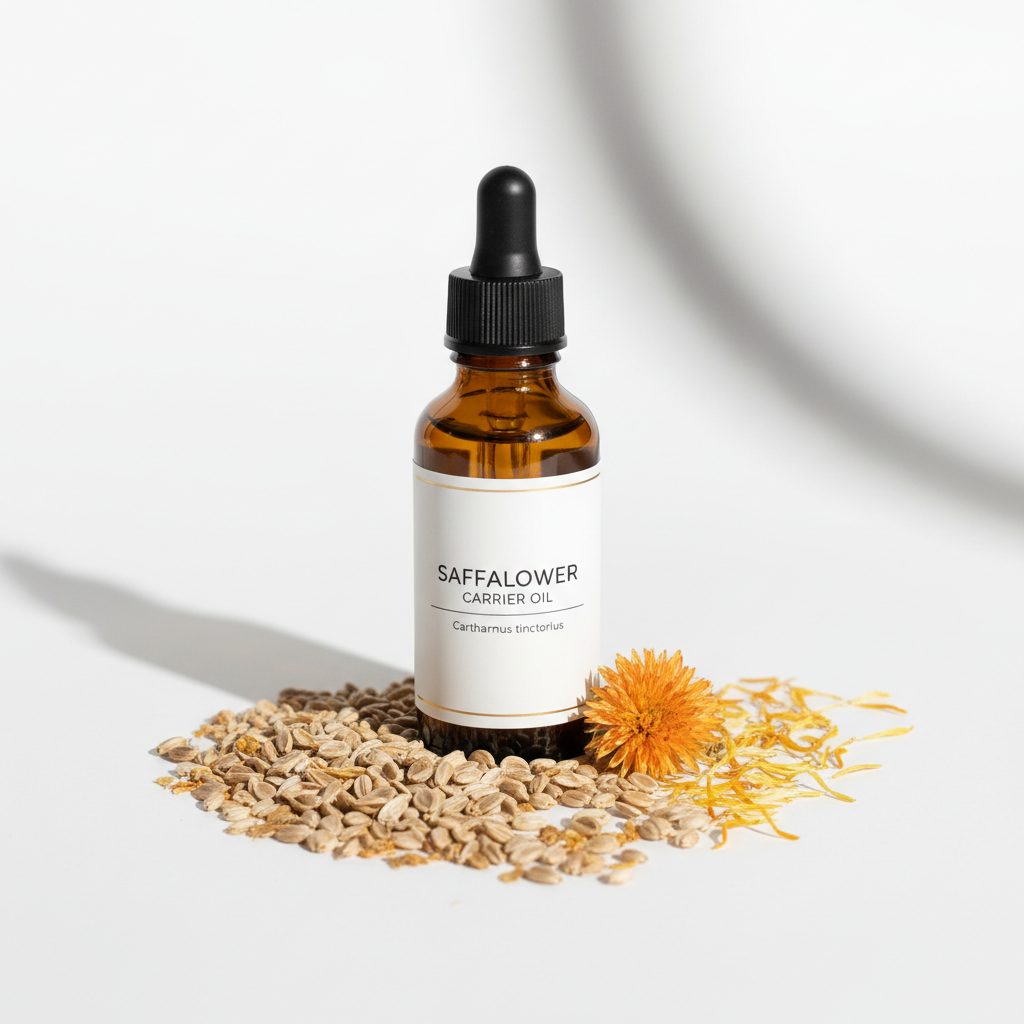
Safflower Carrier Oil
Carthamus tinctorius
Plant Source
seeds
Scent Family
Nutty
"Discover the benefits of Safflower Carrier Oil. Learn about its extraction, properties, uses in skincare, and historical significance for wellness."
Safflower Carrier Oil: Origin and Extraction
Safflower Carrier Oil is extracted from the seeds of the Carthamus tinctorius plant, a thistle-like flowering plant native to Africa and Asia. The oil is primarily obtained through a cold-pressing method, which preserves its rich nutrient profile, including essential fatty acids and vitamins. Safflower seeds contain approximately 25-40% oil, ensuring that the extraction process yields a light, non-greasy carrier oil ideal for cosmetic applications and aromatherapy.
Botanical Information
The botanical name, Carthamus tinctorius, signifies not only a source of oil but also its historical usage as a natural dye. In ancient times, safflower was cultivated for its vibrant flowers, which were used to create yellow dye for textiles. The oil derived from these seeds, however, has gained prominence in skincare and therapeutic applications due to its nutritional richness.
Therapeutic Properties and Benefits
Safflower Carrier Oil boasts several skin-loving benefits:
- Hydration: Rich in linoleic acid, a crucial fatty acid, it aids in moisture retention and supports the skin barrier, making it excellent for dry or dehydrated skin.
- Soothing: It helps to calm irritated skin, alleviating redness and itchiness associated with conditions like eczema or dermatitis.
- Nourishing: High in vitamins A, E, and K, it nourishes the skin and promotes a healthy complexion.
- Hair Care: The oil is also beneficial for hair, enhancing moisture and shine, while reducing breakage and dullness.
Historical and Traditional Uses
Historically, safflower was also used in cooking and as a medicinal herb. Traditional medicine practices from various cultures utilized safflower for its anti-inflammatory properties, incorporating it into remedies for conditions like arthritis and muscle pain. In some cultures, safflower petals were brewed as teas to promote general well-being and as a natural colorant in foods.
Scientific Facts and Research
Research indicates that the linoleic acid in safflower oil plays a significant role in skin health. A study published in the American Journal of Clinical Dermatology highlights its effectiveness in managing acne and improving overall skin hydration. The oil's anti-inflammatory properties have made it a subject of interest for further studies in personal care formulations.
Aroma Profile and Characteristics
Unlike many scented essential oils, safflower carrier oil has a very light, almost neutral aroma, making it an excellent base for essential oil blending. This feature allows it to carry other scents without overpowering them, providing a perfect medium for therapeutic applications in aromatherapy.
Common Applications and Methods
Safflower Carrier Oil is multi-faceted in its applications:
- Cosmetic Use: Often used in cream formulations, lotions, and serums due to its lightweight texture.
- Massage oil: Acts as an effective base due to its soothing properties, allowing for easy application during massage therapy.
- Hair treatments: Used in hair masks or leave-in conditioners to boost moisture and manageability.
- Dilution of Essential Oils: It is commonly employed to dilute essential oils for safe topical application, given its compatibility with many oils.
Interesting Facts and Trivia
- Safflower has been cultivated for over 3,000 years, illustrating its longstanding importance across various cultures.
- The vibrant yellow color of safflower petals was historically used as a substitute for saffron in cooking due to its similar hue.
- Safflower oil is considered one of the healthiest oils for cooking due to its high smoke point and health-beneficial fatty acid composition.
In summary, Safflower Carrier Oil is not only versatile in its applications but is also rich in historical significance and health benefits. It continues to be a popular choice in the beauty and wellness industries, making it a staple for anyone looking to enhance their skin and hair care routines.
Ask AI About Safflower Carrier Oil
Get instant answers about this essential oil
Benefits & Uses
- Calming: Helps to maintain emotional balance and reduce feelings of anxiety.
- Grounding: Ties the body and mind together, promoting a sense of security and stability.
- Uplifting: May enhance mood and promote feelings of joy during aromatherapy sessions.
- Stress relief: Useful in helping lower stress levels when included in relaxation practices.
- Comforting: Provides a sense of warmth and safety in personal care rituals.
- Hydrates skin: Ideal for dry and dehydrated skin types, providing moisture without greasiness.
- Soothes irritation: Can alleviate itchiness and redness associated with dry skin and conditions like eczema.
- Supports hair health: Enhances shine and moisture retention in hair, helping reduce breakage.
- Improves circulation: Enhances blood circulation when massaged into the skin.
- Nourishing: Rich in vitamins and fatty acids that support overall skin and hair health.
- Carrier for essential oils: Ideal for diluting essential oils for topical applications due to its light texture.
- Massage oil: Used in body massage blends to hydrate and soothe skin.
- Moisturizing cream: Forms the base for creams targeting dry or mature skin.
- Hair treatment: Used as a leave-in conditioner to enhance hair smoothness and shine.
- DIY formulations: Serves as a base oil in homemade beauty products such as serums and lotions.
- Cooking oil: Utilized as a versatile cooking oil due to its high smoke point.
- Candle making: Acts as a carrier oil in homemade candles for added scent throw.
- Natural cleaning: Can be incorporated into DIY cleaning products for a conditioning effect on surfaces.
- Furniture polish: Mixed with essential oils for use as a natural furniture polish.
How to Use
Diffuser
For small rooms, use 3-5 drops; for medium-sized rooms, 5-8 drops; for large spaces, 8-12 drops. Diffuse for 30-60 minutes, 2-3 times daily, ideally in the morning or before bedtime to enhance relaxation.
Topical
For adults: Dilute Safflower Carrier Oil to 2-3% with essential oils. For children: Dilution should be 0.5-1%, and for elderly: 1-2%. Use carrier oils like Jasmine or Coconut for luxury blends, focusing on dry areas and massaging gently for 5-10 minutes.
Inhalation
For direct inhalation, add 1-2 drops on a tissue or inhale from cupped hands. For steam inhalation, add 2-3 drops to a bowl of hot water, stepping back to inhale deeply for 5-10 minutes. Alternatively, use a personal inhaler.
Safety & Precautions
Always perform a patch test before topical application to avoid allergic reactions. Consult a healthcare provider before using during pregnancy or lactation. Avoid using oils that may cause photosensitivity (not generally applicable to safflower oil itself) and store in a cool, dark place. Shelf life is typically 1-2 years.
Who should avoid:
- Individuals with specific allergies to safflower or related plants.
- Those with skin conditions that respond negatively to oil applications.
- Pregnant individuals without prior consultation with a healthcare provider.
Recommended Products

Understanding the aromatic layers of Safflower Carrier Oil
Top Notes
Heart Notes
Base Notes
Scent Evolution
Top Notes: First impression, evaporate quickly (15-30 min)
Heart Notes: Main character, last 2-4 hours
Base Notes: Lasting foundation, linger for hours
Complementary essential oils that pair beautifully with Safflower Carrier Oil
Abyssinian Carrier Oil
Crambe abyssinica
✓enhanced aromatherapy benefits
Allspice Essential Oil
Pimenta dioica
✓enhanced aromatherapy benefits
Ammi Visnaga Essential Oil
Ammi visnaga
✓balanced scent profile
Amyris Essential Oil
Amyris balsamifera
✓similar chemical compositions
Angelica Essential Oil
Angelica archangelica
✓balanced scent profile
Angelica Root Essential Oil
Angelica archangelica
✓traditional pairing in aromatherapy
Blending Tips
- • Start with 2-3 oils for simple blends
- • Use 3-5 drops total per 10ml carrier oil
- • Let blends sit for 24-48 hours to marry
- • Test on a small skin area first
Calculating for: Safflower Carrier Oil
Recommended: 2% | Max safe: 5%
29.57 ml
Your Recipe
0.59 ml
28.98 ml
💡 Dilution Tips
- • Always do a patch test before full application
- • Children and elderly need lower dilutions (1-2%)
- • Facial products should be gentle (0.5-1%)
- • 1 drop ≈ 0.05 ml (20 drops per ml)
- • Common carrier oils: fractionated coconut, jojoba, sweet almond
Related Recipes

Calming Lavender Linen Spray Recipe
A gentle, relaxing linen and room spray that promotes restful sleep and calm using lavender, chamomile, and cedarwood essential oils.

DIY Acne Calming Gel Spot Treatment Recipe for Clear Skin
Explore our DIY acne calming gel spot treatment recipe to soothe inflammation and fight breakouts using natural ingredients for healthier skin.
DIY Essential Oil Body Lotion Recipe
Create your own nourishing body lotion with essential oils that hydrates, softens and rejuvenates your skin, leaving it smooth and supple all day long.
DIY Essential Oil Foaming Hand Soap Recipe
Make your own essential oil foaming hand soap! Quick, easy, and eco-friendly. Perfect for sensitive skin and free from harsh chemicals. Try it today!

DIY Essential Oil Foaming Hand Soap Recipe
Craft your own moisturizing foaming hand soap using essential oils! This DIY recipe combines natural ingredients for clean, soft hands. Perfect for home use!
DIY Luxury Deep Nourishing Gel Hand Sanitizer Recipe
This recipe helps you create a premium hand sanitizer with deep nourishment for your skin.